Google's Pixel 11 Series Deepens AI Focus Amidst Hardware Scrutiny
Google's Pixel 11 series solidifies the company's commitment to AI-first mobile experiences, yet its reception reveals a familiar tension between groundbreaking software and hardware refinement, with pricing strategies drawing particular scrutiny.
✨ This content was summarized and interpreted by AI; it may contain errors — please verify accuracy with the original sources. Learn more
Listen to this story
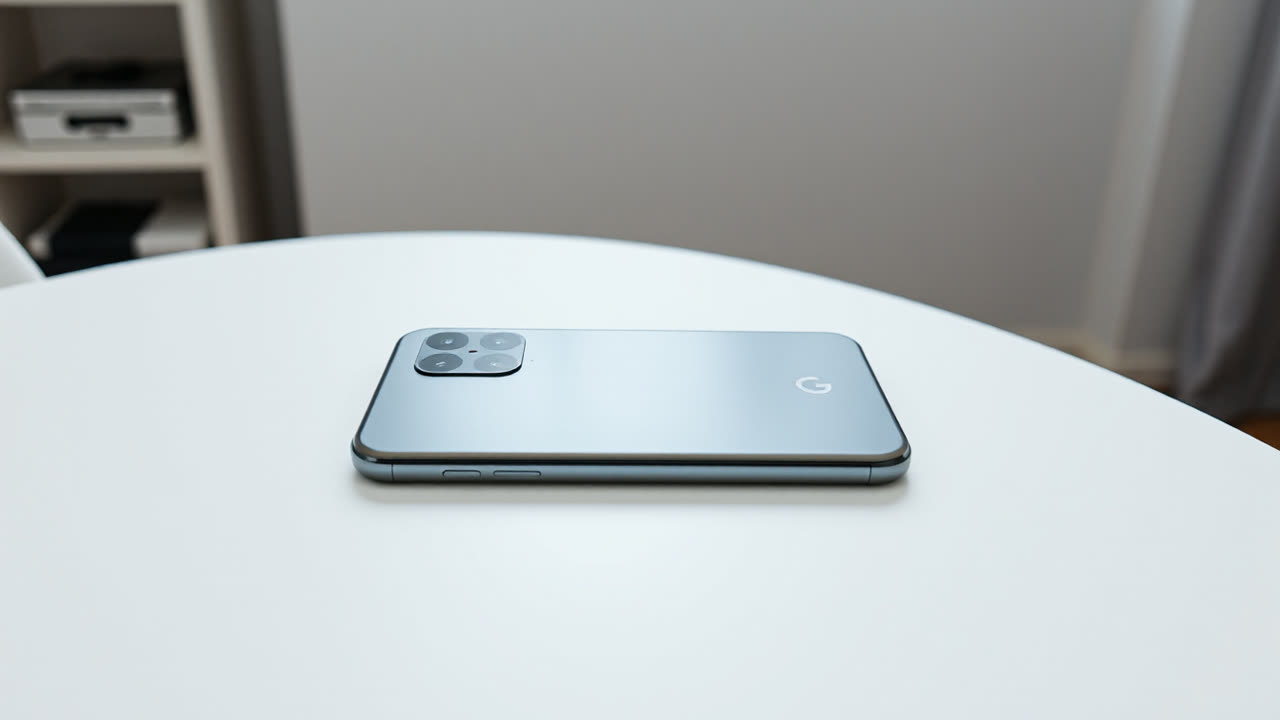
Google's Pixel 11 series, as highlighted in recent Engadget reviews, solidifies the company's commitment to AI-first mobile experiences, yet its reception reveals a familiar tension between groundbreaking software and hardware refinement, with pricing strategies drawing particular scrutiny. The flagship Pixel 11 Pro, reportedly starting at $1,199, pushes the boundaries of computational photography and on-device machine learning, driven by the new Tensor G6 chip. This latest iteration of Google's custom silicon reportedly delivers a significant leap in AI processing capabilities, enabling features like real-time, multi-language transcription and advanced photo/video editing directly on the device, often surpassing cloud-based solutions in speed and privacy. However, the reviews also indicate that while the software experience remains unparalleled in its smarts, the hardware design, though refined, might not represent as radical a departure as some rivals, and battery life, while improved, still faces stiff competition.
The core news is not just about incremental upgrades but Google’s increasingly clear vision for the smartphone as an intelligent agent, deeply integrated with the user’s daily life through proactive AI. The Pixel 11’s camera system, for instance, leverages the Tensor G6’s enhanced image signal processor (ISP) and neural processing unit (NPU) to introduce "Contextual Capture," an evolution of its Magic Editor capabilities that can intelligently anticipate optimal lighting and framing before the shutter button is even pressed. This moves beyond mere post-processing to a more predictive and assistive photography experience. Furthermore, the rumored "Adaptive Audio 2.0" feature dynamically adjusts sound profiles based on ambient noise and user activity, an extension of the Pixel Buds Pro's spatial audio intelligence now deeply embedded within the phone's OS. These advancements underscore Google's strategy to differentiate through software intelligence, making the device feel less like a tool and more like a personal assistant.
This focus on AI and software integration matters profoundly for both users and the industry. For users, it promises a more intuitive and less demanding interaction with their devices. Tasks that once required multiple steps or manual adjustments are increasingly automated, freeing up cognitive load. Imagine voice commands that understand complex, multi-part requests without needing precise syntax, or a phone that intelligently prioritizes notifications based on your current context and schedule, rather than just time. For the industry, it sets a higher bar for what a "smart" phone truly means. Rivals, traditionally strong in raw hardware specifications, are now compelled to accelerate their own on-device AI development. The Tensor G6's efficiency in handling complex AI tasks locally also has significant implications for data privacy, reducing the need to send sensitive information to the cloud, a growing concern for consumers. This could force a paradigm shift where chip design prioritizes AI throughput and efficiency over brute-force clock speeds, influencing future silicon development across the sector.
Comparing the Pixel 11 series to its rivals reveals Google's unique position. While Apple's latest iPhone 18 Pro continues to excel in raw CPU/GPU performance and a tightly integrated ecosystem, and Samsung’s Galaxy S27 Ultra pushes boundaries with innovative display technology and versatility, the Pixel 11's strength lies squarely in its AI-driven user experience. The Tensor G6, while perhaps not topping synthetic benchmarks against the A18 Bionic or Snapdragon 8 Gen 5 in every metric, is purpose-built for Google’s AI workloads, offering a more holistic and often more practical performance advantage in real-world use cases like live translation, advanced voice commands, and sophisticated image processing. Compared to the prior Pixel 10 generation, the Pixel 11 represents a refinement and expansion of its AI capabilities rather than a complete overhaul of its core identity. While the Pixel 10 introduced the Tensor G5 and laid the groundwork for advanced on-device AI, the Pixel 11 reportedly leverages the G6 to make these features more pervasive, faster, and more contextually aware, moving from impressive demonstrations to indispensable daily utilities.
Looking ahead, Google’s trajectory suggests an even deeper integration of AI across its hardware ecosystem. We can anticipate future Pixel devices, perhaps the Pixel 12, to further blur the lines between smartphone, wearable (like the Pixel Watch 4, which reportedly also received positive reviews for its health tracking and seamless integration with the Pixel 11), and smart home devices. The "ambient computing" vision, where technology fades into the background, becoming truly assistive and predictive, is Google’s clear north star. This will likely involve more sophisticated sensor arrays, advanced multimodal AI interfaces that understand gestures and gaze in addition to voice, and even more personalized adaptive experiences. The challenge for Google will be to translate these cutting-edge AI capabilities into a hardware package that consistently competes on all fronts—design, battery life, and raw performance—while maintaining its competitive pricing strategy and ensuring user trust in its handling of increasingly personal data. The Pixel 11 series, therefore, is not merely a new phone; it is a significant step in Google’s long-term strategy to redefine the very nature of personal computing through artificial intelligence.