Google's Pixel Watch 5 Launches with Impressive Hardware, But Key Health Features Delayed
Google's latest smartwatch, the Pixel Watch 5, offers significant hardware upgrades and AI integration but disappoints early adopters by launching without several heavily marketed health features, including blood pressure and insulin resistance tracking.
✨ This content was summarized and interpreted by AI; it may contain errors — please verify accuracy with the original sources. Learn more
Listen to this story
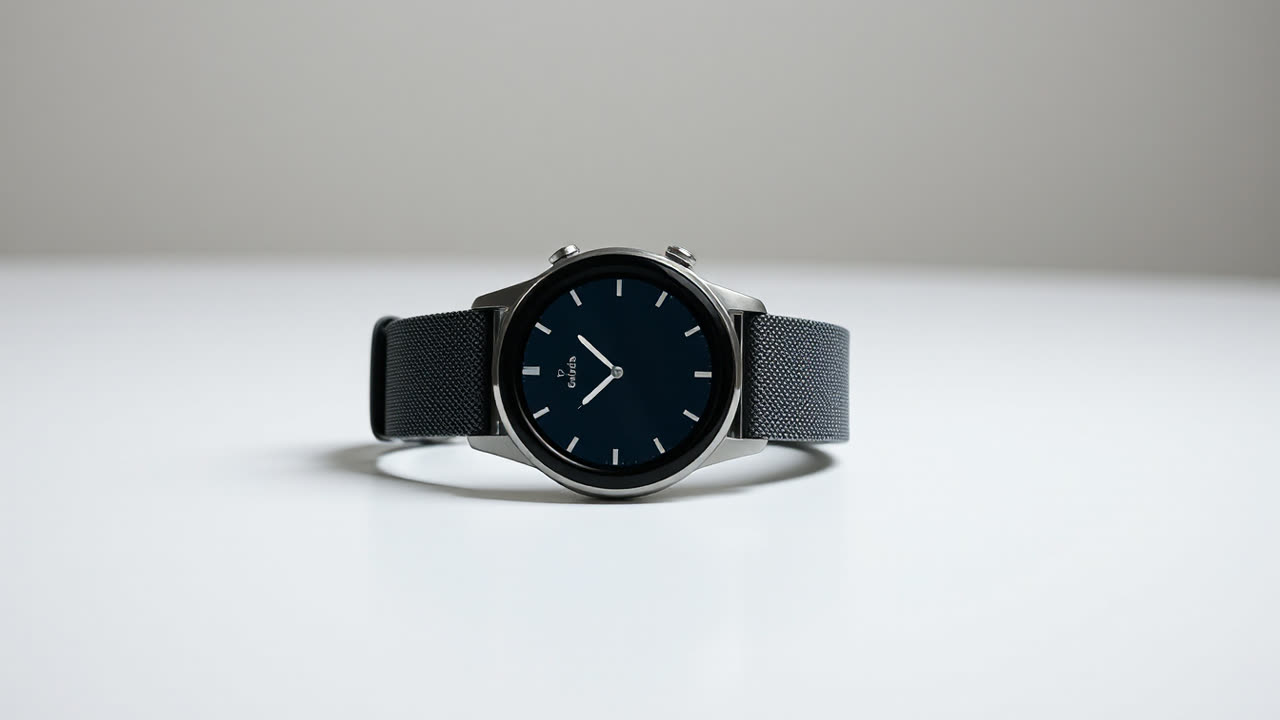
Google's Pixel Watch 5, launched with pre-orders beginning August 12 and general availability on August 20, 2026, arrives as a technically impressive wearable, yet its initial rollout is notably hampered by the absence of several key health features touted in its marketing. Priced starting at $399 for the 41mm model and $429 for the 45mm, with LTE variants adding $100, the device aims to solidify Google's position in the competitive smartwatch arena. However, critical functionalities such as blood pressure and insulin resistance trend tracking, along with the full on-wrist strength training interface, are not available at launch, with some slated for a September 2026 update after a month of data collection. Furthermore, the innovative breathing emergency detection feature, an industry first for wearables, is initially restricted to supported European countries. This staggered release strategy risks undermining the immediate value proposition for early adopters, who are left waiting for a complete experience.
The delayed availability of these core health features matters significantly for both users and the broader smartwatch industry. For consumers, it translates to a fragmented user experience, where a premium-priced device fails to deliver on its full promise from day one. In a market where smartwatches are increasingly seen as indispensable health companions, the expectation is for comprehensive functionality out of the box. Google’s reliance on future software updates for headline features can lead to frustration and a perception of incompleteness. The Pixel Watch 5 does, however, offer immediate benefits, including advanced Gemini AI integration for proactive assistance and offline capabilities for basic tasks, a significantly upgraded Qualcomm Snapdragon W5 Gen 2 Accelerated processor, 3GB of RAM, and 64GB of storage, marking a substantial performance boost over its predecessor. Its "Health Guardian" tools, once fully implemented, promise monthly wellness trend summaries and a powerful AI-powered Health Coach (requiring a Google Health Premium subscription).
Google's journey in the wearables market has been characterized by ambition and iterative progress. After acquiring Fitbit for $2.1 billion in 2021, Google sought to integrate its robust health tracking capabilities with its Wear OS platform, a segment projected to grow its market share to 27% in 2024, up from 21% in 2023, largely driven by Google, Samsung, and other Android partners. The Pixel Watch 5 represents Google's continued commitment, yet its design remains largely unchanged from the Pixel Watch 4, retaining the signature domed Actua 360 Display and aerospace-grade aluminum build. While the internal hardware improvements are notable—a 12% faster CPU and 20% overall performance gain compared to the Pixel Watch 4, along with double the storage—the visual familiarity makes it an incremental upgrade in appearance.
In comparison to its rivals, the Pixel Watch 5 positions itself as a strong contender, albeit with caveats. Against the Apple Watch Series 11, the Pixel Watch 5 boasts a brighter 3,000-nit display (compared to the Series 11's 2,000 nits) and longer claimed battery life of up to 40 hours for the 45mm model, versus the Series 11's 24 hours. It also includes satellite SOS, a feature typically reserved for the Apple Watch Ultra line. Google claims its improved GPS tracking is more accurate than even the Apple Watch Ultra 3 and Garmin Fenix 8 Pro in internal studies, a significant leap for fitness enthusiasts. However, the Apple Watch maintains a sleeker profile, with the Series 11 measuring 9.7mm thick compared to the Pixel Watch 5's 12.3mm.
The competition with Samsung's Galaxy Watch series, particularly the Galaxy Watch 9, reveals different strategic choices. While the Pixel Watch 5 starts at a similar price point, the Galaxy Watch 9 utilizes a newer Snapdragon Wear Elite platform, potentially offering superior raw processing power, and includes sapphire crystal glass on its display, a premium material absent from the Pixel Watch 5's Gorilla Glass 5. Samsung's ecosystem also ties certain advanced health features, like blood pressure monitoring, to its Galaxy phones, a limitation Google avoids by offering broader Android compatibility for most features. The Pixel Watch 5's battery life, however, appears to surpass that of the Galaxy Watch 9.
Looking ahead, Google's strategy seems to be one of continuous iteration and leveraging its AI prowess. The eventual rollout of the missing health features will complete the Pixel Watch 5’s intended offering, and these software-driven enhancements, including monthly blood pressure and insulin resistance trends, are also slated to arrive on older Pixel Watch models and the Fitbit Air. This indicates a commitment to extending the life and functionality of its existing hardware through software, a move that could foster user loyalty but also diminishes the uniqueness of the latest model at launch. The Pixel Watch 5's increased RAM and accelerated processor are likely laying the groundwork for more sophisticated on-device AI capabilities, ensuring Google remains at the forefront of integrating artificial intelligence into personal health and productivity. The global Wear OS market, valued at $6.3 billion in 2024 and projected to reach $18.9 billion by 2033, offers significant growth potential, and Google's ability to deliver a consistently excellent, fully featured experience will be crucial in capturing a larger share against the established dominance of watchOS. The Pixel Watch 5, despite its initial feature gaps, represents a powerful, if still evolving, vision for Google's role in the future of wearable technology.