Google Search's AI Integrates with Canva, YouTube Music, and Instacart for Enhanced Creation
Google Search's AI now directly integrates with Canva, YouTube Music, and Instacart, transforming it into a generative assistant that empowers users to create designs, curate playlists, and compile shopping lists within the search interface.
✨ This content was summarized and interpreted by AI; it may contain errors — please verify accuracy with the original sources. Learn more
Listen to this story
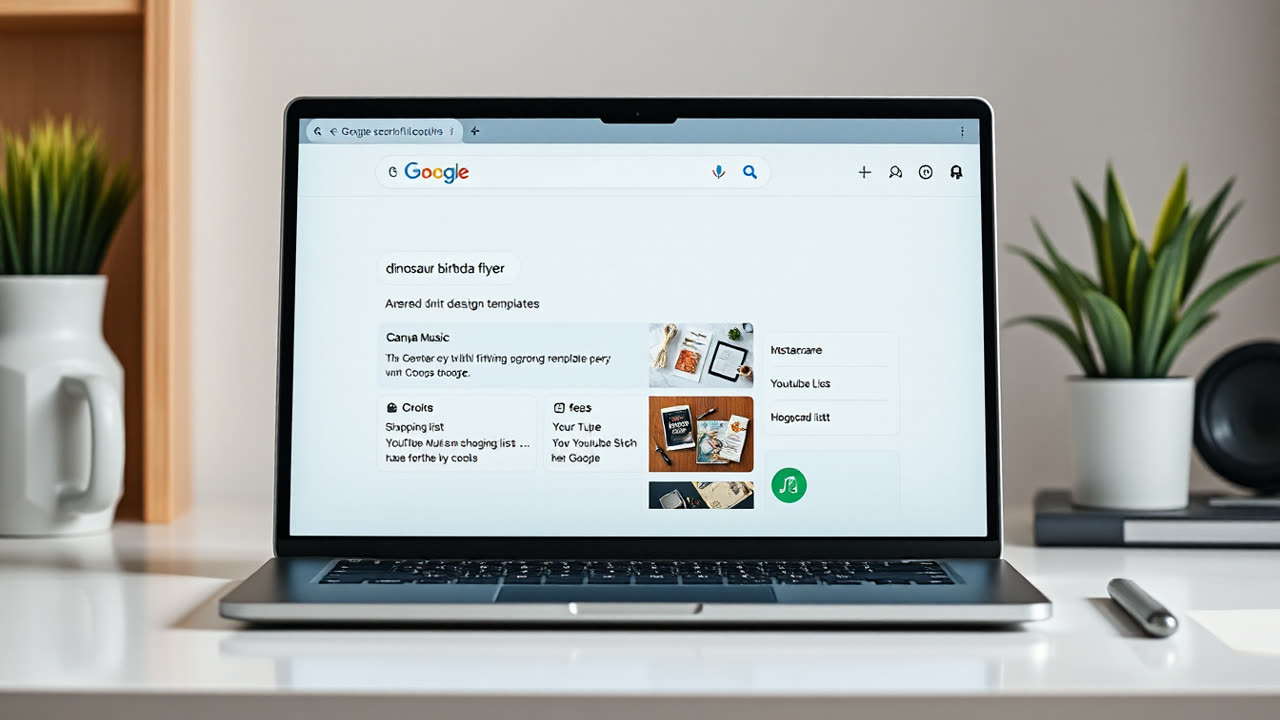
Google Search’s AI capabilities have fundamentally shifted from a mere information retrieval tool to a proactive, generative assistant, now directly integrating with Canva, YouTube Music, and Instacart to empower users with creation and organization directly within the search interface. This expansion, initially highlighted in 2023, has matured, allowing users to generate design templates, curate personalized music playlists, and compile comprehensive shopping lists through natural language prompts, bypassing the need to navigate to individual applications until final review or purchase.
The immediate impact on user experience is profound, streamlining multi-step processes into intuitive conversational interactions. For instance, a user planning a birthday party can now prompt Google Search to "design a flyer for a 5-year-old's dinosaur-themed birthday party with a specific date and time," and Google's AI, leveraging its integration with Canva, will generate several editable design options directly within the search results. Similarly, a request like "create a workout playlist with high-energy 80s rock" will prompt YouTube Music to assemble a relevant list, ready for playback or further refinement. This eliminates context switching, reduces cognitive load, and democratizes access to creative and organizational tools that previously required a dedicated app or specific skill set. For Instacart, the integration translates into unparalleled convenience, where a user can simply state, "add ingredients for chicken tikka masala to my shopping list," and the AI populates a cart with relevant items, often suggesting specific brands or quantities based on common recipes. This capability significantly reduces the friction associated with meal planning and grocery shopping.
This strategic move by Google carries substantial implications for the broader tech industry and the competitive landscape. For Canva, the integration extends its reach directly into the initial intent phase of user activity, potentially driving new users to its platform who might not have otherwise considered it for quick design tasks. It positions Canva as a default AI-driven design solution within Google's ecosystem, contrasting with rivals like Adobe Express or Microsoft Designer, which rely on their respective platform integrations. YouTube Music benefits from deeply embedding itself into the discovery phase, potentially increasing subscriptions and engagement by making playlist creation effortless and ubiquitous within Google Search, a significant advantage over standalone music streaming services like Spotify or Apple Music. Instacart solidifies its position as a dominant force in online grocery by becoming the default AI-driven shopping list generator for millions of Google users, potentially widening its moat against competitors like Amazon Fresh or local supermarket delivery services.
Beyond the individual platforms, this integration underscores Google's broader strategy to position its AI, powered by models like Gemini, as an ambient intelligence layer across the web, making its search engine not just a gateway to information but a hub for task completion. This approach directly challenges the evolving AI strategies of competitors. Microsoft, with its Copilot integrated into Windows and Edge, aims to provide similar generative capabilities across productivity apps and web browsing. However, Google's deep integration into its dominant search platform, coupled with partnerships with leading third-party services, offers a unique advantage in reaching users at the very outset of their digital journeys. This also contrasts with Apple's more walled-garden approach to AI with Siri, which, while deeply integrated into its hardware, has historically been less open to third-party generative integrations for complex tasks.
Looking ahead, the trajectory of these integrations points towards an increasingly personalized and predictive AI experience. Expect Google's AI to become even more sophisticated in anticipating user needs, perhaps proactively suggesting designs based on calendar events, recommending playlists based on location and time of day, or pre-populating shopping carts with frequently purchased items before a user even explicitly asks. The evolution will likely include deeper integration with other Google services like Calendar, Maps, and Photos, creating a seamless, interconnected AI assistant that understands context across a user’s digital life. Challenges will undoubtedly arise concerning data privacy, the accuracy of AI-generated content, and the potential for algorithmic bias in recommendations. However, the current integrations with Canva, YouTube Music, and Instacart represent a significant leap towards a future where Google Search transcends its traditional role, transforming into a central, intelligent hub for creative expression, entertainment, and practical daily tasks, fundamentally reshaping how users interact with the digital world.