Google to Launch Android-Based Googlebook Laptops with Deep Gemini AI Integration
Google is set to commence pre-orders for its Android-based Googlebook laptops, deeply integrated with Gemini Intelligence, on September 21, marking a significant strategic pivot in its hardware ambitions.
✨ This content was summarized and interpreted by AI; it may contain errors — please verify accuracy with the original sources. Learn more
Listen to this story
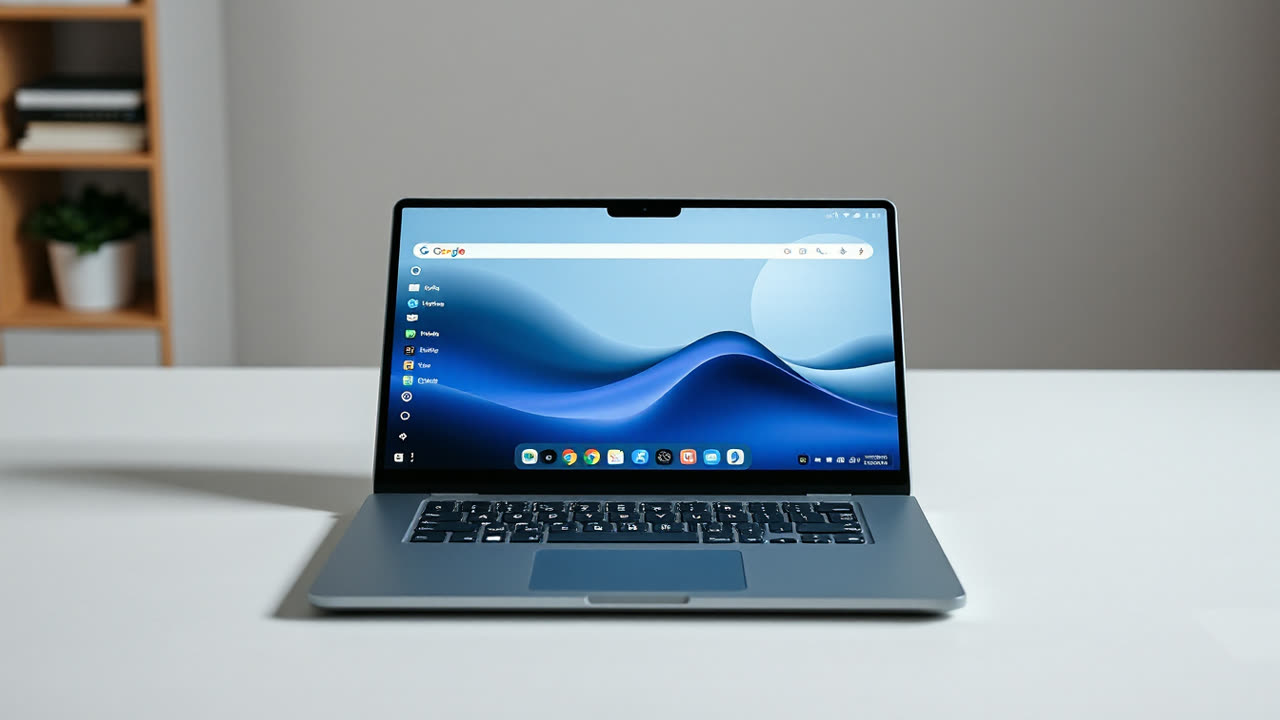
Pre-orders for Google's Android-based Googlebook laptops, deeply integrated with Gemini Intelligence, are set to commence on September 21, marking a significant strategic pivot in Google's hardware ambitions and the broader personal computing landscape. This launch positions Android, traditionally a mobile operating system, as a foundational desktop experience, aiming to leverage its vast app ecosystem and Google's advanced AI capabilities to redefine laptop functionality. The move represents Google's most ambitious push yet into the premium laptop segment beyond its Chrome OS offerings, directly challenging established players like Apple and Microsoft with a mobile-first, AI-centric paradigm.
The core innovation lies in the "Gemini Intelligence at the heart of the operating system," suggesting a pervasive AI layer that goes beyond mere application integration. This could manifest as proactive assistance in productivity suites, context-aware information retrieval across the entire device, and intelligent power management, all driven by Gemini's multimodal understanding. For users, this promises a highly personalized and adaptive computing experience, where the laptop anticipates needs, streamlines workflows, and offers insights that would typically require manual searching or application switching. Imagine a Googlebook automatically summarizing meeting notes from a video call, drafting email responses based on recent conversations, or even organizing files and suggesting relevant content based on current projects, all without explicit prompts. This level of ambient intelligence could significantly reduce cognitive load and enhance efficiency, offering a tangible advantage over traditional operating systems that rely more on user initiation for AI functionalities.
The impact on the industry is potentially transformative. For developers, the transition of Android to a full-fledged laptop OS opens up a massive new canvas for existing applications, potentially driving a wave of optimization for larger screens, keyboard/mouse input, and multi-window environments. This could invigorate the Android app ecosystem, pushing developers to create more robust, desktop-class experiences for their applications, bridging the historical gap between mobile and desktop software. Furthermore, it signals a potential shift in how hardware is designed, with manufacturers likely to prioritize components that can efficiently run Gemini's AI models, such as specialized neural processing units (NPUs), becoming standard features even in mid-range devices. This could accelerate the "AI PC" trend, forcing rivals to deepen their own AI integrations to remain competitive, moving beyond simple Copilot-like features to a more fundamental AI-driven OS experience.
Historically, Google's laptop strategy has revolved around Chrome OS, a lightweight, web-centric operating system praised for its security and ease of use, exemplified by devices like the Pixelbook Go. While Chrome OS has carved out a niche, particularly in education, its application ecosystem, though growing with Android app support, has always been perceived as less robust than Windows or macOS. The Googlebook, running native Android, sidesteps this limitation by directly leveraging the enormous Android app library, offering a more comprehensive software experience from day one. Compared to rivals, Googlebook’s Android foundation with deep Gemini integration positions it uniquely against Apple's macOS, which boasts a mature desktop app ecosystem and powerful M-series chips, and Microsoft's Windows, which is attempting its own AI integration with Copilot+ PCs. The Googlebook aims to differentiate by offering a seamless mobile-to-desktop transition and a level of predictive AI assistance that is arguably more deeply embedded than current competitor offerings, drawing on Google's extensive cloud AI infrastructure. Previous attempts at Android laptops or hybrids, such as early Android tablets with keyboard docks, often suffered from poor optimization for larger screens and a lack of true multi-tasking capabilities; the Googlebook, presumably, addresses these shortcomings with a purpose-built OS layer.
Looking ahead, the success of the Googlebook will hinge on several factors. Pricing will be critical, as will the initial hardware specifications, which are yet to be fully detailed but are expected to compete in the premium segment. Google must convince users that Android on a laptop offers a superior or at least equally productive experience compared to established desktop operating systems, especially for power users. This will require not only robust performance but also seamless peripheral support and sophisticated multi-tasking features that go beyond what typical Android tablets offer. If successful, the Googlebook could catalyze a significant fragmentation in the laptop market, establishing Android as a viable third pillar alongside Windows and macOS for mainstream computing. It could also accelerate the convergence of mobile and desktop paradigms, with future devices blurring the lines even further, driven by pervasive AI. The true test will be how well Gemini Intelligence translates into practical, everyday user benefits that justify a departure from conventional computing, setting a new benchmark for what a smart laptop can truly be.