Google to Launch First Orbital AI Data Center Prototype Satellite
Google's Project Suncatcher is set to launch its first experimental satellite carrying custom TPUs on October 1, 2026, marking a pivotal step in exploring space-based AI infrastructure to address the escalating power and environmental demands of terrestrial data centers.
✨ This content was summarized and interpreted by AI; it may contain errors — please verify accuracy with the original sources. Learn more
Listen to this story
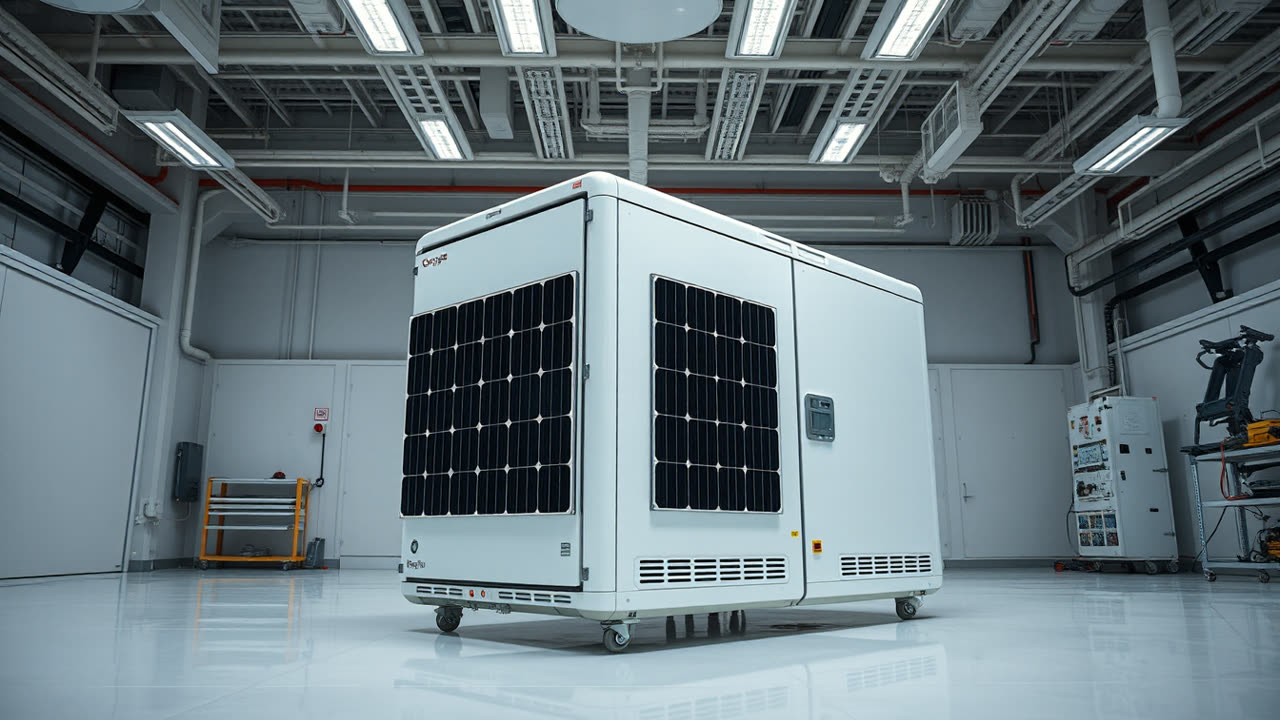
Google's Project Suncatcher, a research initiative exploring the feasibility of orbital AI data centers, is set to launch its first experimental satellite on October 1, 2026, aboard a SpaceX Transporter-18 rideshare mission from Vandenberg Space Force Base. The refrigerator-sized prototype, named MVP (Minimum Viable Product), will carry four of Google's custom Tensor Processing Units (TPUs) and approximately 1,000 watts of solar power to test the chips' performance in the harsh environment of low Earth orbit. This mission represents a critical early step in Google's "moonshot" to determine if AI computing infrastructure can be scaled in space, potentially addressing the escalating power and environmental challenges faced by terrestrial data centers.
The impetus behind Project Suncatcher stems from the unprecedented demand for computational power driven by advanced AI models. Terrestrial data centers are increasingly encountering bottlenecks related to energy supply, cooling requirements, land availability, and local community resistance due to their significant environmental impact. AI workloads are consuming data center resources at an accelerated pace, with the largest clusters today requiring around 100,000 accelerators and consuming tens of megawatts of power. Projections indicate that by 2030, these clusters could demand over one million accelerators and consume around five gigawatts of power. By leveraging near-constant sunlight in low Earth orbit, satellites could generate up to eight times more solar power than on Earth, offering a potential solution to the energy crunch. Furthermore, moving compute infrastructure off-planet could reduce carbon emissions tenfold compared to traditional data centers, mitigating one of AI's most pressing environmental concerns.
This initial mission is not intended to create a commercially operational data center but rather to gather crucial data on how TPUs endure launch forces, radiation, and extreme thermal conditions in a vacuum. Google's Trillium TPUs, the sixth generation of its custom AI accelerators, are designed for improved energy efficiency and peak compute performance, with the latest versions offering 4.7 times the peak compute of their predecessors and operating with 67% greater energy efficiency. The MVP satellite is expected to operate for about a year, answering simple AI queries using Google's Gemini, though it could remain in orbit for up to six years. Engineers are specifically testing specialized cooling systems using heat pipes and radiators, a departure from conventional airflow-based cooling impossible in space. Google had previously indicated that initial tests showed Trillium TPUs could withstand radiation doses exceeding those expected during a five-year space mission.
The concept of orbital data centers, while ambitious, faces formidable engineering and economic hurdles. Radiation can cause "bit flips" and disrupt electronics, while the vacuum of space makes thermal management exceptionally challenging; estimates suggest properly expelling heat from a single orbital data center could require 2.15 million square feet of radiators. The cost of launching hardware into orbit remains a significant barrier, with current costs ranging from $2,500 to $3,000 per kilogram, needing to fall to $200-$500 per kilogram to be financially viable. Moreover, the rapid refresh cycle of computing hardware—typically every three to five years on Earth—presents a major operational and economic challenge for space-based systems, which are difficult and expensive to repair or upgrade. The increasing density of satellites in orbit also raises concerns about space debris and collision risks.
Despite these challenges, Google is not alone in exploring this new frontier. Companies like Starcloud, which has already launched an Nvidia H100 GPU into orbit and is planning an 88,000-satellite constellation, and Axiom Space, which deployed a data processing prototype on the International Space Station in late 2025, are actively developing space-based computing solutions. SpaceX, under Elon Musk, has filed for FCC approval for a constellation of one million data center satellites and envisions gigawatt-scale orbital facilities. The market for orbital data centers is projected to grow significantly, from an estimated $1.77 billion by 2029 to $39.09 billion by 2035.
Looking ahead, Google's longer-term vision for Project Suncatcher involves clusters of satellites carrying dozens of TPUs, connected via high-speed optical links to form a distributed AI computing system. The company plans to launch two more satellites in 2027 to specifically test these high-bandwidth laser communication links. While Google acknowledges that a "usefully operational" system is years away, potentially reaching cost parity with terrestrial data centers by the mid-2030s, this initial test is crucial for understanding the fundamental physics and engineering required. The immediate future will likely see orbital data centers primarily serving specialized "space-native" processing needs, such as reducing downlink bandwidth by processing satellite data directly at the source, rather than competing directly with latency-sensitive terrestrial AI workloads. This pioneering mission by Google underscores a broader industry trend towards diversifying AI infrastructure beyond Earth, driven by the insatiable demand for compute and the urgent need for sustainable, scalable solutions.