Google TV Freeplay Adds 10,000+ On-Demand Titles, Bolstering VOD and Live TV
Google's free, ad-supported streaming service, Freeplay, has transformed into a comprehensive video-on-demand platform with over 10,000 titles and expanded live channels, intensifying competition in the rapidly growing AVOD market.
✨ This content was summarized and interpreted by AI; it may contain errors — please verify accuracy with the original sources. Learn more
Listen to this story
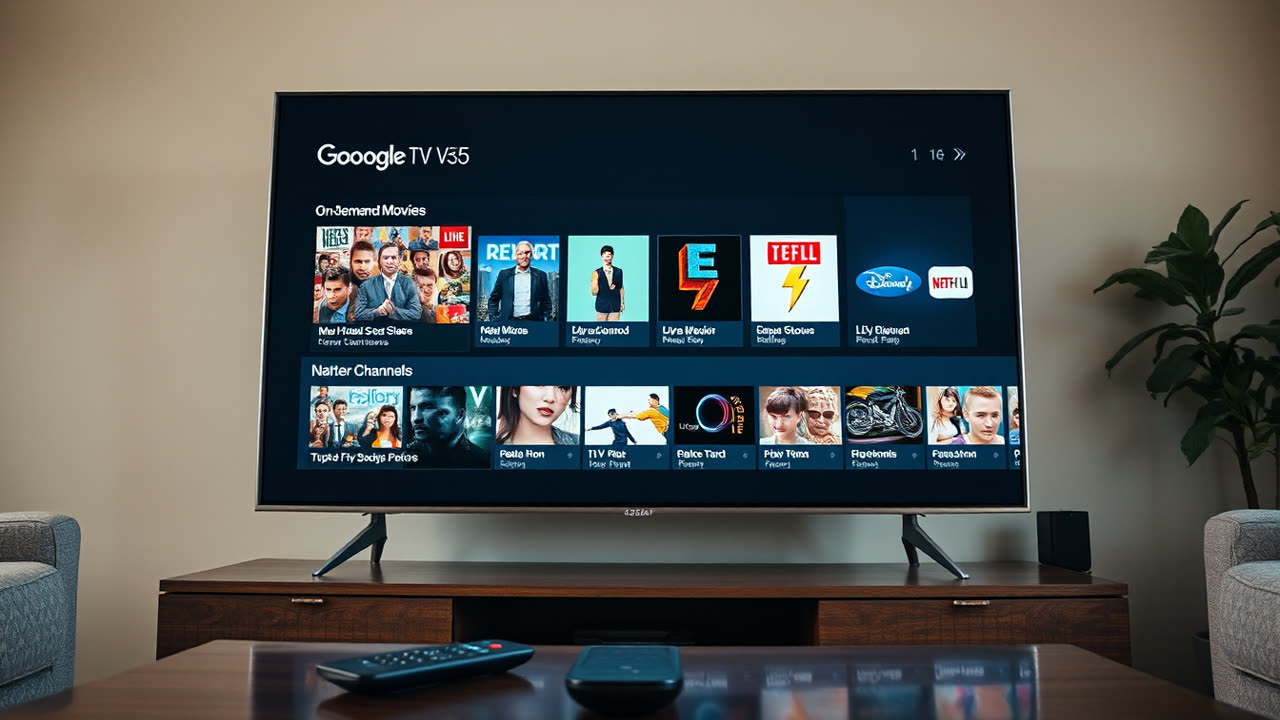
Google TV Freeplay, the company's free, ad-supported streaming service, dramatically expanded its utility on August 11, 2026, by integrating an on-demand library featuring over 10,000 movies and TV shows. This move transforms the platform from a purely linear "always-on" channel experience into a more flexible, user-controlled video-on-demand (VOD) service, directly accessible without any subscription, sign-up, or additional app installation on Google TV devices and compatible hardware, including Walmart's Onn Google TVs. The expanded catalog includes titles from prominent studios such as A24 and Lionsgate, offering acclaimed films like "Lady Bird," as well as popular shows like "Hell's Kitchen" and "Seventeen Again," with Google promising continuous library refreshes throughout the year. Simultaneously, Google also bolstered its live TV offering, increasing the channel count to over 300 free options, adding diverse programming from Bloomberg TV+, Yahoo! Sports Network, and The Martha Stewart Channel.
This strategic pivot is not merely a feature update; it marks a significant evolution in Google's approach to free streaming and carries substantial implications for both users and the competitive landscape of the ad-supported video-on-demand (AVOD) and free ad-supported streaming television (FAST) markets. For users, the introduction of VOD fundamentally shifts the viewing paradigm from passive consumption dictated by a schedule to active selection, mirroring the control users expect from premium subscription services. This newfound flexibility directly addresses the "mercy of the schedule" limitation inherent in traditional linear broadcasting and previous iterations of FAST, making Freeplay a more compelling and sticky destination within the crowded living room. By offering both lean-back channel surfing and intentional VOD playback within a single, integrated interface, Google aims to make Freeplay a default entertainment hub, reducing friction and the need to navigate between multiple apps.
From an industry perspective, Google's enhanced Freeplay VOD offering intensifies the already fierce competition in the rapidly expanding AVOD and FAST sectors. The global AVOD market alone is projected to reach USD 41.92 billion in 2026 and grow to USD 107.49 billion by 2033, demonstrating a robust compound annual growth rate (CAGR) of 14.4%. Another forecast places the market at USD 104.35 billion in 2026, reaching USD 175.01 billion by 2031 with a CAGR of 10.90%. This explosive growth is largely fueled by increasing consumer "subscription fatigue" and economic pressures, driving a strong preference for free, ad-supported content. Indeed, by 2026, over 80% of US subscription streaming viewers are expected to have at least one ad-supported plan, underscoring the mainstream acceptance of this model. Google's move positions it to capture a larger slice of this burgeoning advertising revenue, with standalone AVOD platforms projected to lead the market, accounting for approximately 36.0% of market share in 2026.
While Google TV Freeplay's initial foray into free, ad-supported live channels began in 2023, with a rebrand to Freeplay in late 2024, the addition of VOD represents a crucial maturation. However, in terms of VOD library size, Freeplay's 10,000-plus titles are still "relatively small" when compared to established rivals like Tubi, which boasts over 300,000 movies and TV episodes in 2026, including nearly 400 Tubi Originals. Similarly, The Roku Channel, a significant player with a 2.9% share of total TV/streaming viewing in February 2026, offers tens of thousands of on-demand movies and episodes alongside its over 500 live channels. Unlike Tubi and The Roku Channel, which have invested in original content, Google TV Freeplay currently lacks its own exclusive productions, a key differentiator for competitors. Where Freeplay currently holds an advantage is in its sheer volume of live channels, surpassing Tubi's reported 260. The seamless, app-free integration of Freeplay directly into the Google TV operating system also provides a powerful distribution advantage, leveraging Google's ecosystem dominance.
Looking ahead, the trajectory for Google TV Freeplay is clear: continued expansion of its VOD library will be paramount to close the content gap with rivals, potentially through more aggressive licensing deals. While Google has not announced original content plans for Freeplay, the industry trend suggests that proprietary programming can be a significant draw, and it would be a logical next step to foster platform stickiness and differentiate. The broader FAST market is no longer a disruptor but the "new normal," with VOD capabilities becoming a standard expectation rather than a unique selling proposition. Expect further emphasis on personalization, driven by Google's formidable data and AI capabilities, to enhance content discovery and keep users engaged within the Freeplay ecosystem. As the "battle for the living room" increasingly centers on ad-supported content, Google, alongside Amazon and Netflix, is projected to dominate connected TV (CTV) advertising by 2030, with Google's YouTube platform expected to command a 26% share. This strategic VOD expansion positions Google TV Freeplay as a formidable contender, set to capitalize on the sustained shift towards free, flexible, and ad-supported streaming experiences.