Google Vids to Feature Personalized AI Avatars and Gemini Omni for Video Creation
Google Vids is integrating personalized AI avatars and Gemini Omni-powered tools, allowing users to star in their own AI-generated videos from simple prompts and reference images, democratizing high-quality video production.
✨ This content was summarized and interpreted by AI; it may contain errors — please verify accuracy with the original sources. Learn more
Listen to this story
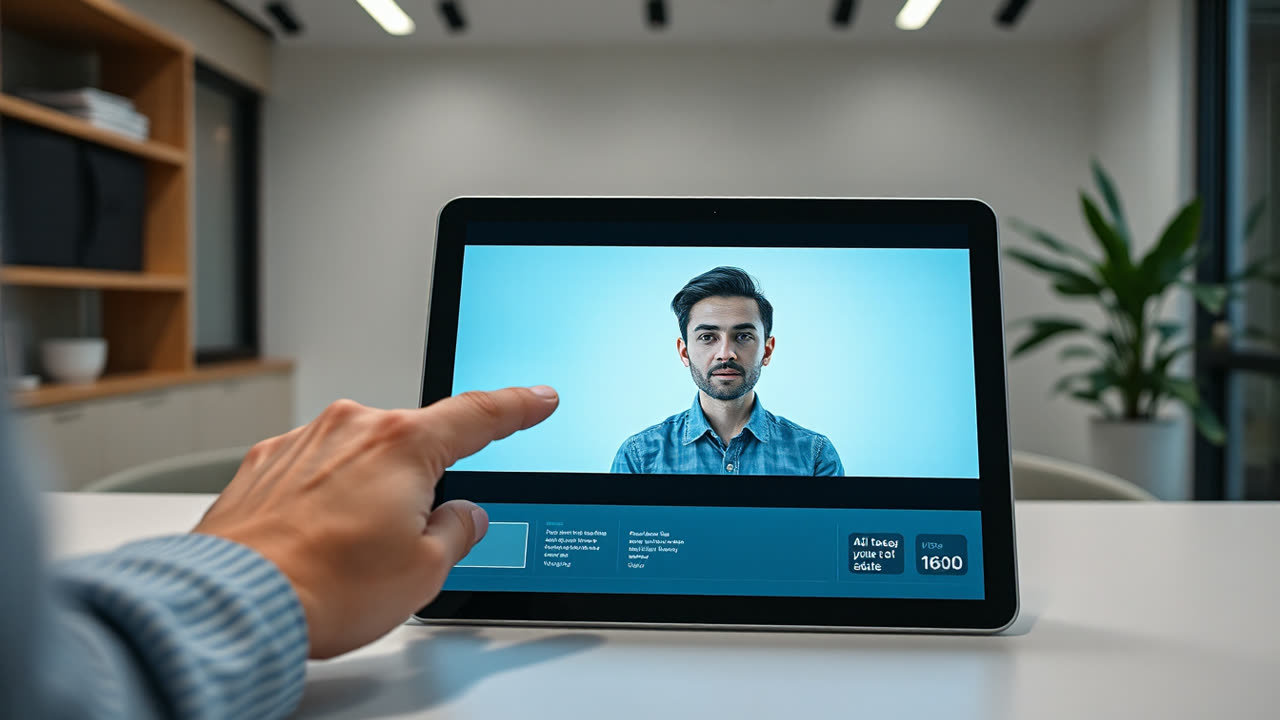
Google Vids is set to revolutionize video creation by integrating personalized AI avatars, allowing users to star in their own AI-generated videos, a significant leap leveraging Gemini Omni-powered tools for sophisticated video generation and editing from simple prompts and reference images. This new functionality permits users to create a digital likeness by uploading a selfie and a short voice recording, subsequently directing their avatar to deliver scripts through typed commands, eliminating the need for traditional camera setups or recording sessions. The personalized avatars, alongside Gemini Omni, are accessible to Google AI Pro and Ultra subscribers, as well as Google Workspace business customers, with Gemini Omni Flash also rolling out to YouTube Shorts and the YouTube Create app at no cost for wider adoption.
This development profoundly democratizes video production, making high-quality, personalized content creation accessible to a broader audience beyond professional videographers. For individual users, it unlocks unprecedented avenues for self-expression and communication, enabling quick, camera-free video updates, personalized shout-outs, or even engaging storytelling without the complexities of production. The ability to generate and edit videos through natural language instructions, a core feature of Gemini Omni's "conversational editing," lowers the technical barrier to entry dramatically, allowing creators to focus on narrative and message rather than intricate software. This capability is particularly impactful for small businesses and educators, who can now produce professional-grade marketing materials, training videos, and engaging educational content at scale and speed previously unattainable.
Industrially, Google Vids' enhanced capabilities represent a significant disruption, shifting the paradigm from traditional, labor-intensive video workflows to AI-augmented production. Gemini Omni, unveiled at Google I/O 2026, is a multimodal model engineered to generate and edit video from any combination of text, images, audio, and existing video inputs, distinguishing itself through "world knowledge grounding" that ensures factual accuracy and contextual relevance in its outputs. This advanced AI can perform complex tasks like trimming, recutting, compositing elements (e.g., replacing backgrounds), and remixing footage with consistent characters and scene context, all guided by natural language prompts. The market for AI video generators is projected to reach $3.44 billion by 2033, underscoring the immense potential and ongoing evolution in this space. While AI handles the volume and technical execution, human creators are augmented, allowing them to concentrate on strategic direction, emotional intelligence, and creative oversight, rather than being replaced entirely.
Google Vids itself has evolved considerably since its April 2024 launch as an AI-powered video creation app for work within Google Workspace. Initially, it focused on AI-assisted storyboarding, script generation, and voiceovers, primarily assembling content from prompts and existing assets like Google Docs and Slides. By April 2026, it had integrated Veo 3.1, Google DeepMind's video generation model, allowing all Google account holders 10 free 720p video clips per month, with paid tiers offering higher limits and custom music generation via Lyria 3. This progression highlights Google's strategic intent to build a comprehensive AI-native video creation stack.
In the competitive landscape, Google Vids with Gemini Omni and personalized avatars enters a burgeoning market. Rivals like HeyGen and Synthesia have already established strong footholds, specializing in realistic AI avatars for corporate training, marketing, and localization, with HeyGen supporting over 175 languages and offering a "Video Agent" for prompt-to-video automation. Synthesia is particularly noted for its enterprise focus, compliance features, and strong full-body avatar performance. Google's Veo model is recognized for its cinematic quality and strong adherence to prompts, while Gemini Omni's unique strength lies in its multimodal input processing and "world knowledge grounding," offering a more reasoning-driven approach to video creation compared to pure video synthesis models. This positions Google to leverage its vast information ecosystem to produce contextually accurate and factually grounded video content, a potential differentiator in a market increasingly saturated with AI-generated visuals.
However, the proliferation of personalized AI avatars and highly capable video generation tools necessitates a critical examination of ethical implications. Concerns around deepfakes, the spread of misinformation, intellectual property rights, and algorithmic bias in training data are paramount. Google is proactively addressing these challenges by incorporating imperceptible SynthID digital watermarks into every AI-generated clip from Vids, enabling users to verify content authenticity and promoting transparency. The ethical responsibility for AI-generated content remains a complex area, prompting discussions about accountability among technology providers, users, and publishers.
Looking ahead, the trajectory of AI in content creation points towards increasingly sophisticated multimodal systems capable of generating coordinated text, images, and video simultaneously, creating cohesive content packages. Adaptive content experiences, where videos dynamically reshape themselves based on real-time user engagement, are also on the horizon. The imperative for clear industry standards regarding disclosure and authenticity will intensify, with forward-thinking brands already developing their own ethical frameworks. As AI video generation continues its rapid ascent, the true value will lie not merely in the technology's ability to create, but in its responsible application, fostering a collaborative ecosystem where human creativity and ethical oversight remain central to the evolving landscape of digital storytelling.