Groundbreaking Motorless Solid-State Cooling System Converts Waste Heat to Refrigeration
German and Japanese researchers have developed a novel heat-driven elastocaloric cooler using shape-memory alloy films to directly transform computing waste heat into cooling, promising a revolution in data center energy efficiency.
✨ This content was summarized and interpreted by AI; it may contain errors — please verify accuracy with the original sources. Learn more
Listen to this story
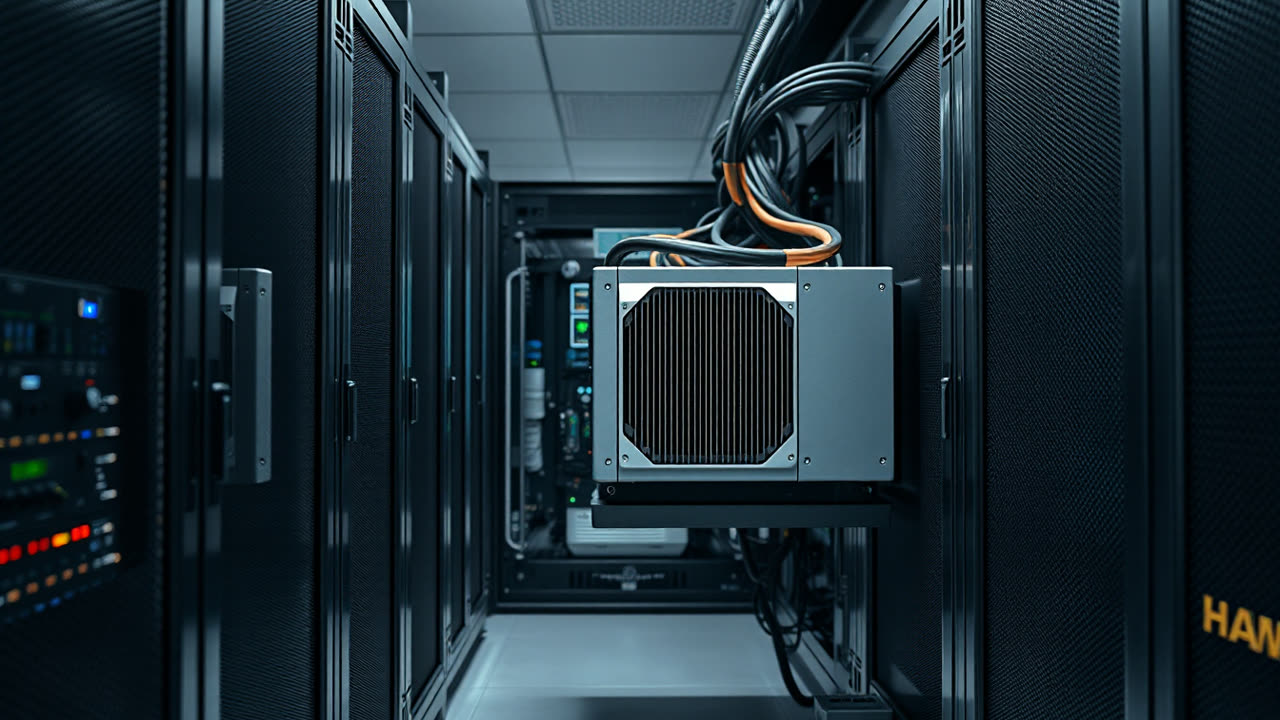
A groundbreaking motorless solid-state cooling system, developed by a collaboration of German and Japanese researchers, leverages shape-memory alloy films to convert waste heat directly into refrigeration, marking a significant leap toward sustainable thermal management in high-density computing environments. This innovative "heat-driven elastocaloric cooler" utilizes the elastocaloric effect in shape-memory alloys, such as nickel-titanium (NiTi), to absorb heat when mechanically stressed and release it when the stress is removed, effectively creating a cooling cycle without the need for traditional compressors or refrigerants. The core mechanism hinges on the material's ability to undergo a phase transformation when subjected to mechanical strain, which in turn causes a temperature change.
The significance of this development cannot be overstated, particularly for data centers, which are projected to consume 8% of global electricity by 2030, with cooling accounting for a substantial portion of that energy expenditure. Current data center cooling solutions, predominantly relying on energy-intensive vapor compression refrigeration or large-scale air conditioning systems, struggle to efficiently dissipate the immense heat generated by modern processors and GPUs. The German-Japanese team's invention offers a direct pathway to recycle this otherwise wasted thermal energy, potentially transforming data center exhaust into usable cooling capacity. This could lead to a dramatic reduction in operational costs, lower carbon footprints, and mitigate the environmental impact associated with conventional refrigerants, many of which are potent greenhouse gases. For individual users, while direct application in consumer electronics is further off, the underlying principle could eventually lead to vastly more efficient and silent cooling solutions for high-performance devices, extending battery life and reducing form factors by eliminating bulky fans.
Traditional cooling systems, whether vapor compression or thermoelectric coolers, often involve moving parts, refrigerants, or significant electrical input for their cooling cycles. Vapor compression, the most common refrigeration technology, relies on the compression and expansion of a refrigerant gas, requiring a compressor and evaporator, which are both energy-intensive and can be noisy. Thermoelectric (Peltier) coolers, while solid-state, are generally inefficient for large-scale applications, often requiring more power to operate than the cooling they provide. In contrast, the elastocaloric effect, specifically in materials like NiTi alloys, offers a high cooling power density and efficiency. When a shape-memory alloy is mechanically deformed, its internal structure changes, absorbing heat from its surroundings. Releasing the deformation causes it to revert, expelling the heat. The novel aspect here is the *heat-driven* nature, where waste heat provides the energy for the mechanical deformation, creating a self-sustaining or even self-amplifying cooling loop. This stands in stark contrast to prior elastocaloric research that typically required external mechanical work input.
Looking ahead, the commercialization of this motorless solid-state cooler faces several hurdles, primarily related to scaling the technology and optimizing material performance. While the proof-of-concept is compelling, transitioning from laboratory demonstrations using thin films to robust, large-scale cooling units suitable for industrial data centers requires significant engineering. Researchers will need to develop efficient heat exchangers that can seamlessly integrate these shape-memory alloy films into existing thermal management infrastructures. Durability of the shape-memory alloys under continuous thermal cycling and mechanical stress is another critical factor for long-term reliability. Furthermore, manufacturing costs for these specialized alloys and the intricate mechanical systems required to induce the elastocaloric effect at scale will need to be competitive with established cooling technologies.
Despite these challenges, the long-term outlook for heat-driven elastocaloric cooling is exceptionally promising. The ability to autonomously convert waste heat into cooling represents a paradigm shift, not just for data centers but potentially for a wide array of applications, including industrial processes, automotive climate control, and even domestic refrigeration. As computing power continues to escalate, so too will the thermal challenges. Technologies like this, which offer energy recycling and silent, refrigerant-free operation, will become indispensable. Future iterations could see these systems integrated directly into processor packages or server racks, creating localized, highly efficient cooling zones that dynamically respond to thermal loads. This innovation could very well define the next generation of thermal management solutions, pushing the industry towards a more energy-efficient and environmentally responsible future.