Hacker Creates $5 ESP32 Ad-Blocking Dongle with Half a Million Domains
A clever hacker has engineered a $5 ad-blocking dongle, leveraging an ESP32 microcontroller to store a staggering 537,000 blocked domains within just 4MB of flash memory, resolving lookups in 10 milliseconds.
✨ This content was summarized and interpreted by AI; it may contain errors — please verify accuracy with the original sources. Learn more
Listen to this story
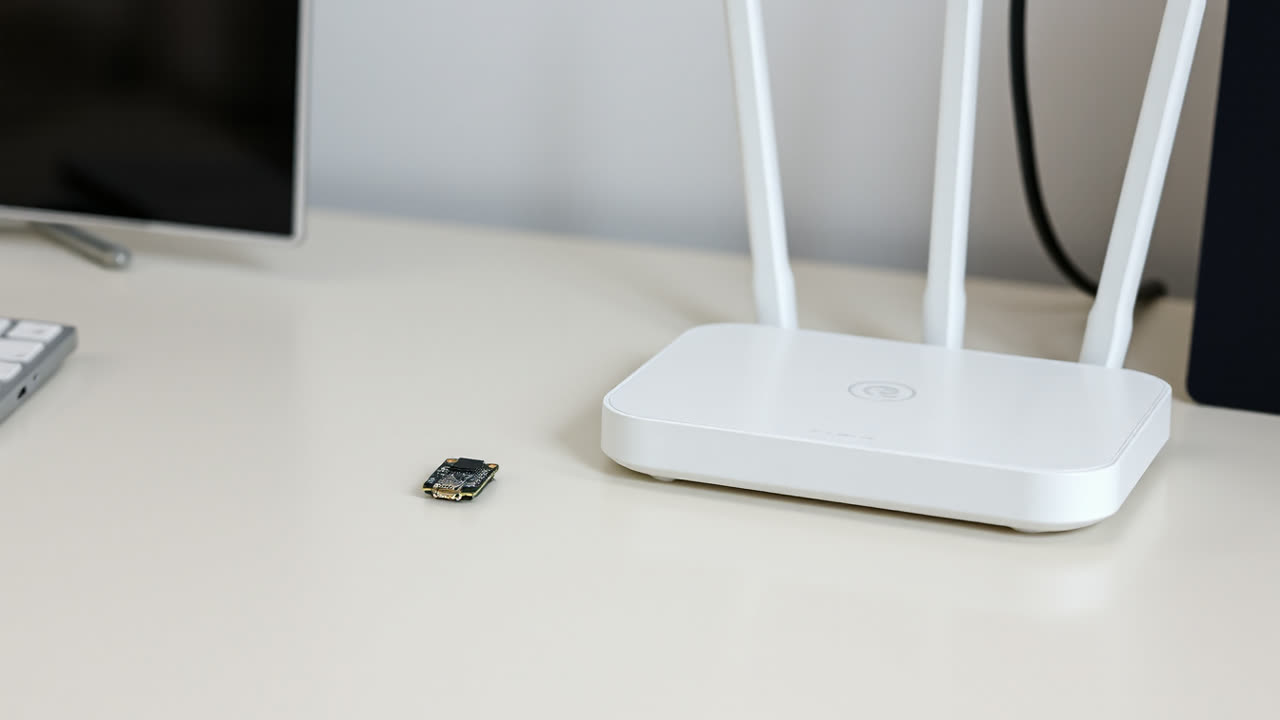
A clever hacker has engineered a $5 ad-blocking dongle, leveraging an ESP32 microcontroller to store a staggering 537,000 blocked domains within just 4MB of flash memory, while its firmware operates on a minuscule 50KB of RAM and resolves blocked lookups in a mere 10 milliseconds. This innovation, detailed by Tom's Hardware, represents a significant leap in resource-efficient ad-blocking technology, far surpassing conventional solutions in terms of cost and hardware footprint. The core of this achievement lies in a sophisticated hashing trick, which efficiently compresses the extensive domain list, allowing for such a high density of blocked entries on extremely limited hardware.
This development fundamentally alters the landscape of personal ad-blocking and network security, offering an unprecedented level of accessibility and affordability. For end-users, the sub-$10 price point for a dedicated hardware ad-blocker makes robust network-wide content filtering available to virtually anyone, circumventing the need for more expensive dedicated hardware like a Raspberry Pi-based Pi-hole, which typically costs upwards of $35-$50 for the board alone, plus accessories. The simplicity of a plug-and-play dongle, requiring minimal configuration beyond initial setup, democratizes advanced network protection. Furthermore, by running at the DNS level, this ESP32 solution blocks ads and trackers across all devices connected to the network, including smart TVs, IoT devices, and gaming consoles, which often lack browser extension support or robust built-in privacy controls. This ensures a more comprehensive and private browsing experience, reducing data consumption and potentially improving network speeds by preventing unwanted connections to advertising servers. The local processing of DNS requests also enhances privacy, as DNS queries are not sent to third-party ad-blocking DNS services, keeping user activity more confined to their local network.
Historically, ad-blocking solutions have ranged from browser extensions, which are limited to specific browsers and devices, to network-level solutions like Pi-hole, which require a dedicated single-board computer. Pi-hole, while highly effective and popular, typically consumes more power and requires a larger hardware footprint, often utilizing several hundred megabytes of RAM and gigabytes of storage for its operating system and blocklists. For instance, a basic Pi-hole installation might use 100-200MB of RAM and store blocklists that, while extensive, might not reach half a million domains without significant resource allocation. Commercial hardware ad-blockers, such as those integrated into some routers or dedicated network appliances, often come at a much higher price point, ranging from tens to hundreds of dollars, and may not offer the same level of transparency or customizability as open-source solutions. The ESP32 dongle, by contrast, demonstrates a paradigm shift, proving that enterprise-grade blocklist capacity can be achieved with ultra-low-cost, low-power hardware. Its 10-millisecond lookup time is comparable to, if not faster than, many DNS resolvers, ensuring that ad-blocking does not introduce noticeable latency into network performance. The "clever hashing trick" itself is pivotal; it likely involves a highly optimized Bloom filter or a similar probabilistic data structure, which allows for extremely compact representation of large sets of data at the cost of a small false positive rate, though for domain blocking, this is often an acceptable trade-off given the vast memory savings.
Looking ahead, this project signals a significant disruption in both the ad-blocking market and the broader embedded systems landscape. We can anticipate a proliferation of similar ultra-low-cost, purpose-built network devices. The open-source nature of many ESP32 projects suggests that this specific implementation could be widely adopted, refined, and potentially commercialized by smaller hardware ventures, offering direct competition to established players. Furthermore, the efficiency demonstrated here could inspire innovation in other areas requiring compact, high-performance data lookups on constrained hardware, from IoT security to specialized network gateways. The success of such a minimal device could also pressure advertisers and publishers to reconsider their reliance on intrusive advertising models, as the barrier to entry for effective ad-blocking continues to diminish. While the immediate impact is on consumer privacy and ad-free browsing, the underlying methodology — achieving immense functionality with fractional resources — holds profound implications for how we design and deploy edge computing and network infrastructure in an increasingly connected world. This project is not merely an ad-blocker; it is a proof-of-concept for highly efficient, specialized network appliances that can be deployed at unprecedented scale and cost-effectiveness.