Half-Life 2 Now Fully Playable in Web Browser at 100+ FPS
Valve's classic Half-Life 2 can now be played directly in a web browser at over 100 frames per second, complete with save states and console support, thanks to an ingenious unofficial port.
✨ This content was summarized and interpreted by AI; it may contain errors — please verify accuracy with the original sources. Learn more
Listen to this story
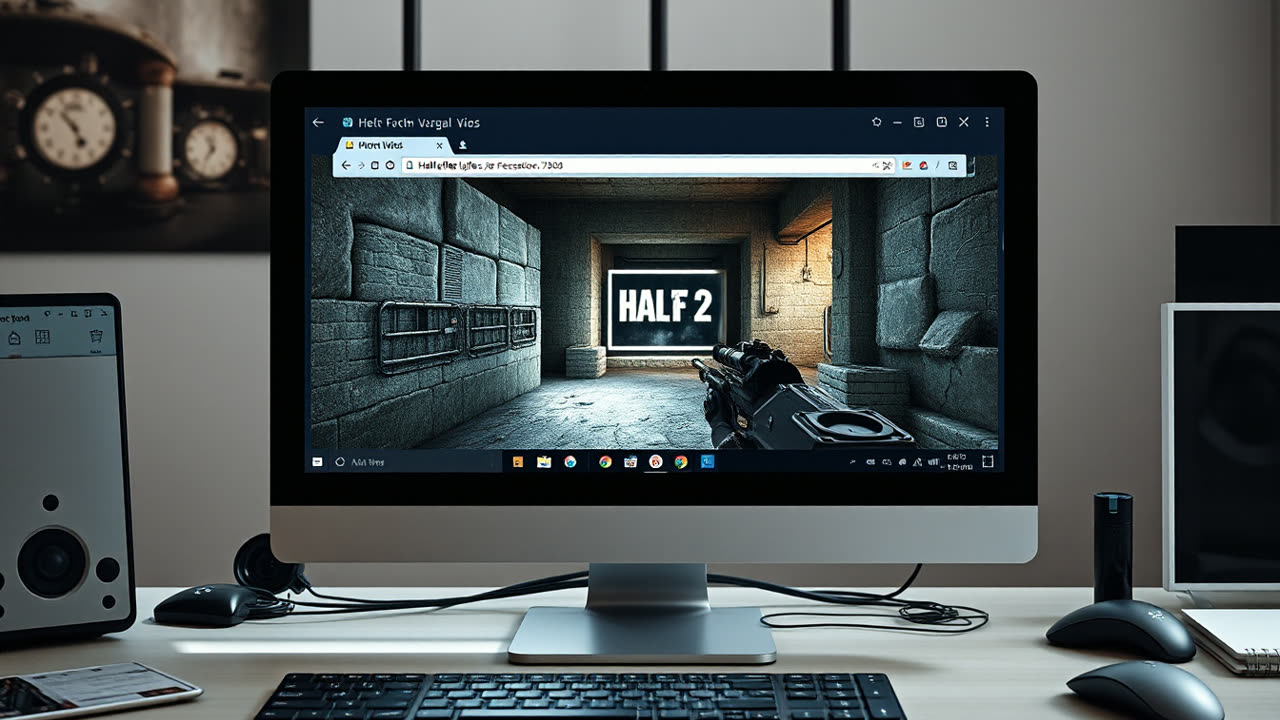
Valve's iconic 2004 masterpiece, Half-Life 2, is now fully playable directly within a web browser, delivering over 100 frames per second alongside features like save states and full Source console support. This ingenious, unofficial port recreates the game's entire campaign, including its episodic DLCs, without requiring any downloads or installations.
The impressive feat was accomplished in just three months by developers Slqnt and 98006, with Slqnt noted as a high school student. Leveraging WebGL 2 and WebAssembly, the port runs the game natively in the browser, bypassing cloud streaming to directly engage the user's GPU for graphics-intensive tasks. Save states are managed seamlessly within the browser's cache or IndexedDB, allowing players to pick up their progress as if the game were natively installed. While largely functional, some minor graphical glitches, such as missing facial animations, have been observed, occasionally giving characters a "zombie" appearance.
This development marks a significant milestone for browser-based gaming and game preservation. It demonstrates the remarkable power of modern web technologies to host complex, graphically rich experiences, making a historically important title accessible to a broader audience across Windows, macOS, and Linux without the need for a Steam account or dedicated software. The project underscores the blurring lines between traditional native applications and web-based experiences, pointing towards a future where high-fidelity gaming is increasingly platform-agnostic. While its unofficial nature means a potential DMCA takedown from Valve remains a possibility, the company's generally community-friendly stance offers hope for its continued availability. As WebGL continues to evolve and the successor WebGPU emerges, the web's role as a robust gaming platform is only set to expand.