Harvard Law Dropout Raises $6M for Blue Voice, an AI for Police Officers
A Harvard Law dropout secured $6 million in seed funding for Blue Voice, an AI platform poised to revolutionize policing by providing officers with real-time, department-specific legal guidance from internal protocols, a critical advancement that carves out a new niche in GovTech but must navigate significant ethical and integration hurdles.
✨ This content was summarized and interpreted by AI; it may contain errors — please verify accuracy with the original sources. Learn more
Listen to this story
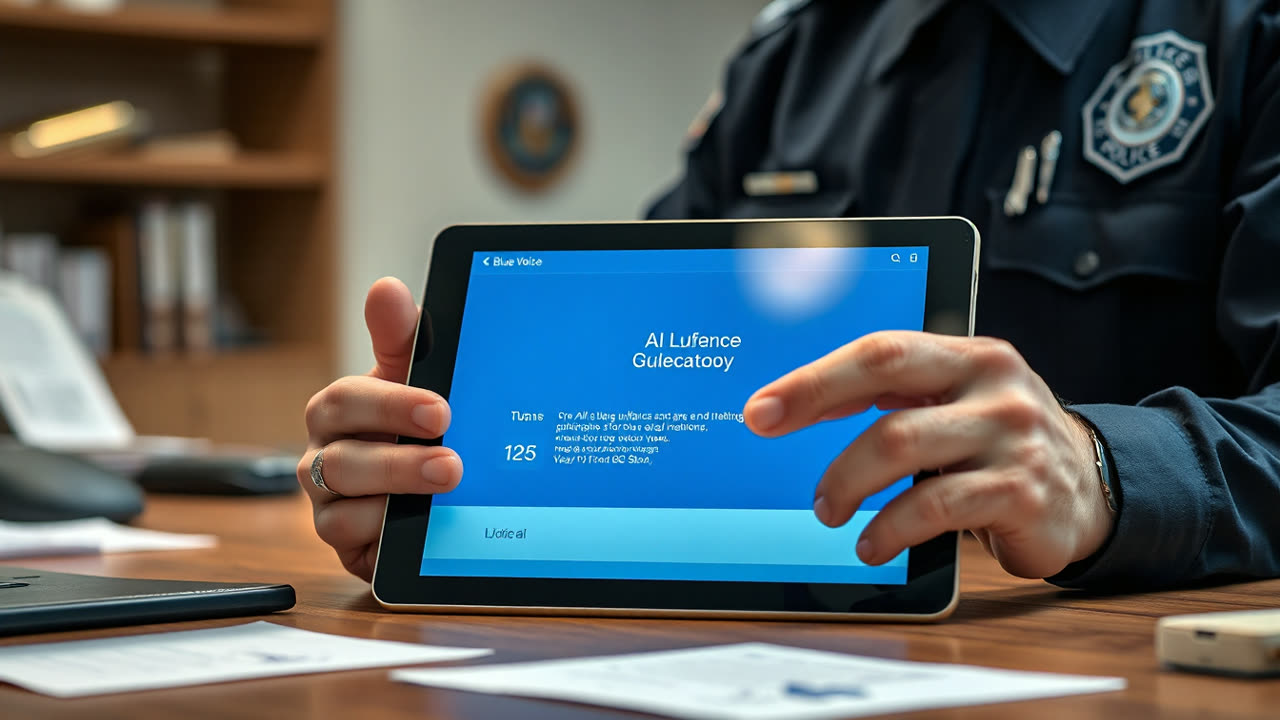
A Harvard Law dropout has successfully raised $6 million for Blue Voice, an AI platform designed to function as a "Harvey for police officers," leveraging department-specific laws and internal protocols inaccessible to general-purpose AI tools. This significant seed funding round, announced on August 31, 2026, positions Blue Voice to revolutionize how law enforcement officers access and interpret the complex web of regulations governing their daily operations. Unlike broad language models such as OpenAI's ChatGPT or Google's Gemini, which are trained on publicly available internet data, Blue Voice's core value proposition lies in its proprietary access to sensitive, non-public information, including local ordinances, departmental guidelines, and specific operational procedures.
The immediate impact on users—individual police officers—could be transformative. Officers frequently confront situations requiring instantaneous decisions under immense pressure, often necessitating a quick recall of obscure regulations or departmental policies. Blue Voice aims to provide real-time, accurate guidance, potentially reducing errors, ensuring compliance, and standardizing responses across a force. For instance, an officer responding to a specific type of incident could query Blue Voice for the exact protocol on evidence collection, use-of-force escalation, or de-escalation tactics pertinent to their jurisdiction, receiving an immediate, tailored answer that accounts for nuances not found in public legal databases. This could lead to a demonstrable reduction in procedural violations and an increase in public trust through more consistent and legally sound policing. Furthermore, Blue Voice could serve as an invaluable training tool, allowing new recruits to simulate scenarios and receive instant feedback based on their department's exact standards before ever hitting the streets.
The broader industry implications are substantial, carving out a new, highly specialized niche within the burgeoning GovTech and legal AI sectors. While AI has made inroads into general legal research with tools like Casetext and LexisNexis AI, and platforms like Harvey AI have successfully assisted corporate lawyers by processing vast amounts of legal documents, Blue Voice targets a critical, underserved segment: frontline government employees operating under unique, localized, and often confidential regulatory frameworks. This differentiation from general AI tools, which struggle with the "dark data" of internal documents and highly specific directives, is Blue Voice's strategic advantage. Its success could spur the development of similar specialized AI platforms for other government agencies, such as fire departments, public health officials, or social services, each requiring bespoke training on their unique operational handbooks and legal mandates. The market for AI in public safety is projected to reach over $10 billion by 2028, underscoring the significant financial opportunity for such targeted solutions.
However, the path forward for Blue Voice is not without its challenges. The integration of AI into police operations raises significant ethical and practical considerations. Algorithmic bias, a perennial concern in AI, could manifest if the training data—departmental policies themselves—contain inherent biases or outdated practices. Ensuring the integrity and neutrality of the information provided by Blue Voice will be paramount, requiring rigorous auditing and continuous updates. Data security and privacy will also be critical, given the sensitive nature of internal police protocols and the potential for misuse if the system is compromised. Moreover, the cultural shift required for widespread adoption within often tradition-bound law enforcement agencies could be considerable, necessitating robust training programs and clear demonstrations of tangible benefits to overcome skepticism. The precise accuracy of the AI's interpretations will also face intense scrutiny, as any misstep could have severe real-world consequences, demanding an extremely high bar for reliability and explainability.
Looking ahead, Blue Voice's evolution will likely involve expanding its capabilities beyond mere information retrieval. Future iterations could incorporate predictive analytics, assisting departments in identifying patterns in calls for service, optimizing resource allocation, or even flagging potential areas for policy reform based on aggregated data from officer interactions. The potential to integrate with existing police technology, such as body-worn cameras or dispatch systems, could offer real-time contextual advice, further enhancing its utility. As the company scales, establishing clear governance frameworks for AI use in policing will be crucial, potentially involving independent oversight bodies to ensure transparency and accountability. Blue Voice represents a significant leap towards more informed and consistent policing, but its true impact will hinge on its ability to navigate these complex technical, ethical, and sociological landscapes while consistently delivering on its promise of accurate, department-specific guidance.