Hohem Eyepic Challenges Gimbal Norms with Detachable Action Camera Module
Hohem's new Eyepic camera introduces a unique modular design, allowing its stabilized camera to detach from the gimbal handle for dual-purpose use as a standalone action camera, directly challenging market leaders.
✨ This content was summarized and interpreted by AI; it may contain errors — please verify accuracy with the original sources. Learn more
Listen to this story
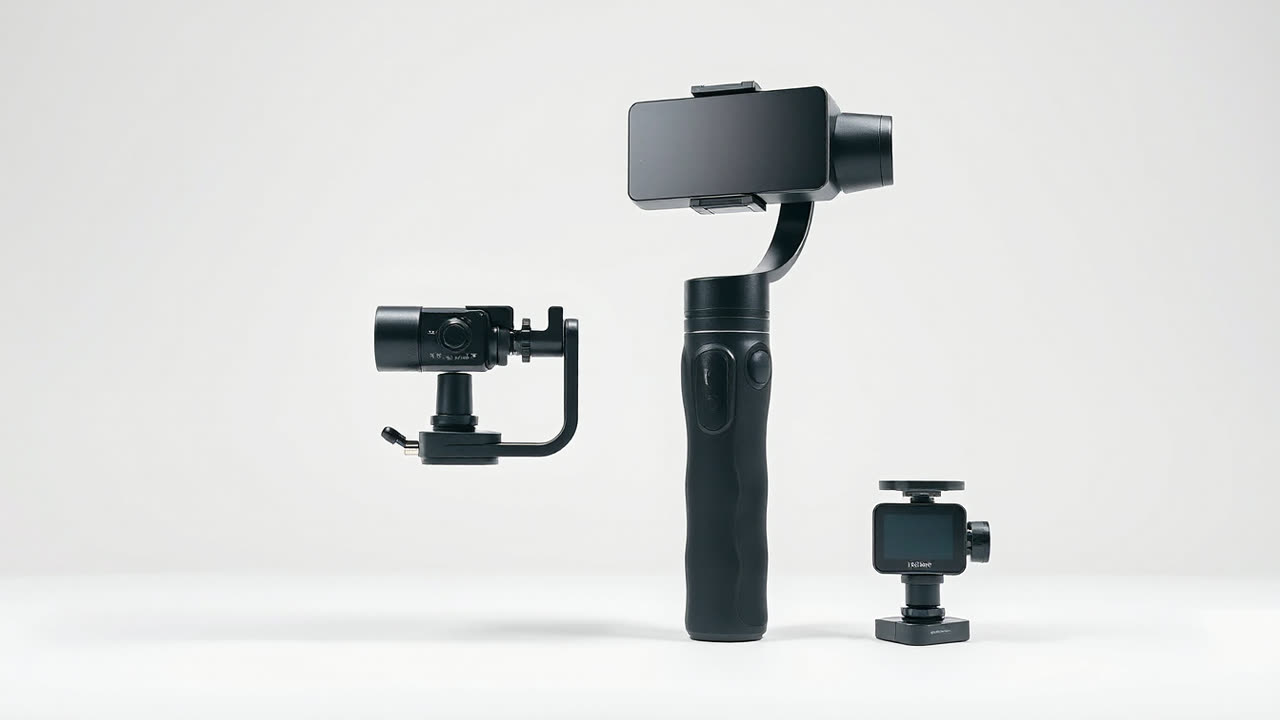
Hohem's Eyepic handheld stabilized camera introduces a significant departure from traditional integrated gimbal designs, featuring a unique detachable action camera module that aims to redefine versatility in portable videography. Unlike the fully integrated units from market leaders like DJI and Insta360, the Eyepic allows its core camera to be independently removed from the motorized gimbal handle, offering a dual-purpose device that functions as both a stabilized camera and a standalone, miniature action camera.
This modular approach directly challenges the established paradigms set by devices such as the DJI Osmo Pocket 3 and the Insta360 GO 3. While the Osmo Pocket 3, released in late 2023, excels with its 1-inch CMOS sensor, 4K/120fps recording, and a rotatable 2-inch OLED touchscreen, its camera remains permanently affixed to the gimbal handle. Similarly, the Insta360 GO 3, known for its tiny form factor and magnetic mounting, requires its Action Pod accessory for screen control and extended battery life, but the camera itself lacks the motorized stabilization of a dedicated gimbal when detached. Hohem's Eyepic, conversely, integrates a robust, two-axis mechanical gimbal within the detachable camera module itself, ensuring a degree of stabilization even when separated from the primary three-axis handle. When combined, the system delivers full three-axis stabilization, offering creators unparalleled flexibility to switch between a traditional stabilized shot and a compact, mountable action camera with inherent stability.
The "why it matters" for users is profound. This design addresses a critical pain point: the need for multiple devices for different shooting scenarios. A videographer can utilize the full Eyepic unit for smooth, cinematic tracking shots, then instantly detach the camera module to mount it on a helmet, drone, or pet for dynamic, point-of-view action footage without losing crucial in-camera stabilization. This eliminates the bulk and expense of carrying both a dedicated gimbal camera and a separate action camera, streamlining workflows for vloggers, travelers, and content creators. The Eyepic’s ability to function independently also opens up new creative avenues, allowing for discreet placement or unique angles that a larger, integrated gimbal camera simply cannot achieve. For instance, the detachable camera, reportedly weighing around 60 grams, offers a level of portability akin to the Insta360 GO 3 but with superior built-in stabilization, making it ideal for quick snaps or hidden camera perspectives.
From an industry perspective, Hohem's Eyepic represents a significant push towards modularity and convergence in the crowded portable camera market. For years, DJI has dominated the high-end consumer drone and gimbal space, while Insta360 has carved out a niche with innovative action cameras and 360-degree capture. Hohem, traditionally known for its smartphone gimbals, is now directly competing in the standalone camera segment by introducing a feature that neither of the established giants currently offers in this specific form factor. This could force competitors to innovate further, potentially leading to a new generation of modular camera systems that prioritize adaptability. While current specifications for the Eyepic detail 4K video recording, a 1/2.3-inch sensor, and a 120-degree field of view, its true disruptive potential lies not in raw specs, which may trail the Osmo Pocket 3's larger sensor, but in its architectural flexibility. The Eyepic's reported battery life of up to 150 minutes for the full unit and 60 minutes for the detached camera offers practical usage times for most casual and semi-professional applications.
Looking ahead, the success of the Eyepic will likely hinge on its robust software ecosystem, consistent firmware updates, and competitive pricing. If Hohem can deliver a seamless user experience that capitalizes on the modularity without sacrificing image quality or stabilization performance, it could carve out a substantial niche. We might see future iterations with larger sensors, improved low-light performance, and more advanced AI tracking features. Furthermore, the industry could witness other players exploring similar modular designs, perhaps with interchangeable lenses for the detached camera modules or even specialized modules for different shooting environments (e.g., waterproof, low-light optimized). The Eyepic's launch signals a nascent trend where camera hardware is no longer a monolithic block but a versatile toolkit, empowering creators with unprecedented adaptability and challenging the status quo of integrated camera systems.