Honda Forges Alliance with QuantumScape to Accelerate Solid-State Battery Revolution
Honda has partnered with QuantumScape in a multi-year joint research agreement to advance solid-state lithium-metal battery technology, marking a pivotal step in its electrification strategy and a significant shift after recent EV launch adjustments.
✨ This content was summarized and interpreted by AI; it may contain errors — please verify accuracy with the original sources. Learn more
Listen to this story
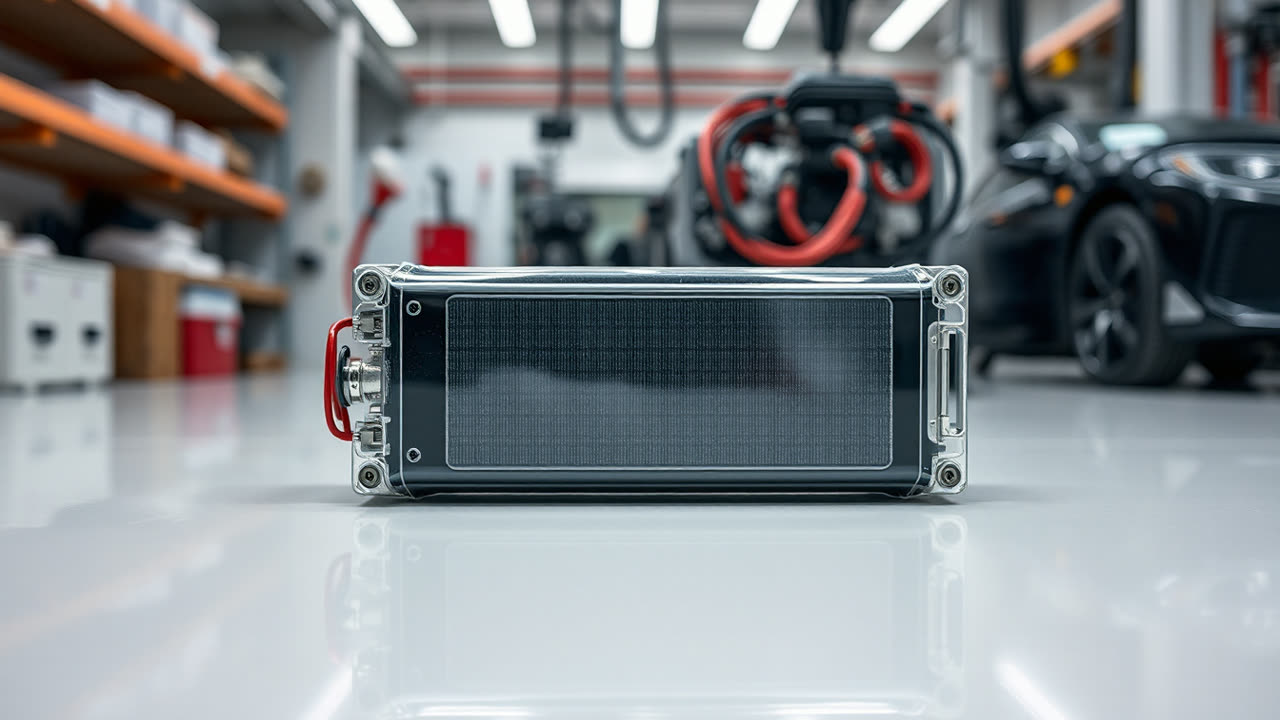
Honda has taken a pivotal step in its electrification strategy, forging a multi-year joint research agreement with American battery development firm QuantumScape in June 2026 to advance solid-state lithium-metal battery technology. This partnership signals a significant shift in Honda's approach, prioritizing next-generation battery development, particularly after the automaker recently scaled back its immediate EV launch plans in North America, including the Honda 0 SUV, Honda 0 Saloon, and Acura RSX, which contributed to its first annual financial loss in nearly 75 years. The collaboration aims to leverage QuantumScape's expertise in developing anode-free, lithium-metal QSE-5 solid-state battery cells, which were recently showcased in a Ducati V21L motorcycle prototype. Honda R&D's Research Center of Excellence COO, Atsushi Ogawa, noted that QuantumScape's solid-state platform demonstrated "compelling and unique advantages" during a technical study, indicating potential for greater range, faster charging, lower costs, and enhanced safety across various applications, including automotive, motorcycles, power equipment, and even energy storage.
This strategic alliance underscores Honda's commitment to achieving carbon neutrality by 2050, with a goal of 100% EV sales by 2040. The move is critical for Honda, which has been producing prototype solid-state batteries at its Sakura City facility in Japan since January 2025, with a substantial investment of approximately $287 million from 2023 to 2027 dedicated to this technology. This demonstration line, spanning 27,400 square meters, is designed to verify mass production technologies and costs, emphasizing Honda's in-house manufacturing capabilities and process optimization. While Honda's 0 Series EVs, adhering to a "Thin, Light, and Wise" philosophy, are still slated for a 2026 debut with models like the Saloon and Space-Hub concepts, these initial offerings are expected to utilize existing lithium-ion battery technology, with solid-state batteries slated for later integration in the latter half of the decade, likely by 2028.
The impact on users and the industry could be transformative. Solid-state batteries promise a significant leap over conventional lithium-ion counterparts by replacing flammable liquid electrolytes with solid materials, offering higher energy density, faster charging speeds, improved safety, and longer lifespans. For consumers, this translates to electric vehicles with ranges potentially exceeding 700 miles and charging times from 10% to 80% in under 15 minutes, effectively mitigating range anxiety and making EVs more practical for daily use. The elimination of liquid electrolytes also reduces fire risks and allows for more compact and lighter battery packs, which can enhance vehicle design and performance. For the industry, Honda's partnership with QuantumScape, a company also collaborating with Volkswagen's PowerCo SE, validates the market's growing confidence in solid-state technology. This collaboration could accelerate the commercialization timeline for solid-state batteries, pushing other automakers to intensify their own development efforts.
However, the path to mass production of solid-state batteries remains fraught with challenges. Manufacturing complexity, high production costs, and the scarcity of stable and efficient solid electrolyte materials are significant hurdles. While Honda has established its demonstration line, scaling this technology to meet global demand at a commercially viable price point is a monumental task. Rivals like Toyota and Nissan are also aggressively pursuing solid-state battery development, with Toyota aiming for commercial launch in 2027-2028, potentially with a 1,000 km (621 miles) range and 10-minute charging, and Nissan targeting mass production by the end of fiscal year 2028. Toyota, notably, has over 1,000 solid-state battery patents and is collaborating with Idemitsu and Sumitomo Metal Mining. The competitive landscape also includes Chinese manufacturers like CALB, which began mass production of semi-solid-state batteries for light commercial vehicles last year, and other firms like SAIC-owned MG and IM Motor, which are testing solid-state or semi-solid-state solutions.
Looking ahead, Honda's alliance with QuantumScape signals a long-term commitment to solid-state batteries as a "game-changer" for its EV future. While initial 0 Series models will rely on current battery tech, the integration of solid-state cells in later versions, potentially around 2028, will mark a crucial inflection point. This strategic pivot, coupled with Honda's in-house manufacturing validation, suggests a measured but determined approach to overcoming the technical and economic barriers. The success of this partnership will not only redefine Honda's standing in the fiercely competitive EV market but also serve as a critical barometer for the broader automotive industry's transition to truly next-generation electric mobility. The coming years will reveal whether Honda, with QuantumScape's backing, can deliver on the promise of solid-state technology, making high-performance, long-range, and rapidly charging EVs a mainstream reality.