Honda's Autonomous Electric Mower Targets $1.5B Commercial Market
Honda's Power Equipment division is making a significant pivot into the commercial electric lawnmower sector with the launch of its autonomous robotic mower, aiming for a substantial share of a market projected to reach $1.5 billion by 2028.
✨ This content was summarized and interpreted by AI; it may contain errors — please verify accuracy with the original sources. Learn more
Listen to this story
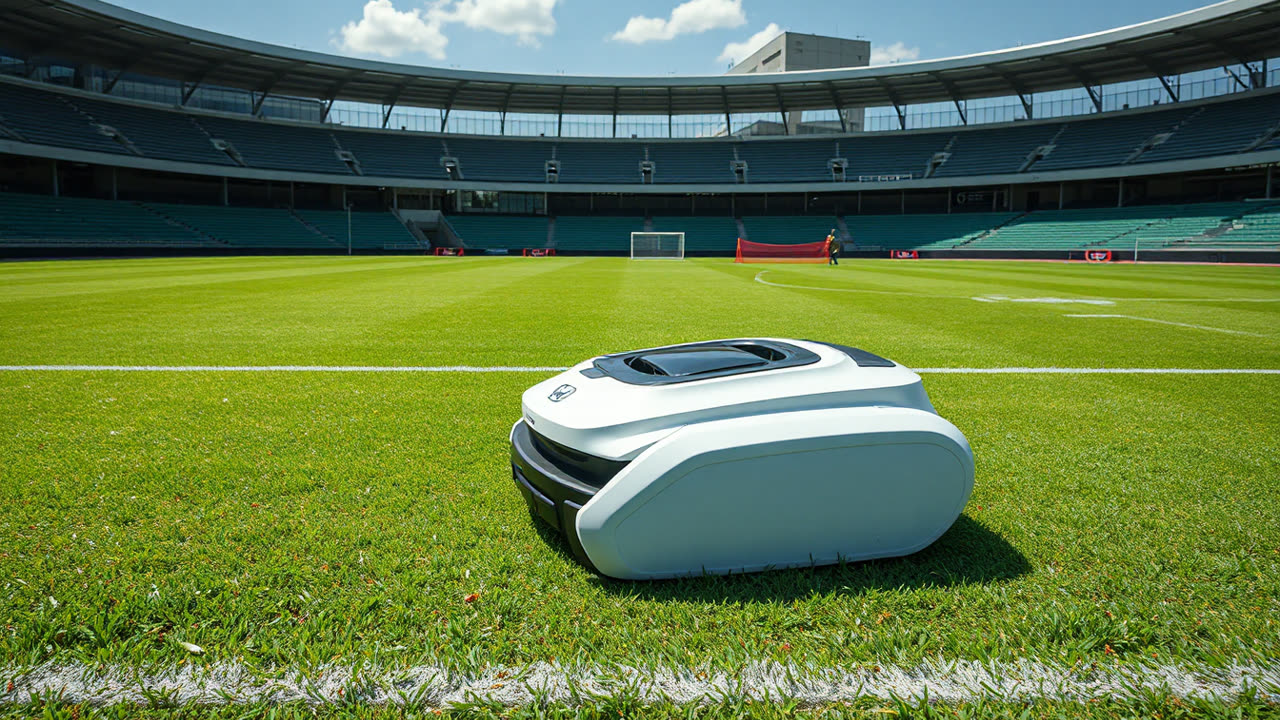
Honda's strategic pivot into the commercial electric lawnmower sector, a market projected to reach $1.5 billion by 2028, marks a significant reorientation for its Power Equipment division, focusing on advanced, autonomous, and entirely electric solutions. This move, announced with the imminent launch of the Honda Robotic Mower, signals a clear intent to capture a substantial share of a burgeoning industry segment distinct from its traditional internal combustion engine (ICE) offerings and far removed from the automotive EV race.
This initiative represents more than just an incremental product update; it's a foundational shift in Honda's approach to commercial landscaping, impacting both professional users and the broader power equipment industry. For commercial landscapers, the adoption of autonomous electric mowers promises substantial operational advantages. Noise pollution, a persistent complaint in urban and residential areas, is drastically reduced, allowing for extended working hours and greater flexibility in scheduling. Eliminating direct exhaust emissions contributes to cleaner air and aligns with growing environmental regulations and client preferences for sustainable practices. Furthermore, the autonomous capabilities, powered by technologies such as RTK-GPS and advanced sensor arrays, are designed to significantly reduce labor costs – a primary expenditure for landscaping businesses. A single operator can potentially manage multiple robotic units simultaneously, freeing up personnel for more complex tasks and addressing the persistent labor shortages facing the industry. The electric powertrains also translate to lower fuel expenses and reduced maintenance requirements compared to their gasoline counterparts, yielding a compelling total cost of ownership (TCO) argument.
Honda’s entry into this specialized market is particularly impactful given its established reputation for reliability and engineering excellence in power equipment. While Honda Automobile dealers await a self-driving EV that genuinely challenges Tesla or GM, Honda Power Equipment dealers are now equipped with a product line poised to disrupt an already evolving segment. The company’s existing vast dealer network and service infrastructure provide a significant competitive advantage, offering robust support and accessibility that many smaller, newer entrants in the autonomous mowing space may lack. This deep-rooted presence could accelerate adoption rates, as landscapers familiar with Honda's quality may be more inclined to trust its electric and autonomous offerings.
The commercial electric and autonomous lawnmower market is already home to several innovative players, each carving out niches with varying levels of autonomy and electrification. Husqvarna, for instance, has made significant strides with its CEORA robotic mower, designed for large-area commercial applications, featuring satellite navigation and a focus on operational efficiency. John Deere has also invested heavily in autonomous agricultural equipment, with some technologies potentially transferable to large-scale commercial mowing. Newer companies like Graze Mowing, Scythe Robotics, and Greenzie have developed sophisticated autonomous solutions, often leveraging AI and advanced perception systems to navigate complex terrains and ensure safety. Honda's Robotic Mower will likely compete directly with these offerings, distinguished by its specific technical specifications, pricing strategy, and the inherent trust associated with the Honda brand. The critical differentiator will lie in the robustness of its autonomous navigation, battery longevity, cutting efficiency, and the seamless integration with existing landscaping workflows.
Looking ahead, Honda’s commitment to this segment suggests a future where commercial landscaping is increasingly automated and electrified. The immediate next steps will involve aggressive market penetration, likely targeting large commercial properties, sports fields, and municipal grounds where the TCO benefits are most pronounced. Further advancements in battery technology, such as solid-state batteries, could extend operational times and reduce charging cycles, making these machines even more attractive. The evolution of sensor technology and AI will enhance the autonomy of these mowers, allowing them to handle more complex environments and dynamically adapt to changing conditions. Regulatory frameworks for autonomous outdoor equipment will also need to evolve, potentially influencing the speed and scale of adoption. Honda’s "all-in" strategy here could also serve as a proving ground for its broader robotics and electrification ambitions, potentially informing future developments in other Honda product lines beyond power equipment. The success of the Honda Robotic Mower will not only redefine commercial landscaping but also solidify Honda's position as a leader in innovative, sustainable power solutions in a rapidly electrifying world.