Honor's "Robot Phone" Experiment: A Gimbal Camera Revolution
Honor's "Robot Phone" experiment, integrating a miniaturized multi-axis gimbal camera directly into a smartphone, promised to revolutionize mobile photography by offering unprecedented stabilization capabilities.
✨ This content was summarized and interpreted by AI; it may contain errors — please verify accuracy with the original sources. Learn more
Listen to this story
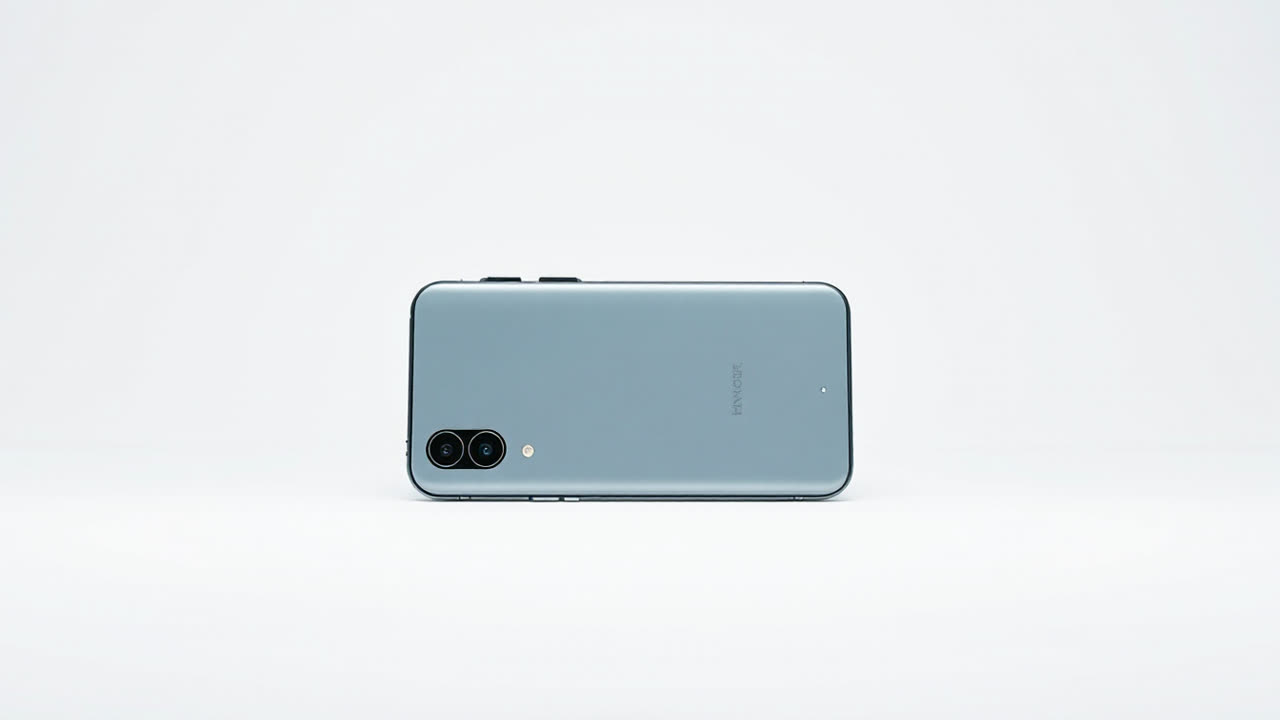
Honor's ambitious "Robot Phone" experiment, unveiled in late 2023, represented a significant leap in mobile photography, integrating a miniaturized, multi-axis gimbal camera system directly into a smartphone chassis, offering stabilization capabilities previously confined to external accessories. This internal gimbal, far more sophisticated than standard optical image stabilization (OIS) systems, promised to revolutionize how users capture video and low-light photos, directly addressing the persistent challenge of camera shake in a portable form factor. The device, while never seeing a wide commercial release under that specific moniker, showcased Honor's commitment to pushing the boundaries of smartphone imaging hardware, demonstrating impressive stability in early hands-on tests, particularly for dynamic video capture and extended exposure photography without blurring.
The significance of such an integrated gimbal system cannot be overstated. For users, it translates directly into professional-grade video footage, smooth pans, and steady tracking shots that would otherwise require costly external stabilizers or extensive post-production. Beyond video, the enhanced stability dramatically improves low-light photography, allowing for longer exposure times without motion blur, thus capturing more detail and reducing noise in challenging conditions. This democratizes high-quality content creation, empowering everyday users to produce cinematic results with just their phone. Industrially, Honor's experiment spurred further innovation across the smartphone sector, pushing competitors to re-evaluate their own stabilization roadmaps. While other manufacturers, notably Vivo with its X series, had already explored integrated gimbal technology, Honor's "Robot Phone" pushed the envelope further by demonstrating a more compact and potentially more versatile implementation. The "Robot Phone" effectively signaled that advanced mechanical stabilization was no longer a niche feature but a viable and desirable component for premium smartphones, forcing rivals to invest more heavily in their own OIS, sensor-shift, or indeed, true gimbal solutions.
Comparing Honor's approach to prior generations and rivals reveals a clear trajectory towards more sophisticated physical stabilization. Traditional OIS, prevalent in most flagship phones for years, typically involves moving a lens element or the entire sensor along two axes to counteract minor jitters. Sensor-shift OIS, popularized by Apple's iPhone Pro Max series, moves the entire camera sensor, offering slightly better performance. However, a true gimbal system, like that in the "Robot Phone," provides multi-axis mechanical stabilization, often correcting for yaw, pitch, and roll, far surpassing the corrective capabilities of OIS or sensor-shift systems. Vivo's integrated gimbal modules, for instance, have shown remarkable results since their introduction in the Vivo X50 Pro, evolving through subsequent generations to offer increasingly robust stabilization, even in challenging scenarios like running or extreme low light. Honor’s "Robot Phone" sought to refine this concept, potentially offering a more compact or power-efficient design, although specific benchmarks against Vivo's contemporary offerings were not widely published for a prototype device. The "Robot Phone" served as a powerful proof-of-concept, demonstrating that such complex mechanics could be integrated without significantly compromising overall phone design or battery life, albeit likely at a premium cost.
Looking ahead, the "Robot Phone" experiment, despite its prototype status, has undeniably influenced Honor's subsequent camera strategies. While the "Robot Phone" itself never became a mass-market product, its underlying technology and the lessons learned from its development are likely integrated into Honor's current flagship devices, albeit perhaps in a more refined or subtly implemented form. The trend towards larger camera sensors, which inherently require more effective stabilization to avoid blur, will only accelerate the demand for advanced solutions like gimbals or highly sophisticated sensor-shift systems. We can anticipate future Honor flagships, possibly within the Magic series, to feature even more advanced stabilization techniques that either directly evolve from the "Robot Phone" project or incorporate its core principles. The industry will likely see continued miniaturization of these components, improved power efficiency, and tighter integration with AI-powered software stabilization to create a hybrid system that offers unparalleled smoothness and clarity. The ultimate goal remains to deliver DSLR-level stability and image quality in a device that fits in a pocket, and Honor's "Robot Phone" was a critical, promising step on that path, pushing the entire mobile imaging industry towards a more stable, cinematic future.