HoverAir Versa's 'Flying Camera' Strategy Sparks Regulatory Debate and Market Disruption
HoverAir's new Versa device is deliberately marketed as a 'flying camera' instead of a drone, challenging FCC regulations and potentially reshaping the aerial imaging market.
✨ This content was summarized and interpreted by AI; it may contain errors — please verify accuracy with the original sources. Learn more
Listen to this story
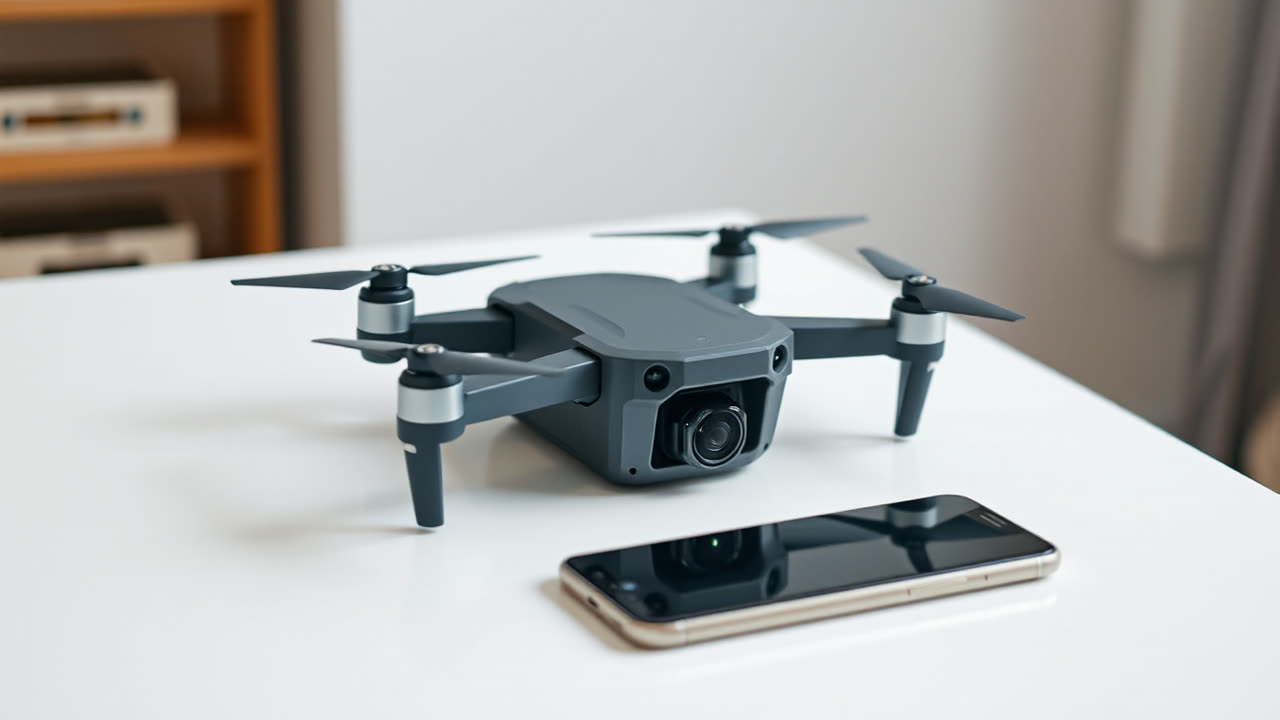
HoverAir's latest device, the Versa, has ignited a fresh debate within the drone industry by deliberately sidestepping the term "drone" and marketing itself as a "flying camera," a tactical maneuver that could challenge the very foundations of existing FCC regulations and user perception. This audacious approach, highlighted by its Indiegogo campaign, positions the Versa not as a recreational or commercial unmanned aerial system (UAS) but as a pocketable, autonomous photographic tool, raising questions about regulatory loopholes and the future of personal aerial imaging.
The Versa itself embodies this minimalist philosophy. Weighing just 180 grams, significantly below the FAA's 250-gram registration threshold for drones in the United States, it features a foldable design that allows it to collapse into a footprint barely larger than a smartphone, fitting easily into a pocket. Its core functionality revolves around autonomous flight modes for capturing photos and 2.7K video, controlled via a smartphone app. This focus on ease of use and portability, coupled with the "flying camera" designation, aims to appeal to a broader consumer base often intimidated by the complexities and perceived regulatory hurdles associated with traditional drones. HoverAir's previous innovations, such as the X1's ability to fold flat for portability and the Hover 2's modular design, have consistently pushed the boundaries of compact aerial photography, but the Versa's regulatory gambit represents a significant escalation.
This semantic distinction matters profoundly because it directly confronts the regulatory framework governing UAS. The Federal Aviation Administration (FAA) in the U.S. broadly defines a drone as an unmanned aircraft, requiring registration for devices weighing 250 grams or more and mandating Remote ID capabilities for most operations. By positioning the Versa under this weight threshold and avoiding the "drone" label, HoverAir attempts to bypass not only registration requirements but also the psychological barrier that the term "drone" often presents to new users. This could open the floodgates for similar sub-250g devices to enter the market with minimal regulatory oversight, potentially democratizing aerial photography to an unprecedented degree. However, it also introduces a gray area where the spirit of aviation safety regulations could be undermined by technicalities. While the Versa might avoid explicit FAA registration, its operation still falls under general airspace rules, including prohibitions against flying over people, at night without proper lighting, or in restricted airspace. The onus will likely fall on the user to understand these nuances, a responsibility often overlooked in the pursuit of convenience.
The "flying camera" narrative also reshapes the competitive landscape. Traditional drone manufacturers like DJI, Autel, and Skydio invest heavily in advanced flight stability, obstacle avoidance, and sophisticated camera systems, often resulting in larger, heavier, and more expensive units that unequivocally fall under drone regulations. DJI's Mini series, for example, also targets the sub-250g market, but explicitly acknowledges its drone status while emphasizing its lightweight advantage. The Versa, by contrast, positions itself against action cameras or even advanced smartphone cameras, offering an aerial perspective without the perceived baggage of a "drone." This could carve out a new niche, attracting consumers who want an elevated viewpoint for vlogging or travel photography without considering themselves drone pilots. If successful, this re-branding could pressure established drone manufacturers to re-evaluate their own marketing and product development strategies, potentially leading to a proliferation of "flying cameras" designed to navigate regulatory thresholds.
Looking ahead, the success or failure of HoverAir's "flying camera" strategy will have far-reaching implications. Should the Versa gain significant traction without direct regulatory challenge, it could establish a precedent for other manufacturers to develop and market similar devices, potentially leading to a fragmented regulatory landscape where identical flying machines are treated differently based on their branding and weight. This could force regulatory bodies like the FAA to re-evaluate their definitions and enforcement mechanisms, perhaps introducing new categories or more explicit guidelines for sub-250g aerial devices, regardless of their marketing moniker. Conversely, if the FCC or FAA were to actively challenge HoverAir's classification, it could send a clear message that semantic gymnastics will not circumvent established aviation safety principles. Ultimately, the true test will be user adoption and the real-world impact on airspace safety. While the allure of a pocketable, regulation-lite "flying camera" is strong, the inherent risks of any flying object, however small, remain. The industry, regulators, and consumers alike will be watching closely to see if giving a camera wings truly allows it to dodge the drone ban, or merely postpones an inevitable regulatory reckoning.