HP Omen Transcend 14 Gaming Laptop Sees Massive $1,000 Price Cut
A premium 14-inch gaming laptop, likely the HP Omen Transcend 14, featuring Intel's Core Ultra 9 285H and Nvidia's RTX 5070, is now available for $1,999.99, marking a $1,000 reduction and signaling a shift in the high-end portable gaming market.
✨ This content was summarized and interpreted by AI; it may contain errors — please verify accuracy with the original sources. Learn more
Listen to this story
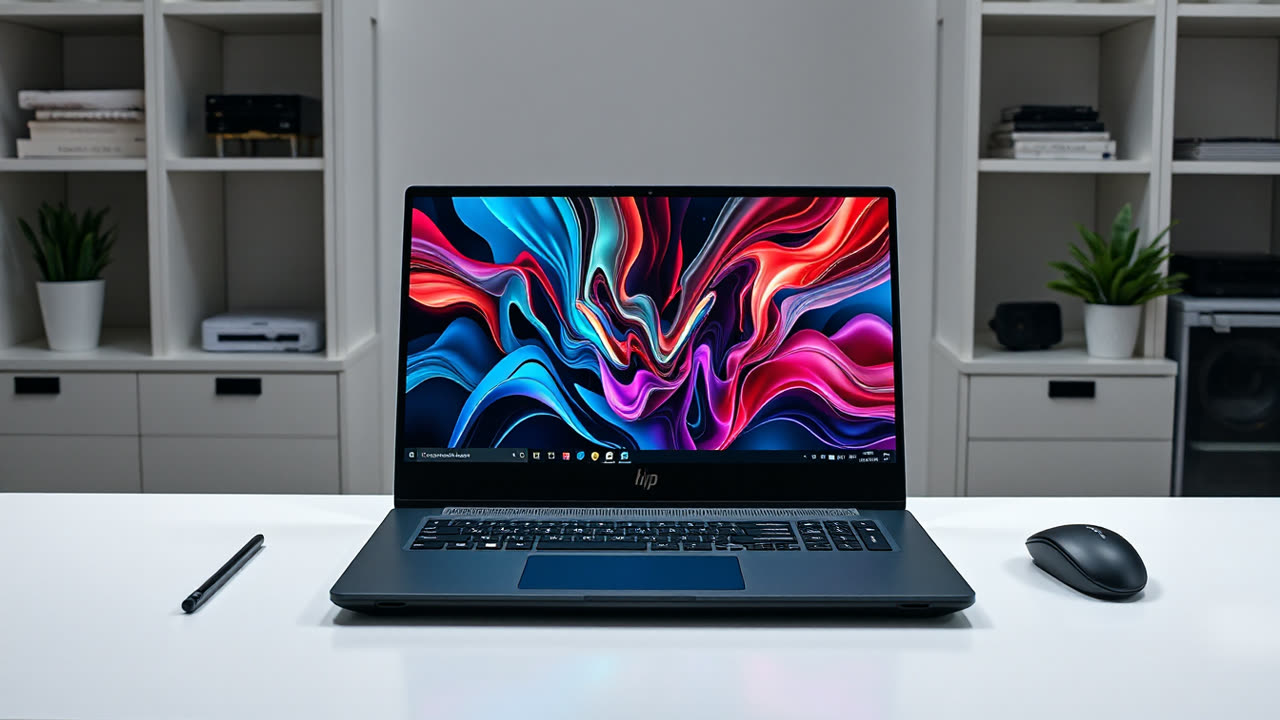
A substantial $1000 discount has positioned a 14-inch compact gaming powerhouse, pairing Intel’s Core Ultra 9 285H processor with Nvidia’s RTX 5070 Laptop GPU and a 3K 120Hz OLED display, as a compelling option at $1,999.99, down from its original $2,999.99. This aggressive pricing for a machine likely to be the HP Omen Transcend 14, a model noted for its premium build and specifications, signifies a critical moment in the high-end portable gaming laptop market.
This significant price reduction is more than just a fleeting deal; it underscores a pivotal shift in the gaming laptop landscape, particularly for the burgeoning 14-inch segment. For users, it means unprecedented access to top-tier performance and display technology in a form factor previously associated with significant compromises or prohibitive costs. The Core Ultra 9 285H, part of Intel's latest generation of mobile processors, brings not only raw computational power but also integrated AI capabilities via its Neural Processing Unit (NPU), promising enhanced efficiency and new functionalities for gaming and content creation workloads. Paired with the RTX 5070 Laptop GPU, users can expect exceptional frame rates at the laptop's native 3K resolution, leveraging next-generation ray tracing and DLSS advancements that the 50-series architecture is designed to deliver. The 3K 120Hz OLED display further elevates the user experience, offering superior contrast, vibrant colors, and lightning-fast response times crucial for competitive gaming, alongside the benefits for creative professionals who demand color accuracy.
From an industry perspective, this pricing strategy by retailers like Best Buy, likely supported by manufacturers, could signal several trends. It might indicate increased competition among manufacturers vying for market share in the premium compact gaming space, or perhaps a strategic move to clear inventory as the next wave of components or laptop designs approaches. The $1000 markdown suggests either a higher-than-anticipated initial MSRP or a calculated effort to make cutting-edge technology more accessible, potentially expanding the market for ultra-portable, high-performance gaming machines. This could force rivals to re-evaluate their pricing strategies and accelerate innovation in cooling solutions and power delivery for smaller chassis.
Comparing this machine to its predecessors and rivals highlights its advanced positioning. The Intel Core Ultra 9 285H represents a significant architectural leap from previous 13th or 14th Gen H-series processors, emphasizing efficiency cores and integrated AI acceleration, which is increasingly relevant for modern applications and game optimizations. While precise benchmarks for the RTX 5070 Laptop GPU are still emerging, it is expected to offer a substantial performance uplift over the previous generation's RTX 4070 Laptop GPU, closing the gap between desktop and mobile graphics solutions further, particularly in ray tracing performance. Rivals in the 14-inch category, such as the Razer Blade 14 or ASUS ROG Zephyrus G14, typically offer strong performance but often at a premium, and the integration of a 3K 120Hz OLED panel at this price point is particularly noteworthy, as OLED screens often command a higher cost and are less common in gaming laptops due to burn-in concerns and higher manufacturing expenses. The compact 14-inch form factor itself, once a niche, is now a battleground for manufacturers aiming to balance portability with uncompromised power, a feat that requires sophisticated thermal engineering.
Looking ahead, this aggressive pricing could be a precursor to a broader trend of more accessible high-end compact gaming laptops. The integration of powerful NPUs in processors like the Core Ultra 9 285H suggests a future where AI plays a more direct role in optimizing game performance, streaming, and even operating system functions, moving beyond simple upscaling technologies. We can anticipate further refinement in thermal designs, allowing even more powerful GPUs, potentially from Nvidia's future 60-series, to be housed in these smaller chassis without significant throttling. The increasing adoption and maturation of OLED technology will likely see more manufacturers offer such vibrant, low-latency displays across their premium lines, potentially pushing down costs further. The long-term outlook points to a continued convergence of slim design, extreme portability, and uncompromised gaming performance, with competitive pricing becoming a key differentiator in a crowded market. This current deal may well be an early indicator of a future where true desktop-class gaming in a backpack-friendly form factor is not just a luxury, but an increasingly attainable reality for a wider audience.