HP OmniBook 5's $550 Discount Reshapes Mid-Range Laptop Market
HP's OmniBook 5, featuring a premium OLED display and AI PC capabilities, is now available for an unprecedented $750, disrupting the mid-range computing segment by democratizing high-end features.
✨ This content was summarized and interpreted by AI; it may contain errors — please verify accuracy with the original sources. Learn more
Listen to this story
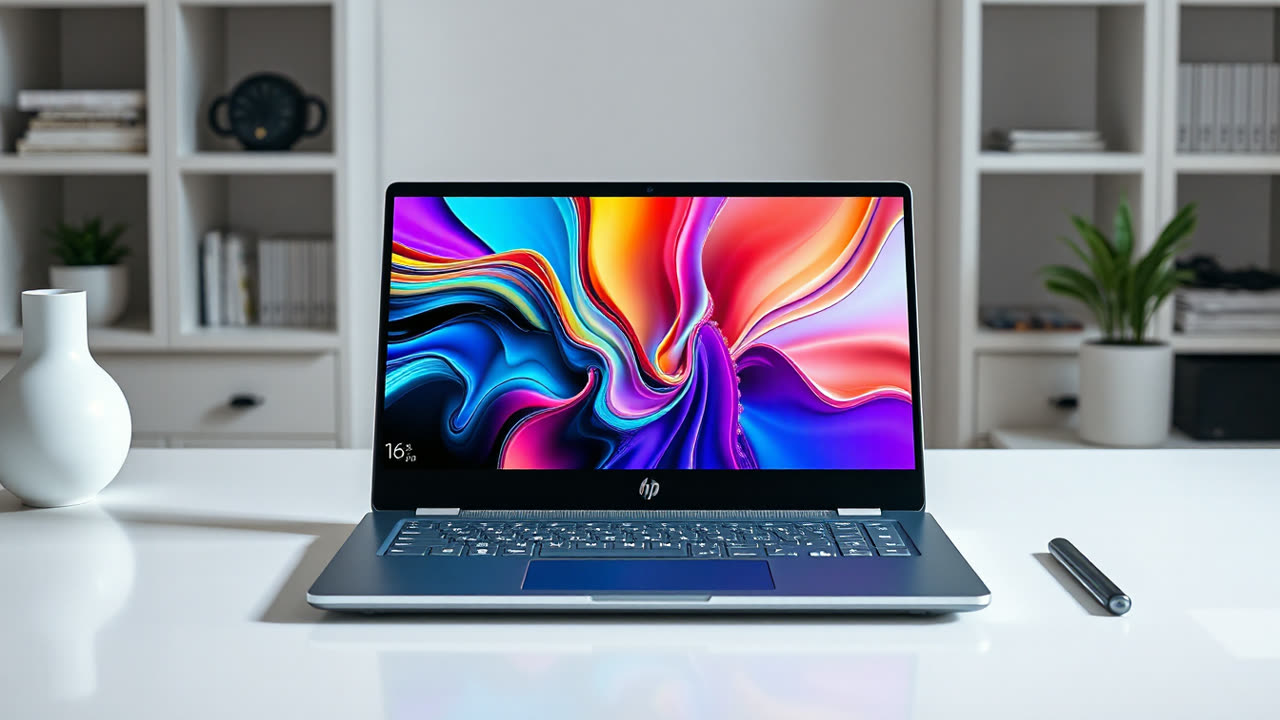
The HP OmniBook 5, a laptop lauded for its premium features at an accessible price point, has disrupted the mid-range computing market with a significant $550 discount, bringing its cost down to just $750 from an original retail price of $1,300. This aggressive pricing strategy positions a device featuring a vibrant OLED display and robust battery life, typically reserved for higher-end machines, squarely within the budget segment. The OmniBook 5, part of HP's revitalized OmniBook series which notably includes AI PC capabilities, initially launched in late 2024 as a contender for users seeking a balance of performance and portability. Its introduction marked HP's intent to infuse advanced display technology and efficient power management into a broader consumer base, challenging the traditional segmentation where OLED was a premium differentiator.
This substantial price reduction on the OmniBook 5 profoundly impacts both consumers and the broader laptop industry. For users, it democratizes access to a superior visual experience. OLED panels, known for their infinite contrast, true blacks, and exceptional color accuracy, dramatically enhance content consumption, creative work, and general productivity by reducing eye strain and improving overall clarity. Historically, laptops with OLED screens commanded prices upwards of $1,500, making them aspirational for many. At $750, the OmniBook 5 becomes an undeniable value proposition, offering a premium display alongside what reviewers have consistently praised as "great battery life"—often exceeding 10-12 hours in mixed usage scenarios—a critical factor for mobile professionals and students. This combination of visual fidelity and endurance at a mid-range price point directly addresses the long-standing compromise budget-conscious buyers faced: choosing between display quality, performance, or battery life.
From an industry perspective, the OmniBook 5's aggressive pricing could trigger a ripple effect, forcing competitors to re-evaluate their own mid-range offerings. Brands like Dell, Lenovo, and Acer, which have also begun integrating OLED into more affordable lines, may find themselves under pressure to match or exceed HP's value proposition. This could accelerate the adoption of OLED technology across the mainstream market, pushing down component costs further and making it a standard rather than a luxury. Furthermore, the OmniBook 5's integration of AI PC features, likely powered by a neural processing unit (NPU) from AMD or Intel, positions it within the burgeoning category of devices designed for enhanced on-device AI workloads. While specific AI benchmarks for the OmniBook 5 are still emerging, its inclusion at this price point suggests HP is committed to making AI acceleration accessible, potentially setting a new baseline for what a "budget" laptop should offer in terms of future-proofing.
Compared to its immediate rivals in the sub-$1000 category, the OmniBook 5 stands out primarily due to its OLED screen. Many competitors at this price still rely on IPS LCD panels, which, while capable, cannot match the contrast and color vibrancy of OLED. For instance, popular models like the Acer Swift Go 14 or Lenovo Yoga 7i often feature excellent IPS displays, but their OLED variants typically push their prices closer to or above the OmniBook 5's original $1,300 mark. Against its own prior generation or even other models within the broader OmniBook X series, the "5" model appears to strike a particularly sweet spot, leveraging economies of scale and perhaps a strategic margin reduction to capture market share. The original OmniBook series from the 1990s was known for its innovation in portability, and this new iteration continues that legacy by bringing advanced features to a wider audience.
Looking ahead, this move by HP signals a pivotal shift in the laptop market. The sustained availability of premium features like OLED and robust AI capabilities at significantly reduced prices suggests a maturation of these technologies and a willingness by manufacturers to use aggressive pricing as a competitive weapon. We can anticipate other manufacturers to follow suit, leading to an even more competitive landscape where OLED screens become a common expectation even in the sub-$1,000 segment by late 2026 or early 2027. This trend will likely push innovation in other areas, such as improved power efficiency for OLED panels and more powerful, integrated NPUs, as companies seek new differentiators. For HP, the OmniBook 5's success at this price point could solidify its position as a leader in delivering high-value computing, potentially paving the way for more aggressively priced premium-feature laptops across its portfolio and accelerating the transition to AI-powered personal computing for the mainstream user.