HP Omnibook X (2026) Review: Nailing the Basics with AI Prowess
HP's Omnibook X (2026) redefines the premium laptop segment by focusing on fundamental excellence and robust on-device AI capabilities, offering exceptional value and setting a new benchmark for performance and battery life in the burgeoning AI PC market.
✨ This content was summarized and interpreted by AI; it may contain errors — please verify accuracy with the original sources. Learn more
Listen to this story
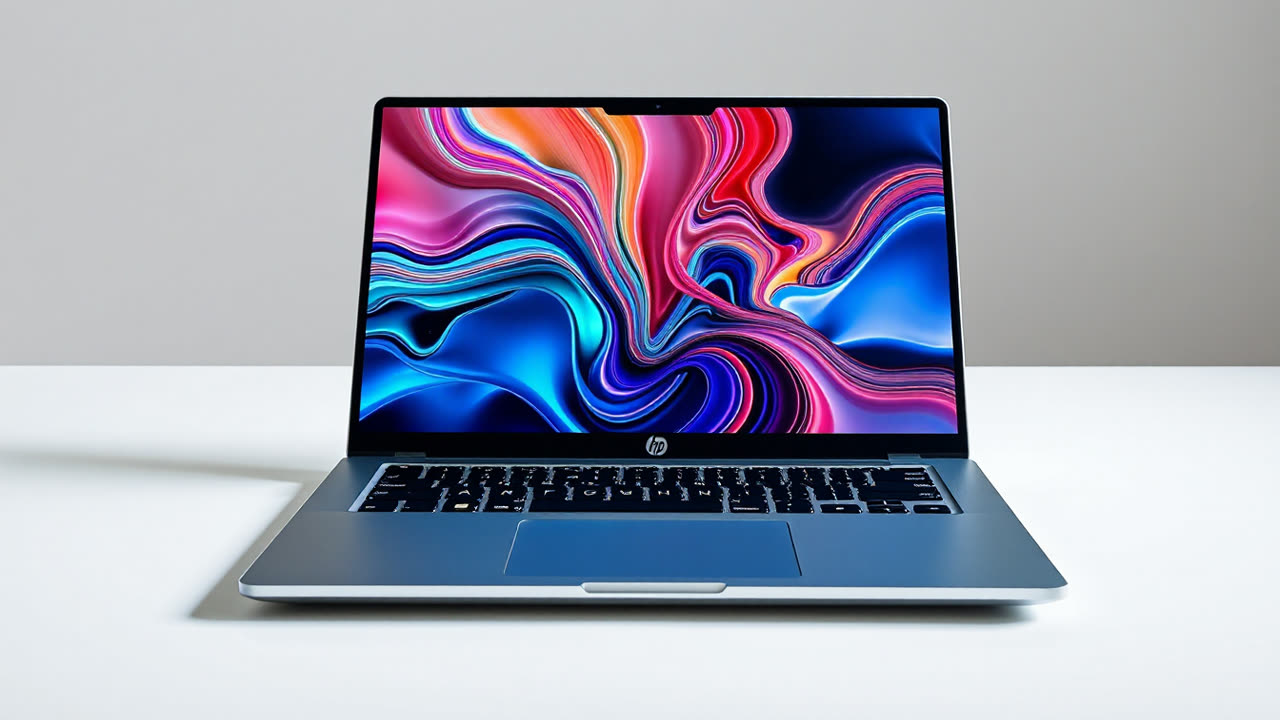
The HP Omnibook X (2026) emerges as a formidable contender in the premium laptop market, distinguishing itself not with audacious innovations, but by meticulously refining the core tenets of a superior computing experience. Starting at a reasonable $900, though typically retailing for around $1,400, this machine delivers exceptional value, especially considering its robust feature set. Its smooth anodized aluminum chassis, weighing 2.9 pounds and measuring 12.6mm thick, strikes an impressive balance between durability and portability, undercutting the 14-inch MacBook Pro's 3.4 pounds. This commitment to fundamental excellence is immediately apparent, offering a user experience that prioritizes reliability and performance over flashy, often superfluous, gimmicks.
At the heart of the Omnibook X's appeal is its stunning 14-inch 3K OLED touchscreen display, a 16:10 panel that provides more vertical workspace than typical widescreen offerings. This vibrant screen boasts up to 1,100 nits of HDR brightness and 500 nits of SDR brightness, covering 100 percent of the DCI-P3 color gamut, ensuring rich colors and sharp visuals. For users demanding fluid visuals, the display also features a 120Hz refresh rate. HP also offers more economical 2K IPS LCD and OLED options, though these lack the brightness and touch capabilities of the premium 3K OLED. Complementing the visual prowess is a wide, lattice-free keyboard and a generously sized haptic touchpad, both contributing to a superior input experience that rivals the industry's best.
Under the hood, the Omnibook X (2026) offers a diverse range of configurations, signaling HP's strategic adaptability in the evolving processor landscape. While the review model featured an Intel Core Ultra X9 388H chip, a 16-core processor with Intel's Arc B390 GPU, paired with 32GB of RAM, HP also provides variants with AMD Ryzen AI 300 Series and Snapdragon X Elite processors. The inclusion of these distinct architectures underscores a broader industry trend towards a more fragmented and competitive processor market, moving beyond the traditional Intel-AMD duopoly to include powerhouses like Qualcomm and even Nvidia's new RTX Spark family for AI-intensive tasks. Notably, the Snapdragon X Elite variant promises an exceptional battery life of up to 28 hours, leveraging its 4nm process node and Qualcomm's custom Oryon CPU cores for remarkable power efficiency, operating within a 15-30W envelope compared to traditional processors' 20-65W range. Even the Intel Core Ultra model delivers impressive longevity, with some configurations offering up to 22 hours of battery life and up to 22 hours and 45 minutes of video playback. This substantial improvement in battery endurance, nearly doubling the 13 hours of local video playback seen in the 2025 model, is a significant leap forward.
The Omnibook X's integration of dedicated Neural Processing Units (NPUs), delivering up to 50 TOPS (Trillion Operations Per Second) for AI workloads, is a critical differentiator, positioning it firmly within the burgeoning "AI PC" category. This on-device AI capability, beyond basic automation, facilitates advanced Windows 11 features like Recall and Studio Effects, and HP's proprietary AI optimization software intelligently adapts performance based on user patterns. This matters immensely for users, particularly professionals and students, who increasingly rely on AI-driven workflows for tasks such as automating summaries, enhancing video conferencing with advanced background blur, and optimizing battery consumption. By offloading complex AI tasks to the NPU, the CPU remains less burdened, contributing to sustained efficiency even during heavy multitasking.
Compared to rivals, the Omnibook X presents a compelling alternative. While Apple's MacBook Pro 14 (M4, 2024) remains a strong contender, particularly for those embedded in the macOS ecosystem, the Omnibook X's competitive pricing (starting around ₹1,60,689 compared to the MacBook Pro 14's ₹1,98,990 for a similar configuration) and robust Windows-centric AI features offer a distinct advantage for many. The Dell XPS 16 (2026) also stands out as a premium option, lauded for its design and powerful features, but HP's focus on nailing the basics with exceptional battery life and a comprehensive port selection—including USB-C, Type-A, HDMI, and a headphone jack—provides practical benefits for a professional audience, even if an SD card reader is a notable omission. The Omnibook X effectively succeeds HP's Envy series, carrying forward its premium design while introducing significantly enhanced AI capabilities, longer battery life, and superior display quality, marking a clear generational leap.
Looking ahead, the Omnibook X (2026) exemplifies HP's "One HP" strategy, aiming for a tightly integrated ecosystem across consumer and enterprise segments, driven by shared silicon and design principles. The laptop's emphasis on local AI execution, with NPUs capable of handling multiple concurrent AI workloads, reflects a broader industry shift away from cloud-only approaches, promising lower latency and enhanced privacy for users. This focus on AI-driven productivity and versatility, especially with its 2-in-1 Flip models, positions HP strongly in a market increasingly defined by hybrid work models and the demand for adaptable computing devices. As the global laptop market continues its projected growth, driven by device replacement cycles and the end of Windows 10 support, HP's commitment to delivering a well-rounded, high-performance, and AI-capable machine like the Omnibook X sets a high bar for the competition and promises a future where fundamental excellence remains paramount.