HP Unveils OmniBook 5 14: A Bold OLED Challenge to Apple's MacBook Neo at $699.99
HP's new OmniBook 5 14 directly challenges Apple's premium laptop dominance with an aggressive $699.99 starting price, a thinner, lighter design, and a vibrant OLED display, positioning itself as a compelling alternative to the rumored MacBook Neo.
✨ This content was summarized and interpreted by AI; it may contain errors — please verify accuracy with the original sources. Learn more
Listen to this story
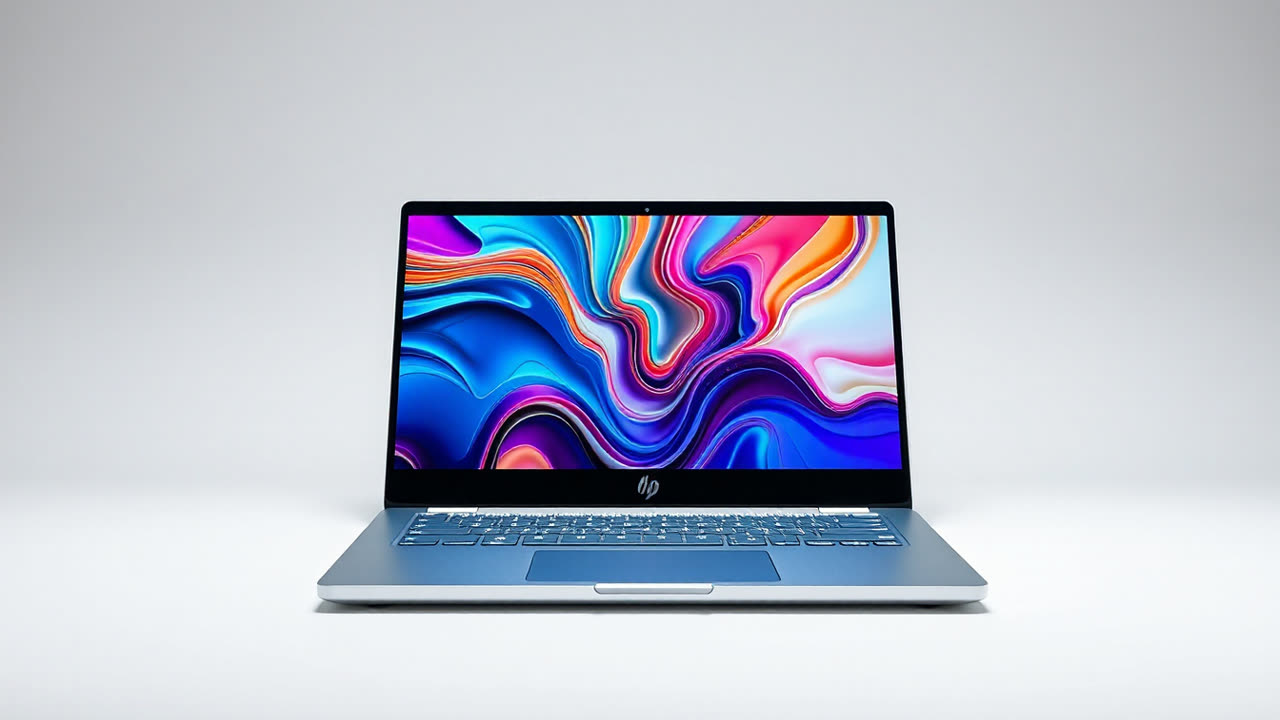
HP's audacious new OmniBook 5 14, starting at an aggressive $699.99, directly challenges Apple's premium laptop dominance by offering a thinner, lighter design coupled with a vibrant OLED display, positioning itself as a compelling alternative to the rumored MacBook Neo. This strategic move by HP, leveraging an Intel Core 5 315 "Wildcat Lake" processor, 8GB of RAM, and a 256GB SSD, signals a significant escalation in the ongoing battle for the consumer and enterprise thin-and-light laptop market. The sub-$700 price point for a machine boasting an OLED screen and a next-generation Intel chip is particularly striking, aiming to democratize premium features often reserved for devices costing considerably more.
This launch is a calculated strike at the heart of Apple's perceived value proposition, especially with the MacBook Neo rumored to retain a higher entry-level price point, likely exceeding $1000, even for its base configurations. For users, the OmniBook 5 14 represents a genuine opportunity to access cutting-edge display technology and a sleek form factor without the customary premium price tag. OLED panels, known for their superior contrast ratios, true blacks, and vibrant color reproduction, have historically been a luxury feature, often adding hundreds to a laptop's cost. HP's ability to integrate this at such an accessible price could fundamentally shift consumer expectations, making OLED a standard rather than an exception in the mid-range segment. This pushes the industry towards faster adoption of advanced display technologies, benefiting content creators, multimedia consumers, and even general users who appreciate a visually richer experience.
From an industry perspective, the OmniBook 5 14's aggressive pricing and feature set exert immense pressure on rivals, including Dell, Lenovo, and particularly Apple. While Apple continues to command a significant portion of the premium laptop market, especially in North America, with its ecosystem strength and M-series silicon, devices like the OmniBook 5 14 force a re-evaluation of pricing strategies and feature roadmaps. The "Wildcat Lake" processor, likely Intel's answer to Apple's M-series chips in the efficiency and integrated graphics departments, underscores Intel's relentless pursuit of competitive performance in the mobile space. If "Wildcat Lake" delivers on its promise of improved power efficiency and robust processing capabilities, it further levels the playing field, eroding one of Apple's key competitive advantages. The 8GB RAM and 256GB SSD, while standard for this price point, are sufficient for most everyday tasks, but HP will undoubtedly offer configurations with higher specifications to cater to more demanding users, likely pushing the price closer to the $1000 mark.
The background to this launch is a market increasingly saturated with thin-and-light options, where differentiation often comes down to design, display quality, and battery life. HP has historically competed strongly in the Windows laptop space, with its Spectre and Envy lines often lauded for their premium build and features. The OmniBook 5 14 seems to distill these premium attributes into a more affordable package, directly targeting the mid-to-high range that Apple's MacBook Air and the rumored MacBook Neo occupy. Compared to the prior generation of HP's mainstream laptops, the inclusion of OLED at this price point is a clear upgrade, reflecting broader trends in display manufacturing making the technology more cost-effective. Competitors like Dell's XPS 13 or Lenovo's Yoga series, while often offering OLED options, typically start at higher price points for similar configurations, giving HP a distinct edge in value.
Looking ahead, the OmniBook 5 14 could catalyze a broader market shift. We can anticipate other Windows OEMs rapidly following suit, integrating OLED panels into their mid-range offerings to remain competitive. This will likely accelerate the decline of traditional IPS LCDs in premium and even mainstream laptops, similar to how SSDs replaced HDDs as the default storage option. The intense competition at the $700-$1000 price bracket will also push innovation in other areas, such as battery technology and integrated AI accelerators, as manufacturers seek new ways to stand out. Apple, in response, might be compelled to either enhance the base specifications of the MacBook Neo or introduce more competitive pricing, particularly if the OmniBook 5 14 gains significant market traction. The true battle will ultimately be fought on performance benchmarks, real-world battery life, and the overall user experience, where HP is clearly betting that a stunning display and a compelling price can sway consumers away from the allure of the Apple ecosystem.