HTC's XR Struggle and AI Pivot: The VIVE Eagle's Critical Launch
Despite innovative modularity, HTC's Vive XR Elite failed to gain mass appeal, leading the company to pivot towards AI-powered lightweight AR glasses like the forthcoming VIVE Eagle in a rapidly evolving XR market.
✨ This content was summarized and interpreted by AI; it may contain errors — please verify accuracy with the original sources. Learn more
Listen to this story
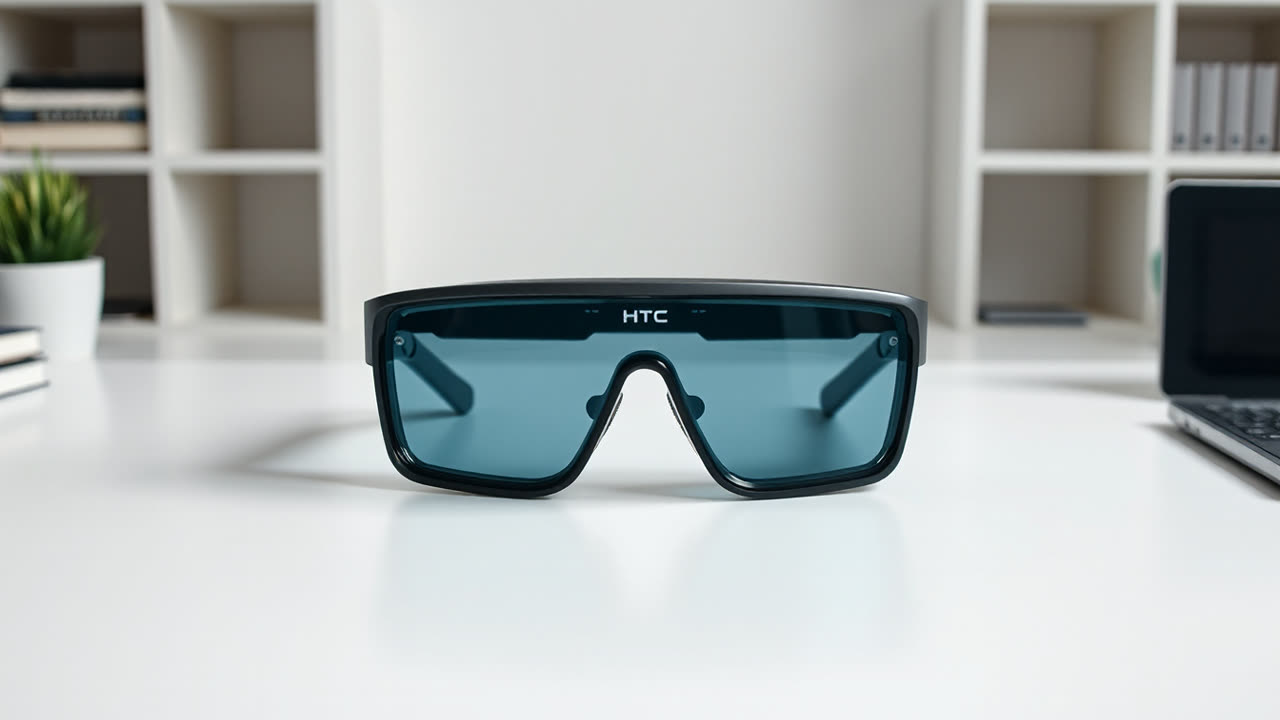
The HTC Vive XR Elite, introduced in February 2023 at a launch price of $1,099, stands as a testament to HTC's continued ambition in the extended reality (XR) space, offering a modular design that can transform from a full VR headset to a lighter pair of mixed reality (MR) glasses. While lauded for its comfort and innovative convertible form factor, which reduces its weight from 625g with the battery to a mere 273g in "glasses mode," the device has struggled to carve out significant consumer appeal against more dominant rivals like Meta and Apple. This struggle highlights the persistent challenges facing premium XR devices in a market still grappling with high costs, limited compelling content, and the elusive quest for mass adoption.
The Vive XR Elite is powered by a Qualcomm Snapdragon XR2 processor, features 12 GB of RAM, 128 GB of storage, and boasts a 4K resolution display (1920x1920 pixels per eye) with a 90 Hz refresh rate and a 110-degree field of view. Its full-color RGB passthrough camera and depth sensor enable robust mixed reality experiences, allowing virtual objects to interact with the real world, a capability HTC initially pitched as superior to Meta Quest Pro's passthrough. The headset also includes diopter adjustment for near-sighted users and an adjustable interpupillary distance (IPD) range, enhancing user comfort and accessibility. Despite these technical merits and its ability to function as both a standalone device and a PC VR headset, reviews, even as late as August 2026, consistently point to a significant content library deficit compared to Meta's more mature platform, leading to a perception of "premium price without premium polish". The device's initial price of $1,099, while later seeing some reductions to $799.99 for the base model, still positioned it as a high-end offering, often more expensive than a Meta Quest Pro and considerably above the mass-market Quest 3.
The lukewarm reception of the Vive XR Elite underscores a critical inflection point for the XR industry, particularly for companies like HTC, which once led the VR market. In 2026, the XR landscape is increasingly defined by a bifurcated market: consumer-focused devices prioritizing affordability and a broad content ecosystem (like Meta Quest 3) and high-fidelity, often more expensive, devices targeting enterprise and professional users (like Apple Vision Pro). HTC's attempt to bridge this gap with the XR Elite, a device designed for both consumers and enterprise, appears to have fallen into a difficult middle ground. While its modularity and comfort are praised, the lack of a strong, diverse content library and a higher price point hinder its appeal to the average consumer who might opt for the Meta Quest 3's deeper game library and lower cost. For enterprise, where HTC Vive Pro 2 headsets still maintain traction in simulation and design validation, the XR Elite's "smart glasses" form factor is a step towards more versatile, portable mixed reality for productivity and collaboration, but widespread adoption faces challenges like integration with existing IT ecosystems and the need for tailored content.
Comparing the Vive XR Elite to its rivals highlights its unique position and inherent weaknesses. The Meta Quest 3, released after the XR Elite, offers a more powerful processor (though the XR Elite's display resolution is slightly higher per eye) and a significantly richer content store at a more accessible price point. Apple's Vision Pro, while substantially more expensive and weighing more, sets a new benchmark for visual fidelity and seamless spatial computing, focusing on integrating into daily life rather than just gaming. The Vive XR Elite's 625g weight (with battery) is heavier than the Meta Quest 2's 503g, though its convertible nature offers a lighter "glasses mode" that rivals other lightweight AR glasses. This modularity, allowing users to detach the battery cradle for a lighter, glasses-like experience with an external power source, is an innovative design choice that hints at the future of more wearable XR. However, this modularity also means reduced performance in the lighter mode, and the need for an external power source negates some of the portability benefits.
Looking ahead, HTC's strategy appears to be shifting, or at least diversifying. In March 2026, HTC reassured the community of its continued activity in the XR business, emphasizing a long-term vision towards lightweight AR glasses. This aligns with broader industry trends predicting that by 2026, the focus will be on creating "stylish glasses that are indistinguishable from regular eyewear" for AR, with advancements in micro-OLED displays and waveguide technology. Notably, HTC Chairman Cher Wang stated in July 2026 that AI has become a crucial trend for the company, with HTC's first AI-powered smart glasses, the "VIVE Eagle," expected to arrive in the US and Europe in Q3 2026. This "VIVE Eagle" product, distinct from the XR Elite, is positioned as a first step towards lightweight AR glasses and integrates the VIVE AI platform introduced in 2025. This suggests HTC is pivoting towards a truly glasses-like form factor with integrated AI, potentially learning from the XR Elite's challenges in balancing a full headset with a "smart glasses" aspiration. The company also continues to push its VIVERSE metaverse platform, aiming for a user-generative ecosystem with monetization tools and expanded partnerships.
The broader XR market in 2026 is seeing a shift from experimental projects to practical business tools, with enterprise adoption accelerating in areas like training, product simulation, and remote collaboration. While consumer VR headset shipments saw a decline in 2024, the overall immersive market (XR + smart glasses + MR) is accelerating, making 2026 a pivotal year. HTC's challenge, and opportunity, lies in translating its engineering prowess and enterprise focus into consumer relevance. While the Vive XR Elite was a commendable effort in modular design and mixed reality, its inability to overcome content and pricing hurdles against established ecosystems like Meta's, and the emerging premium standard set by Apple, prevented it from achieving widespread acclaim. The forthcoming "VIVE Eagle" smart glasses, with their explicit AI integration and focus on a true glasses form factor, represent HTC's next critical move to redefine its presence in a competitive and rapidly evolving XR landscape, aiming for a future where immersive technology is more seamlessly integrated into daily life.