HTC Vive Eagle Smart Glasses Launch in US, Europe, and Australia
HTC has launched its Vive Eagle smart glasses in the US, Europe, and Australia, directly challenging Meta's Ray-Ban Meta lineup with a privacy-first, multi-AI integration approach.
✨ This content was summarized and interpreted by AI; it may contain errors — please verify accuracy with the original sources. Learn more
Listen to this story
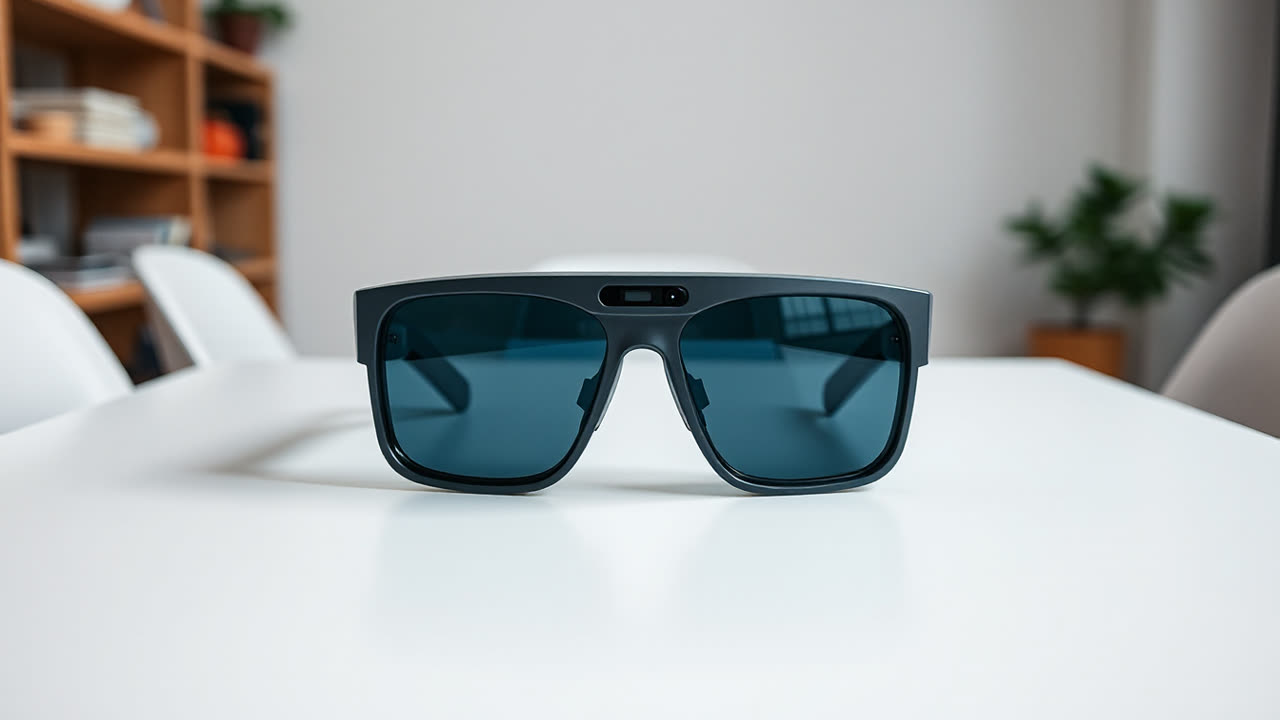
HTC has finally launched its Vive Eagle smart glasses in the US, Europe, and Australia, marking a significant strategic pivot for the company once synonymous with Android smartphones and now a key player in the extended reality (XR) space. Priced at $499 in the US, £429 in the UK, and €469 in Europe, with shipments commencing immediately in North America and from September 21st in the UK and Europe, these camera-equipped AI glasses are a direct challenge to Meta's dominant Ray-Ban Meta lineup, emphasizing privacy and multi-AI integration. This move signals HTC's commitment to the burgeoning consumer smart glasses market, which saw display-less smart glasses shipments surge by 167% year-over-year in Q1 2026, with Meta currently holding a substantial 69.2% market share.
The Vive Eagle distinguishes itself with a "privacy-first" philosophy, a critical differentiator in a market increasingly wary of surveillance concerns surrounding wearable cameras. Unlike some rivals, HTC has implemented several features to address these anxieties: all personal data is stored locally on the device with AES-256 encryption, and the company is pursuing international privacy certifications like ISO 27001 and 27701. Crucially, when complex queries necessitate cloud AI, requests are processed anonymously through third-party services, de-identified to prevent user profiling. The glasses also feature a bright LED indicator that illuminates or pulses during photo or video capture, with sensors designed to disable recording if the LED is obscured or if the glasses are not being worn. An optional, innovative feature even allows nearby individuals to vocalize "Stop filming" to immediately halt a recording. This proactive approach to privacy directly contrasts with Meta, which has faced class-action lawsuits and public criticism, with its glasses sometimes labeled "pervert glasses" due to concerns over discreet recording.
Beyond privacy, the Vive Eagle boasts a 12MP ultra-wide camera capable of 3K video recording (1512 x 2016 pixels at 30 FPS, or 3024 x 4032 pixels for photos) with electronic stabilization, allowing for hands-free photo and video capture. While its video resolution is slightly lower than the Ray-Ban Meta Gen 2's 3K (2384 x 3168) recording, HTC's offering provides 32GB of local storage for approximately 3,000 photos or 50 three-minute videos. Powered by Qualcomm's Snapdragon AR1 Gen 1 chipset with 4GB of RAM, the glasses support Wi-Fi 6E and Bluetooth 5.3 connectivity, pairing with iOS 17.6+ or Android 10+ phones via the Vive Connect app. The "Flexible Intelligence" approach to AI integration is another key selling point, allowing users to switch between HTC's onboard VIVE AI for basic offline commands and cloud AI platforms like Google Gemini and OpenAI's ChatGPT for more complex queries. This multi-platform support provides users with more choice and avoids vendor lock-in, offering features like live translation (speech and text), meeting notes, and "Total Memory Recall" for logging information.
Weighing under 49 grams, the Vive Eagle features a lightweight, Wayfarer-style design with adjustable nose pads, contoured temples, and ZEISS UV400 sun lenses, available in four color options: Berry, Black, Coffee, and Grey. It offers open-ear stereo speakers for spatial sound while minimizing sound leakage, and a 235mAh battery provides up to 4.5 hours of continuous music playback or over three hours of voice calls. Fast charging capabilities allow for a 50% charge in just 10 minutes. An optional VIVE Power Boost accessory, weighing only 8 grams, can extend battery life by another 80%. Each purchase includes a two-year subscription to VIVE AI Plus, a premium service offering enhanced AI responsiveness, locational search, and unlimited memory capacity, though post-trial pricing remains undisclosed.
The launch of Vive Eagle significantly intensifies competition in the "display-free" smart glasses segment, a market projected to reach $5.1 billion in revenue in 2026. While Meta, with its Ray-Ban and Oakley partnerships, currently dominates with an estimated 90% share of the AI smart glasses market in 2025, HTC is positioning itself as a premium, privacy-conscious alternative. Meta's entry-level glasses start at $299, making the Vive Eagle's $499 price point a notable premium. However, HTC's emphasis on data security and multi-AI flexibility could appeal to a segment of consumers increasingly concerned about big tech's data practices. Other competitors like Google and Samsung are also expected to release audio-first eyewear this fall, with Apple rumored to unveil its own audio-based glasses in 2027. The broader smart glasses market, including AR display glasses from companies like XREAL and RayNeo, is also rapidly evolving, with the total AR market projected to reach $198 billion by 2026.
HTC's latest offering represents a calculated risk, leveraging its long-standing expertise in immersive technology (evident in its Vive VR headsets) to carve a niche in a crowded, yet rapidly expanding, consumer market. The company's prior focus on enterprise VR solutions, such as the Vive Focus Vision, has provided a foundation in developing robust hardware and software ecosystems. The success of the Vive Eagle will depend not only on its technical capabilities but also on HTC's ability to effectively communicate its privacy-first message and whether consumers are willing to pay a premium for enhanced data security and AI flexibility in their everyday wearables. As the smart glasses market continues its explosive growth, projected to reach $210.96 billion in 2026 and $2.3 trillion by 2034, HTC's privacy-centric, multi-AI strategy offers a compelling, albeit challenging, path to differentiate itself in the next generation of personal computing.