Huawei Accelerates AI Accelerator Roadmap, Ascend 960PR Doubles FP4 Performance
Huawei has significantly accelerated its AI accelerator roadmap, pulling in the launch of its next-generation Ascend NPUs by several quarters, with the flagship Ascend 960PR reportedly doubling FP4 performance expectations.
✨ This content was summarized and interpreted by AI; it may contain errors — please verify accuracy with the original sources. Learn more
Listen to this story
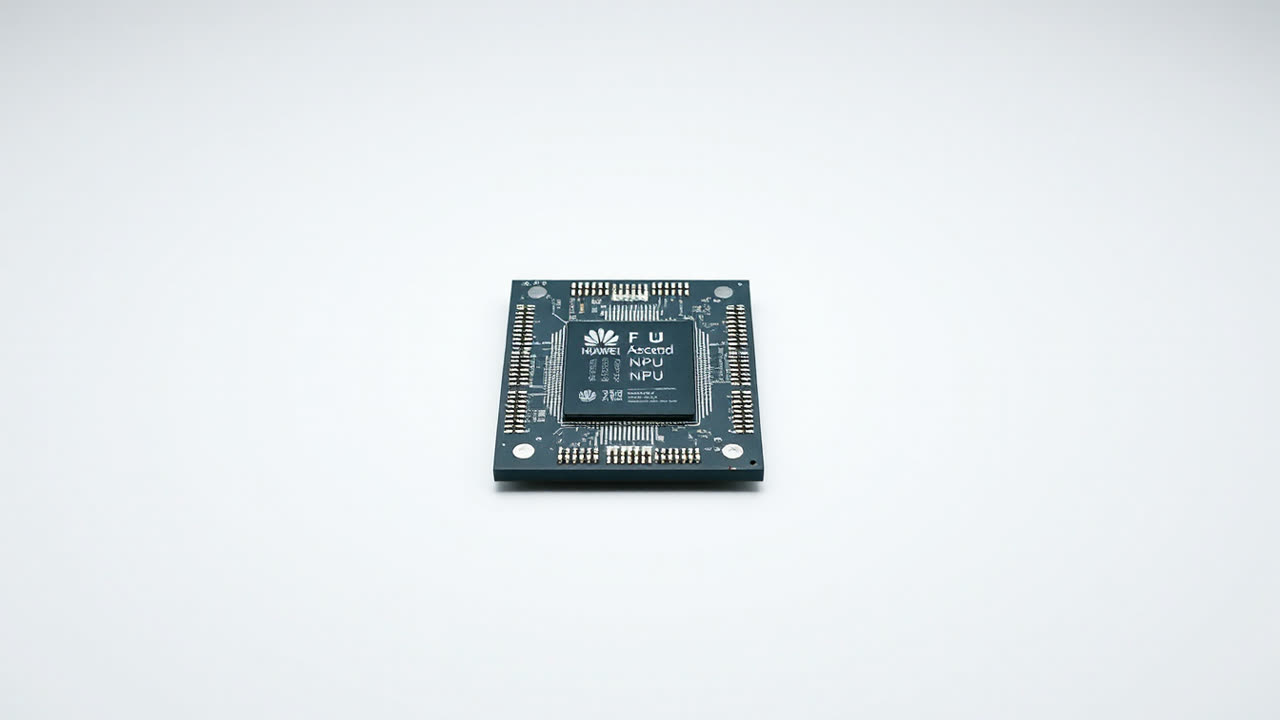
Huawei has significantly accelerated its AI accelerator roadmap, pulling in the launch of its next-generation Ascend NPUs by several quarters, with the flagship Ascend 960PR reportedly doubling FP4 performance expectations. This aggressive timeline, unveiled alongside details of next-generation Ascend NPUs, Kunpeng CPUs, and comprehensive scale-up and scale-out connectivity solutions, signals Huawei's deepening commitment to building a robust, vertically integrated AI ecosystem that mirrors Nvidia's "AI factory" blueprint. The 960PR's unexpected performance leap, particularly in FP4 precision, is critical for large language model (LLM) inference and training, where lower precision formats are increasingly vital for efficiency and speed.
This strategic acceleration and performance over-delivery are not merely incremental upgrades; they represent a pivotal moment for Huawei and the broader Chinese AI industry. For users, particularly enterprises and research institutions within China, it promises a more rapid deployment of advanced AI infrastructure, potentially reducing reliance on Western technology and fostering greater digital sovereignty. The ability to deploy high-performance AI accelerators sooner means faster model training, quicker iteration cycles, and ultimately, more sophisticated AI applications across sectors like autonomous driving, healthcare, and smart cities. For the industry, it intensifies the global AI chip race, demonstrating Huawei's resilience and capacity for innovation despite stringent export controls and geopolitical pressures. It validates China's long-term strategy of domestic self-sufficiency in critical semiconductor technologies, pushing the boundaries of what was previously thought possible under sanctions.
Huawei's approach directly challenges Nvidia's dominance by replicating a holistic "AI factory" model, which integrates hardware (accelerators, CPUs), software (CANN, MindSpore), and networking solutions. The Ascend 960PR, while specific performance benchmarks against current market leaders like Nvidia's H100 or forthcoming Blackwell architecture are still emerging, is positioned as a direct competitor in the high-performance computing segment. Its reported FP4 efficiency is particularly noteworthy, as Nvidia has also emphasized FP4 and FP6 capabilities in its latest architectures to optimize for LLMs. The Kunpeng CPUs, designed to complement the Ascend NPUs, provide the necessary general-purpose compute power, forming a complete node solution akin to Nvidia's Grace Hopper Superchip or CPU-GPU server designs. Furthermore, the emphasis on scale-up and scale-out connectivity, likely involving high-bandwidth interconnects similar to Nvidia's NVLink or InfiniBand, is crucial for building massive AI clusters capable of training foundation models. This integrated strategy aims to simplify deployment and maximize performance for large-scale AI workloads, offering a compelling alternative within the Chinese market and potentially beyond.
The background to this development is rooted in the escalating technological rivalry between the US and China. Facing extensive restrictions on accessing advanced semiconductor manufacturing equipment and leading-edge chips from companies like TSMC and Nvidia, Huawei has been forced to innovate rapidly and vertically integrate its supply chain. The company's prior generation Ascend 910B chips have already seen significant adoption within China, powering various AI initiatives and demonstrating the feasibility of a domestic alternative. This latest roadmap, therefore, is not a sudden pivot but an acceleration of an existing, well-defined strategy. By pulling in next-generation products, Huawei is signaling its ability to overcome manufacturing hurdles and iterate on its designs at a competitive pace, leveraging domestic fabs and design capabilities. This contrasts sharply with the initial skepticism regarding China's ability to produce high-performance AI chips independently, highlighting a significant leap in indigenous technological prowess.
Looking ahead, Huawei's accelerated roadmap could reshape the competitive landscape, particularly within China. The robust performance of the Ascend 960PR and the integrated ecosystem approach positions Huawei as the primary domestic alternative to Nvidia, potentially capturing a significant share of China's burgeoning AI infrastructure market. This could lead to a bifurcated global AI chip market, with distinct ecosystems developing in the East and West. Further iterations of Ascend NPUs are expected to continue pushing performance boundaries, with a focus on even lower precision formats and specialized architectures for emerging AI paradigms. Huawei's long-term success will hinge on its ability to maintain this aggressive development pace, attract a strong developer community to its MindSpore AI framework, and ensure consistent manufacturing yields and technological advancements from its domestic partners. The unfolding competition between Huawei's Ascend platform and Nvidia's offerings will be a defining narrative in the global AI race for the foreseeable future, driving innovation and potentially leading to more diverse and specialized AI hardware solutions worldwide.