Huawei Unveils Mate XT2: World's First Tri-Panel Foldable with Built-in Privacy Display
Huawei's Mate XT2, unveiled on September 7, 2026, in China, marks a significant leap in foldable smartphone technology as the world's first tri-panel foldable to integrate a built-in privacy display.
✨ This content was summarized and interpreted by AI; it may contain errors — please verify accuracy with the original sources. Learn more
Listen to this story
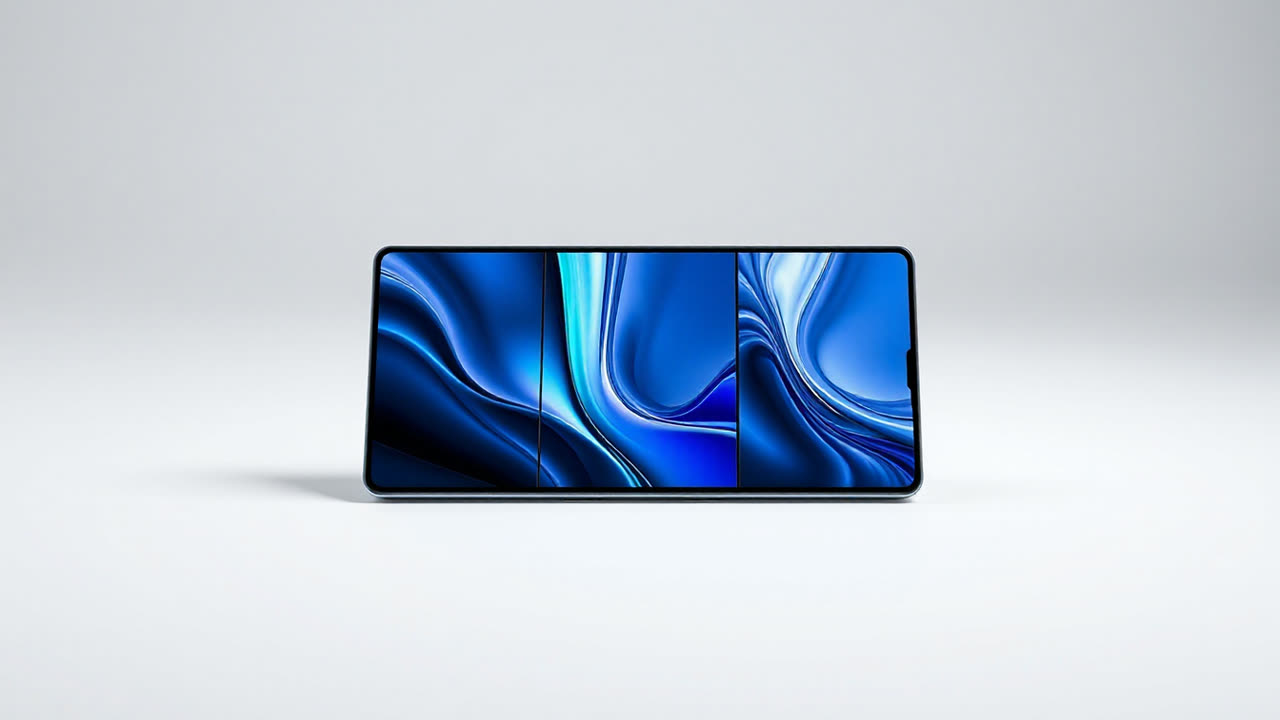
Huawei's Mate XT2, unveiled on September 7, 2026, in China, marks a significant leap in foldable smartphone technology as the world's first tri-panel foldable to integrate a built-in privacy display. This "Ultimate Design" or "Extraordinary Master" device not only pushes the boundaries of form factor innovation but also introduces a critical privacy feature previously seen only in traditional slab phones, specifically the Samsung Galaxy S26 Ultra. Its starting price of CNY 19,999 (approximately $2,980) for the 16GB+256GB model, escalating to CNY 24,999 (about $3,725) for the 1TB privacy screen variant and CNY 29,999 (around $4,470) for the top-tier 2TB package with stylus, firmly positions it in the ultra-premium segment.
The core innovation lies in its "Lingdun" or "Smart Shield" privacy screen, a hardware-level technology utilizing an independent dual-pixel design. This allows the display to dynamically switch between wide and narrow viewing angles without compromising resolution, effectively shielding on-screen content from prying eyes. Users can activate this feature with a double-tap or smart control key and configure it for specific applications, enhancing security for sensitive information like banking apps or private messages. This direct integration contrasts with traditional privacy screen protectors that often degrade image quality and brightness. Huawei explicitly claims its dual-pixel approach maintains brightness and contrast, addressing a significant user concern identified with Samsung's Privacy Display on the Galaxy S26 Ultra.
Beyond privacy, the Mate XT2 represents a maturation of the tri-fold concept. Huawei has transitioned from its previous outward-folding "Z-shaped" design, which left the flexible screen exposed, to an inward-folding "G-shaped" architecture. This new design, reminiscent of Samsung's Galaxy Z TriFold (launched in 2025 as a technological showcase), ensures the expansive 10.2-inch inner 3K OLED display is fully protected when closed. When folded, a 6.5-inch OLED cover display with a peak brightness of 6,500 nits provides a conventional smartphone experience. This shift underscores an industry-wide convergence towards more robust and user-friendly foldable designs.
The device's enhanced durability is another critical stride, addressing a long-standing Achilles' heel for foldables. It is the first tri-fold phone to achieve IP58 and IP59 dust and water resistance ratings, a significant milestone for a form factor historically plagued by fragility concerns. The outer display is protected by basalt glass, boasting 30 times better drop resistance and 16 times better scratch resistance than its predecessor, while the inner display features a multi-layer composite structure that improves impact resistance by 200%. A redesigned hinge further contributes to its resilience.
Under the hood, the Mate XT2 is powered by Huawei's new Kirin 9050 Pro processor, based on the company's "Tau Scaling Law," delivering a claimed 42% performance boost over previous Mate XT models. This proprietary chip development is particularly noteworthy given ongoing geopolitical constraints, highlighting Huawei's relentless investment in R&D and its drive towards self-reliance in silicon. The Kirin 9050 Pro's Maleoon GPU also supports hardware-accelerated real-time ray tracing, pushing mobile graphics capabilities. Running on HarmonyOS 7.0, the Mate XT2 leverages its large display for enhanced multitasking, including a three-way split-screen layout.
This launch carries substantial implications for both users and the wider tech industry. For consumers, the Mate XT2's integrated privacy display removes a major barrier to using large-screen devices confidently in public. The ability to instantly safeguard sensitive content from side glances, without sacrificing display quality, could significantly broaden the appeal of foldables beyond early adopters. This feature could evolve into a premium standard across all high-end smartphones, not just foldables, as privacy concerns intensify.
From an industry perspective, Huawei's continued innovation, despite sanctions, solidifies its position as a technological leader, particularly in the foldable segment where it held a 40% shipment share in China in Q1 2026. The Mate XT2's advanced design and features intensify competition, especially as Samsung continues to gain market share with its Fold and Flip series, and Apple prepares its rumored first foldable iPhone for late 2026. The market for foldables is projected to grow by 20-30% year-on-year in 2026, driven by new entries and evolving designs. Huawei's substantial pricing reinforces the luxury status of tri-fold devices, potentially influencing how rivals position their high-end offerings. The emphasis on ruggedness with IP58/59 ratings indicates a crucial industry trend towards making foldables as durable as traditional flagships, a necessary step for widespread adoption. As the foldable market matures, devices like the Mate XT2, with their blend of cutting-edge design, enhanced durability, and innovative privacy features, will dictate the pace and direction of mobile evolution.