Hugging Face's LeRobot v0.6.0 Unleashes "Imagination" in Robotics
The latest LeRobot release introduces world models, enabling robots to predict future actions and significantly advancing autonomous learning.
✨ This content was summarized and interpreted by AI; it may contain errors — please verify accuracy with the original sources. Learn more
Listen to this story
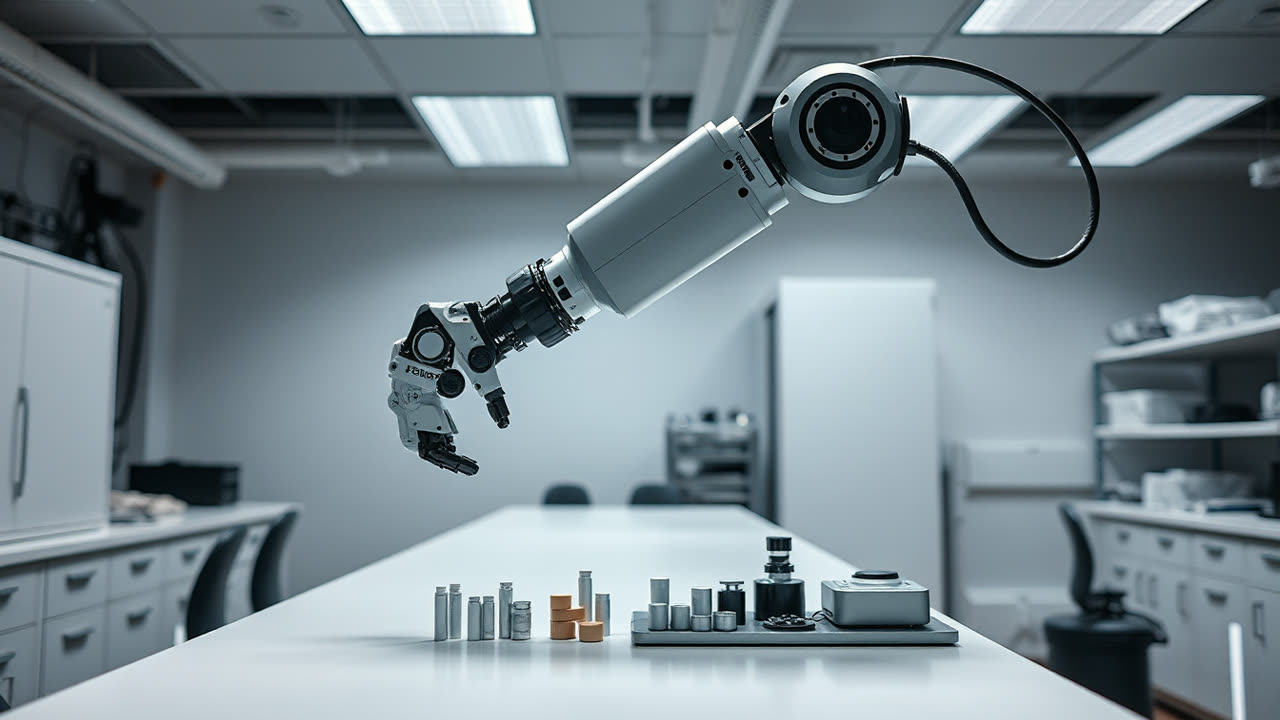
Hugging Face has unveiled LeRobot v0.6.0, dubbed "Imagine, Evaluate, Improve," marking a pivotal advancement in robot learning by integrating "world models" that allow robots to "imagine" future actions before execution. This release significantly expands its capabilities with new Vision-Language-Action (VLA) models like GR00T N1.7 and MolmoAct2, a dedicated Reward Models API for effective success evaluation, and six new unified simulation benchmarks. Crucially, dataset handling has been substantially improved with features like VLM-powered language annotation and faster data loading, alongside a `lerobot-rollout` CLI for human-in-the-loop corrections, turning deployment failures into valuable training data.
This update fundamentally redefines robotics, shifting from simple precision tools to intelligent apprentices capable of active skill acquisition through end-to-end imitation learning. By offering state-of-the-art models, datasets, and tools built on PyTorch, Hugging Face is democratizing AI in robotics, making it accessible for researchers and developers to contribute and benefit from shared resources, even without physical robots. The modular, open-source nature of the framework, bolstered by collaborations with partners like NVIDIA, is set to accelerate research and development across a multitude of industries. LeRobot v0.6.0 is more than just an incremental update; it represents a strategic leap towards a future where robots possess unprecedented autonomy and intelligence, learning and adapting dynamically.