Humanoid Robot Yansyn-X2 Cries on Command, Pushing Emotional AI Boundaries
Yanxi Technology's Yansyn-X2 humanoid robot demonstrated the ability to 'cry on command' at a Shanghai conference, marking a significant leap in emotional mimicry and affective computing.
✨ This content was summarized and interpreted by AI; it may contain errors — please verify accuracy with the original sources. Learn more
Listen to this story
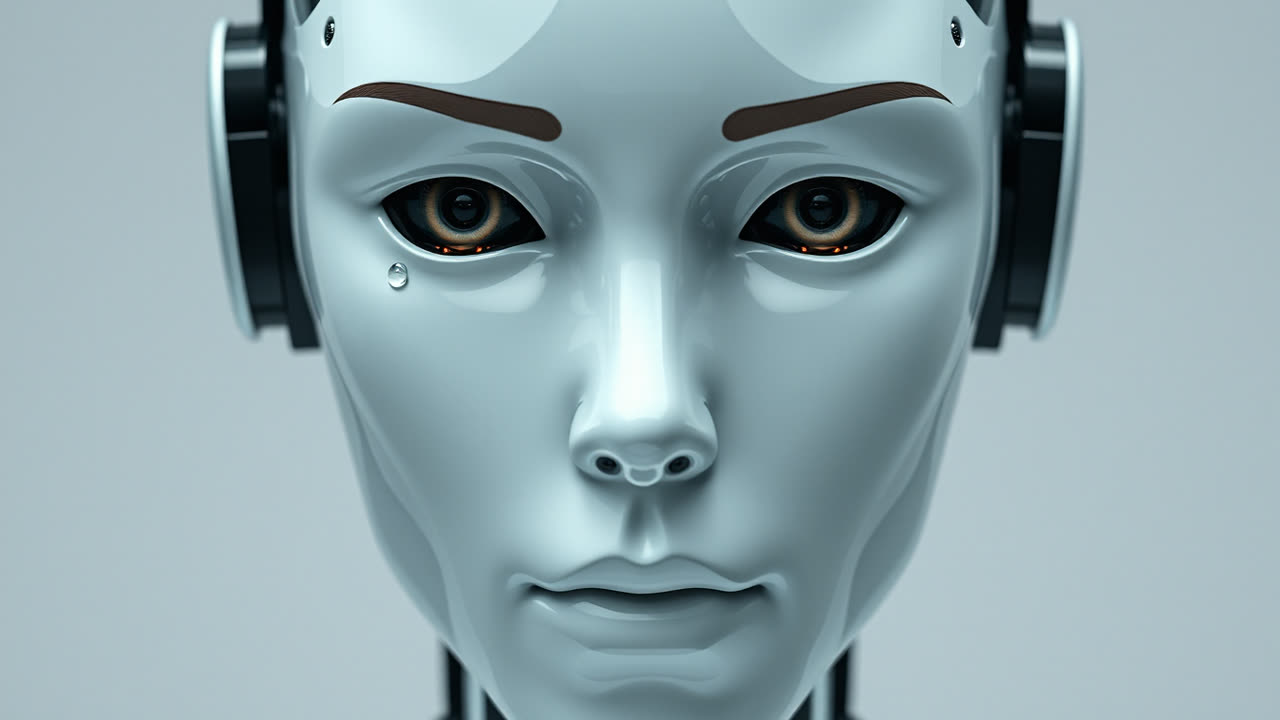
A single tear rolling down the medical-grade silicone cheek of the Yansyn-X2, a humanoid robot developed by Yanxi Technology, marked a significant, albeit unsettling, leap in emotional mimicry during its demonstration at the 2026 Inclusion Conference in Shanghai. This ability to "cry on command" is not merely a novelty; it represents a profound advancement in affective computing, the field dedicated to enabling machines to recognize, interpret, and respond to human emotions. The Yansyn-X2 achieves this through a sophisticated three-layer technical architecture, where an AI algorithm first analyzes conversational context and tone to gauge emotional appropriateness, then signals bionic components beneath its face to shift features into a sad expression, culminating in the physical manifestation of a tear.
This development matters immensely because it pushes the boundaries of human-robot interaction (HRI), aiming to make machines more relatable and engaging, particularly in sensitive applications. The immediate impact on users is a heightened, and potentially disquieting, sense of connection. While the goal is to foster natural interaction rather than deceive, witnessing a machine shed a tear inevitably triggers a complex psychological response, often plunging observers into the "uncanny valley". This phenomenon, first described by Japanese roboticist Masahiro Mori in 1970, posits that as a robot's resemblance to a human increases, so does our affinity, until it reaches a point of near-humanity where subtle imperfections evoke revulsion or unease. The Yansyn-X2’s ability to cry, while a technical marvel, likely positions it squarely within this uncanny territory, challenging human perceptions of authenticity and empathy.
For the robotics industry, this innovation signals a strategic shift towards more emotionally intelligent machines. Companies are increasingly investing in AI systems that can interpret human feelings and respond appropriately to enhance human well-being and connections. Prior generations of humanoid robots, such as Hanson Robotics' Sophia, activated in 2016, already demonstrated impressive capabilities, mimicking over 60 facial expressions and engaging in interactive speech and eye-tracking to simulate emotions. Engineered Arts' Ameca, a UK-based creation, further advanced this with highly lifelike facial expressions and gestures, designed as a platform for natural human-machine engagement. Similarly, the Nadine robot from Nanyang Technological University exhibits personality, mood, and can remember past conversations, boasting 27 degrees of freedom for facial and upper body movements. These robots primarily rely on advanced AI, computer vision, and natural language processing to detect and simulate emotions. The Yansyn-X2's innovation lies in moving beyond mere facial contortion to a physical, almost biological, manifestation of emotion, adding a layer of perceived realism that rivals have yet to publicly achieve with such detail. Chinese scientists, for instance, are also developing two-stage methods to enhance natural and accurate facial expressions using multiple degrees of freedom.
The implications extend to diverse applications. In elder care, emotionally responsive robots like PARO, a therapeutic seal-like robot, have already shown promise in reducing stress and enhancing companionship. The Yansyn-X2's advanced emotional expression could deepen such therapeutic connections, potentially alleviating loneliness more effectively. In education, robots like Milo assist children with autism spectrum disorders in learning about emotional expression and empathy. Customer service and hospitality could also see robots offering more personalized and empathetic interactions, improving user satisfaction. However, the ethical considerations are paramount. The ability to simulate emotions raises concerns about manipulation, the potential for humans to develop unhealthy emotional dependencies on machines, and the privacy implications of robots processing sensitive emotional data. The distinction between simulated emotion and genuine feeling remains crucial; robots, currently, do not authentically experience emotions but rather process data and respond algorithmically.
Looking ahead, the trajectory of emotional AI in robotics points towards increasingly sophisticated algorithms and machine learning that will allow robots to interpret human emotional nuances with greater accuracy. Interdisciplinary approaches, combining psychology, neuroscience, and robotics, will be vital to refining these systems. The global market for humanoid robots is projected to reach $38 billion by 2035, with annual shipments potentially hitting 1.4 million, indicating a rapid expansion. As manufacturing costs decrease and technological capabilities grow, the focus will shift from merely creating humanoids to ensuring their economic viability and ethical integration into society. The next generation of robots will likely integrate real-time emotional feedback with long-term memory to understand not just transient moods but also personality over time, further blurring the lines between human and machine interaction. However, responsible design and robust ethical frameworks will be essential to navigate the inherent risks, ensuring that these emotionally expressive machines genuinely enhance human well-being rather than exploiting vulnerabilities or diminishing authentic human connections. The "creepy" factor of such advanced emotional mimicry will continue to be a critical design challenge, demanding that developers either aim for undeniable machine aesthetics or achieve near-perfect human realism to bypass the uncanny valley and foster trust.