Hyundai has officially opened orders for its new IONIQ 3, an entry-level electric hatchback poised to disrupt the burgeoning affordable EV market with a starting price of approximately $30,000.
Hyundai opened orders for the IONIQ 3, its new entry-level electric hatch, starting at about $30,000.
✨ This content was summarized and interpreted by AI; it may contain errors — please verify accuracy with the original sources. Learn more
Listen to this story
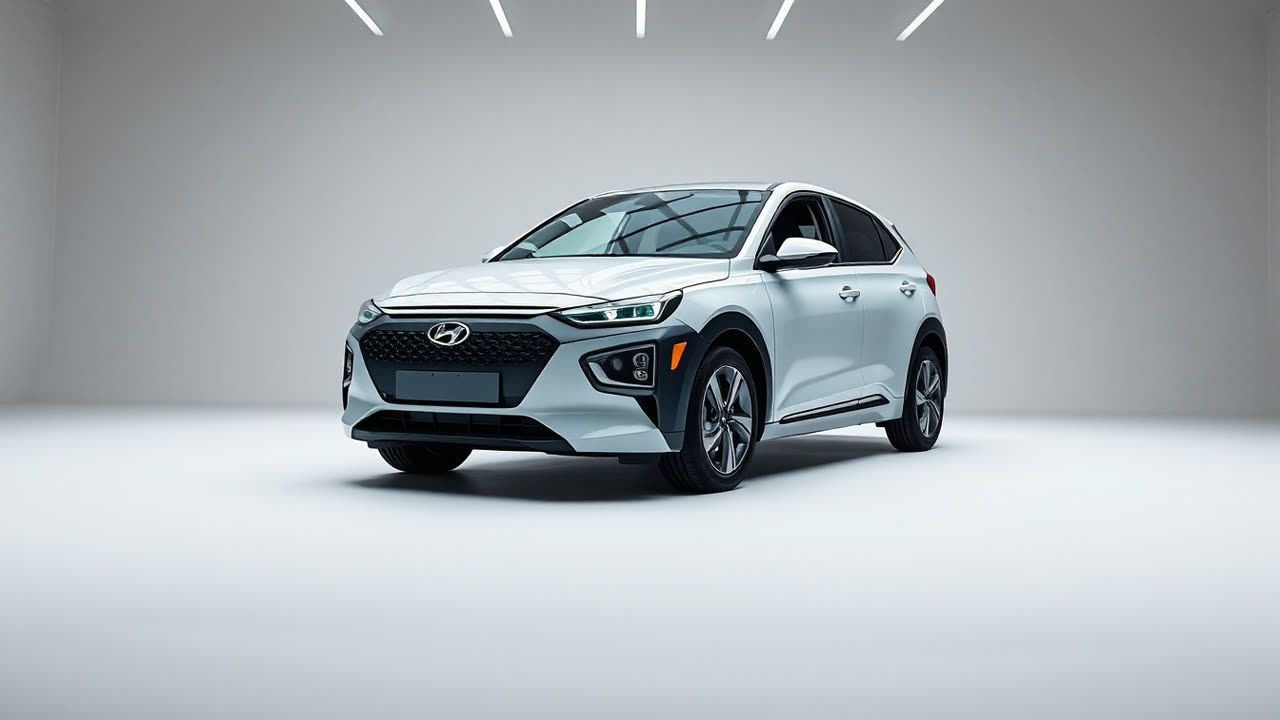
Hyundai has officially opened orders for its new IONIQ 3, an entry-level electric hatchback poised to disrupt the burgeoning affordable EV market with a starting price of approximately $30,000. This aggressive pricing strategy positions the IONIQ 3 as a critical vehicle in accelerating mainstream EV adoption, particularly as global economic pressures continue to make higher-priced electric vehicles a luxury for many. The IONIQ 3, designed with urban commuters and first-time EV buyers in mind, leverages Hyundai’s established Electric-Global Modular Platform (E-GMP) architecture, albeit likely in a more compact and cost-optimized configuration, to deliver a compelling blend of efficiency and practicality. Early specifications suggest a projected range of around 220-250 miles on a single charge for the base model, powered by a 58 kWh battery pack, with a more potent long-range variant potentially offering up to 300 miles. Fast charging capabilities are expected to allow an 80% charge in under 30 minutes, a crucial feature for daily usability.
This strategic move by Hyundai is not merely an expansion of its IONIQ sub-brand; it represents a significant commitment to democratizing electric mobility, placing immense pressure on competitors across the automotive spectrum. For consumers, the IONIQ 3's price point, especially when coupled with potential federal tax credits or local incentives, brings EV ownership within reach of a much broader demographic, effectively challenging the perception that electric vehicles are inherently premium products. The lower entry barrier could significantly boost the "second car" market for EVs, allowing households to transition more easily away from internal combustion engines. Its compact footprint also caters directly to the growing demand for agile, efficient vehicles in densely populated urban environments, where charging infrastructure is also increasingly prevalent.
From an industry perspective, the IONIQ 3's launch is a gauntlet thrown down. Traditional rivals like Volkswagen, which has been developing its ID.2all for a similar market segment, and Renault with its upcoming 5 E-Tech, will face heightened competition. The $30,000 price point also directly challenges the long-anticipated "Model 2" or "Redwood" from Tesla, forcing accelerated development or a re-evaluation of pricing strategies from the EV giant. Furthermore, it intensifies the battle with Chinese manufacturers like BYD and MG, which have already begun to introduce cost-effective EVs into European and other international markets. Hyundai's ability to deliver a feature-rich, reliable EV at this price point, backed by its established dealer network and warranty, provides a distinct advantage over newer, less proven entrants. Unlike the IONIQ 5 and IONIQ 6, which pushed the boundaries of design and technology at higher price points, the IONIQ 3 focuses on essential utility and value, aiming for volume sales.
The IONIQ 3's arrival also showcases Hyundai's maturing EV strategy. Having successfully launched the premium IONIQ 5 crossover and the sleek IONIQ 6 sedan, the brand is now filling out its portfolio with a high-volume, entry-level offering, creating a comprehensive lineup that appeals to diverse market segments. This systematic approach allows Hyundai to leverage economies of scale in battery production and component sharing across its E-GMP platform, driving down manufacturing costs. The company's commitment to vertical integration, including battery supply chain management, is likely a key factor in achieving this competitive price.
Looking ahead, the IONIQ 3 is poised to be a catalyst for a new wave of EV adoption. Its success will likely compel other legacy automakers to prioritize more affordable electric models, potentially igniting a price war in the sub-$35,000 segment. This could lead to a rapid acceleration of EV market share, particularly in regions with strong government incentives or high fuel prices. The challenge for Hyundai and its competitors will be to maintain profitability while scaling production and continuing to innovate in battery technology and charging infrastructure. As more affordable EVs enter the market, the focus will shift from range anxiety to charging convenience and overall total cost of ownership. The IONIQ 3's launch marks a pivotal moment, signaling the true beginning of the mass-market electric vehicle era, where affordability, rather than just premium features, will dictate market leadership.