Hyundai IONIQ 3 Launches with 308 Miles Range and $25,000 Price, Disrupting Affordable EV Market
Hyundai's new IONIQ 3 electric hatchback, offering an impressive 308 miles of range for approximately $25,000, is poised to redefine the affordable EV segment and accelerate mass adoption.
✨ This content was summarized and interpreted by AI; it may contain errors — please verify accuracy with the original sources. Learn more
Listen to this story
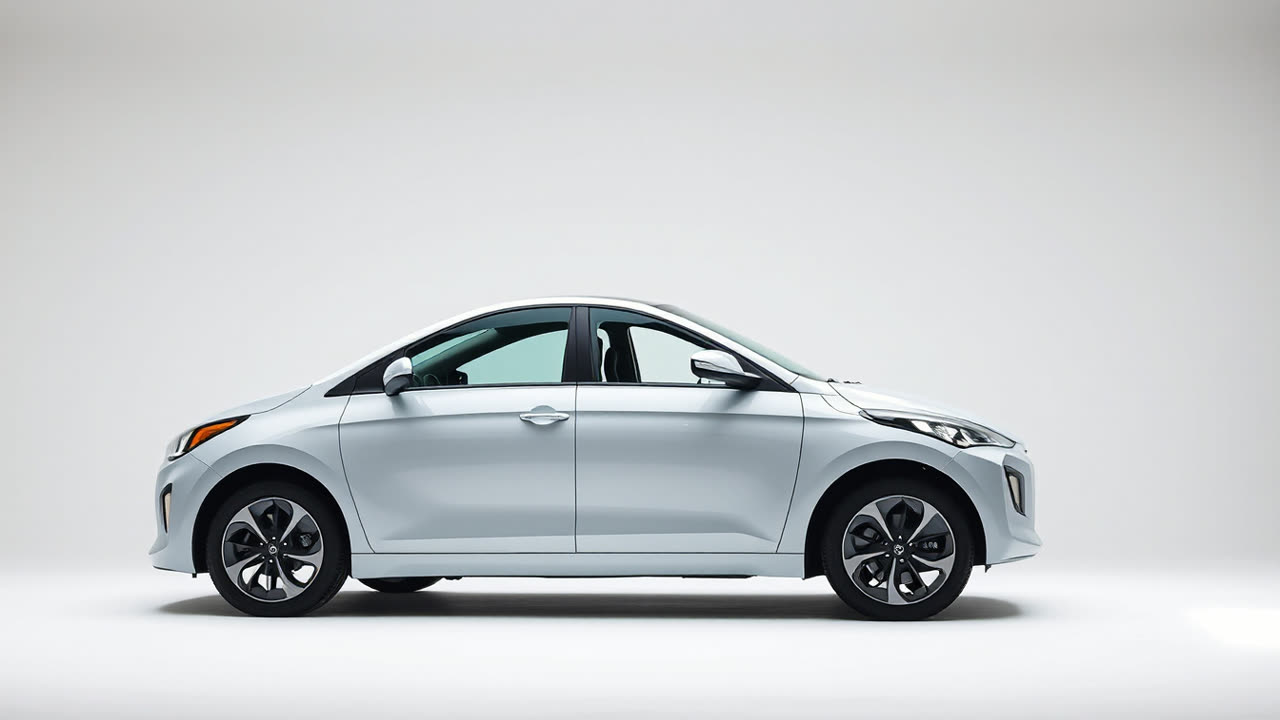
Hyundai’s new IONIQ 3 electric hatchback has launched with an impressive 308 miles of range and a highly competitive starting price of approximately $25,000, immediately positioning it as a disruptive force in the burgeoning affordable EV market. This aggressive pricing and substantial range have already generated unprecedented interest in the UK, surpassing any previous Hyundai vehicle launch, underscoring a significant shift in consumer demand towards accessible, long-range electric vehicles. The IONIQ 3’s introduction at this price point directly challenges the established notion that extended EV range is exclusive to premium segments, making electric mobility a viable option for a much broader demographic.
This strategic move by Hyundai carries profound implications for both consumers and the automotive industry, particularly in the sub-$30,000 segment where value and practicality are paramount. For users, the IONIQ 3 democratizes long-distance electric travel, reducing range anxiety—a persistent barrier to EV adoption—without demanding a premium price tag. The lower entry cost, combined with potential government incentives and reduced running costs compared to internal combustion engine (ICE) vehicles, significantly improves the total cost of ownership equation. This accessibility is crucial for accelerating mass market EV adoption, especially in urban and suburban environments where a compact, efficient hatchback is highly desirable. Furthermore, the IONIQ 3’s design, likely building on the critically acclaimed aesthetics of its IONIQ 5 and IONIQ 6 siblings, is expected to offer a compelling blend of style, practicality, and advanced technology, making it an attractive proposition beyond just its price and range.
Within the industry, the IONIQ 3 sets a new benchmark for affordability and range, intensifying pressure on competitors to accelerate their own cost-reduction strategies and expand their entry-level EV offerings. Traditional automakers like Volkswagen, with its anticipated ID.2all, and Stellantis, with upcoming compact EVs, will be forced to re-evaluate their pricing and performance targets to remain competitive. Chinese manufacturers, who have made significant inroads into the European market with aggressively priced EVs such as the BYD Dolphin and MG4 EV, will find their primary advantage challenged. The BYD Dolphin, for instance, offers a range of around 265 miles (WLTP) at a similar price point, while the MG4 EV extended range model provides up to 323 miles, but typically starts at a higher price. The IONIQ 3 effectively splits the difference, offering competitive range at a price point that undercuts many. Hyundai's ability to deliver such specifications at this price suggests efficiency gains in battery technology, manufacturing processes, or a strategic decision to prioritize market share over immediate profit margins in this segment. This could be attributed to Hyundai's vertically integrated supply chain and its dedicated E-GMP platform, which allows for scalable and cost-effective production of various EV models.
The IONIQ 3’s arrival builds on Hyundai’s successful "IONIQ" sub-brand strategy, which has already seen critical acclaim and strong sales for the IONIQ 5 and IONIQ 6, both built on the E-GMP platform. While the IONIQ 3 is expected to utilize a more cost-effective architecture, potentially a derivative of E-GMP or a new platform optimized for smaller vehicles, it inherits the brand's reputation for innovative design, robust charging capabilities (including potential for ultra-fast charging, albeit possibly at a lower rate than its premium siblings), and advanced driver-assistance systems. Its predecessor, in a spiritual sense, might be considered the Kona Electric, which paved the way for Hyundai in the affordable compact EV space but typically offered less range and a higher starting price in its fully equipped versions compared to the new IONIQ 3. The IONIQ 3 represents a significant leap forward in packaging efficiency and cost reduction, leveraging economies of scale and maturing battery technology.
Looking ahead, the IONIQ 3 is poised to significantly accelerate the transition to electric vehicles, particularly in markets where compact cars are popular and price sensitivity is high. Its success will likely spur other manufacturers to prioritize the development of similarly priced and capable models, leading to a richer and more competitive landscape for consumers. We can anticipate a wave of sub-$30,000 EVs with ranges exceeding 250 miles becoming the new standard within the next two to three years. Hyundai itself may leverage the IONIQ 3's platform for further derivatives, potentially a compact crossover or a smaller sedan, expanding its affordable EV portfolio. The primary challenges will lie in scaling production to meet surging demand, managing raw material costs for batteries, and ensuring robust charging infrastructure development keeps pace with the influx of new, affordable EVs. However, the IONIQ 3’s aggressive market entry marks a pivotal moment, signaling the true arrival of the mass-market electric vehicle.