Hyundai's IONIQ 3 Set to Electrify Affordable EV Market with 2026 Launch
Hyundai is poised to launch mass production of its compact IONIQ 3 EV in mid-August 2026, targeting over 40,000 sales in 2027 to democratize electric vehicle ownership.
✨ This content was summarized and interpreted by AI; it may contain errors — please verify accuracy with the original sources. Learn more
Listen to this story
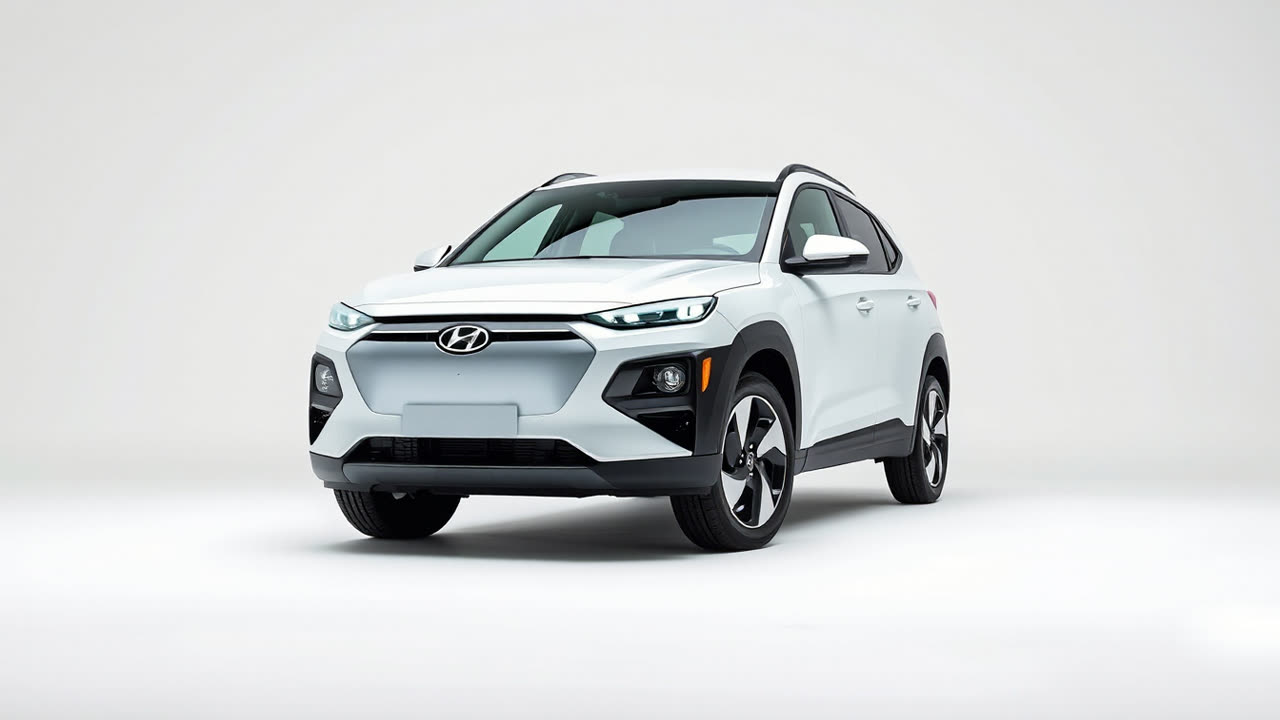
Hyundai is poised to significantly accelerate its electric vehicle offensive with mass production of the IONIQ 3 commencing in mid-August 2026, targeting an ambitious sales volume exceeding 40,000 units in 2027 alone as orders open in the latter half of 2026. This aggressive timeline underscores Hyundai's strategic pivot towards democratizing EV ownership, positioning the IONIQ 3 as a critical entry point into its acclaimed electric lineup, likely slotting beneath the IONIQ 5 and 6 in both size and price.
The IONIQ 3 is anticipated to be a compact SUV or hatchback, designed to directly contend in the burgeoning affordable EV segment, a space currently underserved by compelling options. Early indications suggest it will leverage a modified version of Hyundai's Electric Global Modular Platform (E-GMP), optimized for smaller dimensions and potentially incorporating more cost-effective battery chemistries like Lithium Iron Phosphate (LFP) for its base models, alongside Nickel Manganese Cobalt (NMC) options for extended range. This dual-chemistry approach, mirroring strategies seen from competitors, would allow Hyundai to offer a more accessible starting price point, potentially in the sub-$30,000 range before incentives, which is crucial for capturing a broader demographic. The vehicle is expected to offer a practical range, likely exceeding 250 miles on a single charge for its mid-tier variants, making it a viable primary vehicle for many urban and suburban drivers. Fast-charging capabilities, a hallmark of the E-GMP platform, are also expected to be retained, allowing for rapid replenishment of the battery from 10% to 80% in under 20 minutes, a significant advantage over many current compact EV offerings.
This launch carries profound implications for both consumers and the wider automotive industry. For users, the IONIQ 3 represents a crucial step towards making long-range, technologically advanced EVs more attainable. The current EV market, while growing, still faces a significant price barrier for many potential buyers, particularly outside of luxury segments. By introducing a well-equipped, efficient compact EV at a competitive price, Hyundai could unlock a new wave of adoption, appealing to first-time EV buyers and those seeking a practical, environmentally conscious daily driver without compromising on modern features or charging convenience. The projected sales target of over 40,000 units in its first full year suggests Hyundai's confidence in strong consumer demand for such a vehicle, potentially alleviating some of the "range anxiety" and "cost anxiety" that have historically hampered broader EV uptake.
Industrially, the IONIQ 3's introduction intensifies the race for market share in the compact EV segment. It will directly challenge established players like the upcoming Kia EV3 and EV4 (expected to share significant underpinnings), the Volkswagen ID.2all, and potentially even the future iterations of the Tesla Model 3 or a smaller, more affordable Tesla model. Hyundai's proven track record with the IONIQ 5 and 6, both lauded for their design, efficiency, and charging speeds, gives the IONIQ 3 a strong foundation of brand credibility. Its arrival will likely force competitors to re-evaluate their own pricing strategies and feature sets for smaller EVs, driving innovation and ultimately benefiting consumers through increased choice and potentially lower prices across the board. The emphasis on high-volume production from the outset also signals Hyundai's commitment to scaling EV manufacturing, leveraging its global supply chains and manufacturing expertise to meet anticipated demand. This move further solidifies Hyundai-Kia’s position as a dominant force in the global EV transition, moving beyond niche premium offerings to target the mass market segment with purpose-built electric vehicles.
Looking ahead, the IONIQ 3 is more than just a new model; it's a strategic linchpin in Hyundai's broader electrification roadmap. Its success will validate the scalability and cost-effectiveness of the E-GMP platform for smaller vehicles and could pave the way for an even more diverse range of electric offerings, including potentially smaller city cars or even commercial vehicles. The 40,000-unit target for 2027, while ambitious, is realistic given the accelerating demand for compact EVs and Hyundai's robust production capabilities. The ongoing investment in battery technology, manufacturing efficiencies, and global charging infrastructure partnerships will be critical to sustaining this momentum. As the EV market matures, the battle will increasingly shift from luxury performance to practical affordability, and the IONIQ 3 positions Hyundai squarely at the forefront of this next wave, poised to capture a significant portion of the mass-market EV transition.