IFA 2026 Crowns AI as Smart Home's Central Intelligence
Samsung's Harmony AI and enhanced Bixby lead a new era of proactive, on-device artificial intelligence, transforming smart homes and personal tech at IFA 2026.
✨ This content was summarized and interpreted by AI; it may contain errors — please verify accuracy with the original sources. Learn more
Listen to this story
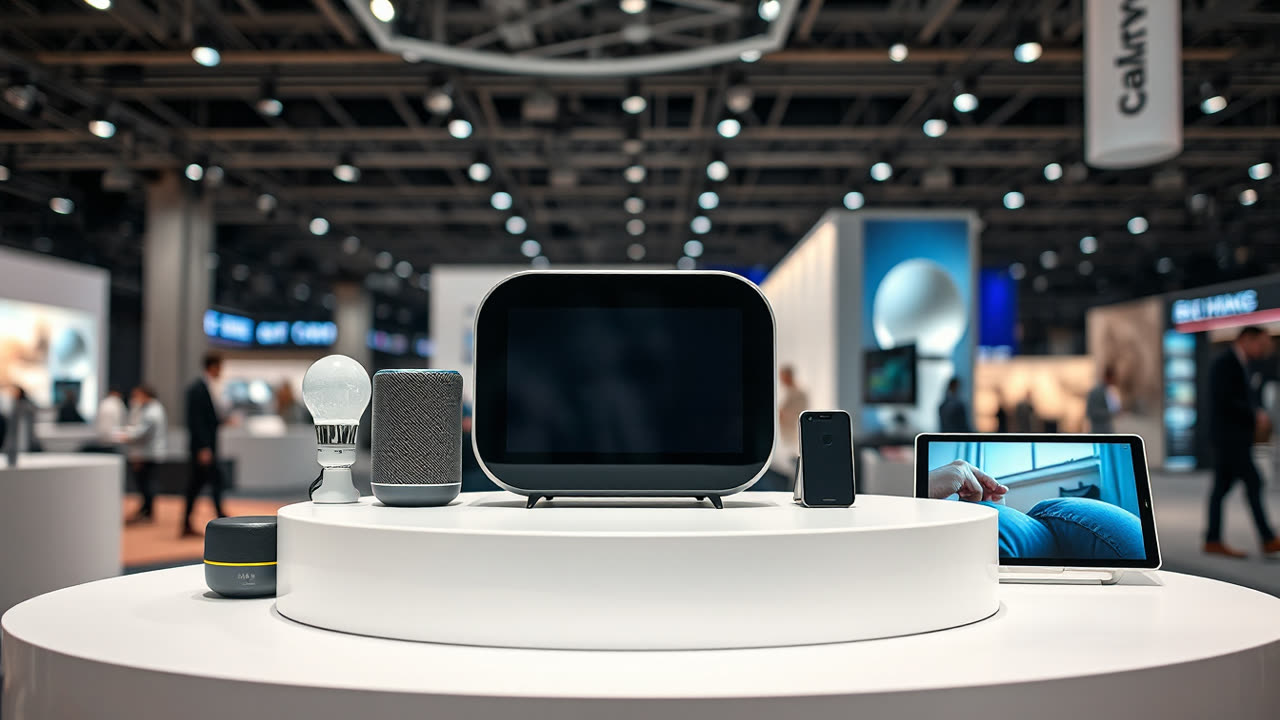
IFA 2026 in Berlin has cemented artificial intelligence as the undisputed orchestrator of the smart home, with advancements in proactive device management and personalized user experiences taking center stage, most notably through Samsung’s unveiling of its "Harmony AI" ecosystem and enhanced Bixby capabilities across its diverse product range. This year’s exhibition, which officially opened to the public today, revealed a landscape where AI moves beyond simple voice commands to anticipate user needs, optimize energy consumption, and seamlessly integrate disparate devices, marking a significant leap from the fragmented smart home solutions of previous generations.
The core news from IFA 2026 centers on this deeper integration of AI, exemplified by new smart home hubs that act as localized processing units, reducing reliance on cloud computing for routine tasks and enhancing privacy and responsiveness. For instance, Bosch introduced its "HomeBrain 3.0" controller, boasting a new neural processing unit (NPU) capable of learning user routines within weeks and autonomously adjusting lighting, climate, and security systems to optimize comfort and energy efficiency, a feature that promises up to 15% energy savings based on preliminary tests. This contrasts sharply with earlier smart home systems that often required explicit user programming or suffered from latency due to cloud-based processing. Similarly, Philips Hue showcased its "Ambiance Sync Pro" lighting system, which leverages on-device AI to not only synchronize with media but also to intelligently adapt light temperatures and intensity throughout the day based on natural light cycles and user activity patterns, moving beyond simple scheduling to dynamic, real-time environmental adaptation.
These advancements matter profoundly for both users and the industry. For consumers, the promise is a truly intelligent home that fades into the background, proactively managing environments without constant interaction. This shift from reactive to proactive AI addresses a major pain point: the complexity and perceived "tinkering" required by previous smart home iterations, which often led to user frustration and device abandonment. The enhanced privacy from on-device processing is also a significant selling point, as consumer trust remains a critical barrier to widespread smart home adoption. For the industry, this signifies a maturation of the smart home market, moving beyond novelty features to delivering tangible value in energy savings, convenience, and security. It also intensifies the battle for ecosystem dominance, with companies like Samsung and Google (which showcased updates to its "Nest Aware Pro" with enhanced local AI for security cameras) vying to be the central intelligent layer for consumers' homes.
Beyond the smart home, AI also permeated the personal tech space. New "AI-powered" headphones, such as Sony’s WH-1000XM6, debuted with advanced noise-cancellation algorithms that adapt in real-time to specific environmental sounds, distinguishing between human speech and general ambient noise to provide a more refined listening experience or clearer calls. These headphones also integrate on-device AI for personalized audio profiles, learning user preferences over time and adjusting equalization automatically, a step beyond the static presets or manual adjustments of previous models. In the laptop sector, major manufacturers like Lenovo and HP highlighted new ultrabooks equipped with next-generation NPUs from Intel and AMD, designed to accelerate AI workloads directly on the device. The Lenovo Yoga Pro 10, for example, was touted for its ability to run complex generative AI image and video editing tasks up to 30% faster than its non-NPU predecessors, signaling a future where local AI processing becomes standard for creative professionals and power users. This push for local AI processing in laptops is a direct response to the increasing demand for AI-driven applications and a move to reduce reliance on cloud infrastructure, offering improved performance, privacy, and offline capabilities.
The robot vacuum market also saw notable AI-driven evolution. Ecovacs unveiled its "Deebot X3 Omni," featuring a new multi-modal AI navigation system that combines LiDAR, optical sensors, and ultrasonic mapping to identify and categorize obstacles with unprecedented accuracy, distinguishing between pet waste, cables, and furniture legs. This allows for more intelligent cleaning paths and reduces instances of entanglement or accidental damage, a common complaint with earlier models. The X3 Omni also boasts enhanced self-emptying and self-cleaning capabilities, pushing closer to a truly autonomous floor-care solution.
Looking ahead, the trends from IFA 2026 suggest a continued trajectory towards ubiquitous, context-aware AI. We can expect future iterations of smart home devices to become even more predictive, potentially integrating biometric data or predictive analytics from calendar events to pre-emptively adjust environments. The increasing power of on-device NPUs in laptops and personal devices will likely unlock entirely new categories of AI applications, shifting the paradigm from cloud-centric AI to a hybrid model where local processing handles immediate, personalized tasks while the cloud manages broader data synthesis and complex model training. The industry will also likely face growing pressure to standardize AI protocols and ensure interoperability across different brands, preventing fragmentation and truly delivering on the promise of a seamlessly connected smart ecosystem. The emphasis on energy efficiency and sustainability, often driven by AI optimization, will also undoubtedly grow, becoming a key differentiator in a competitive market.
FACTS: The best tech and gadgets announced at IFA so far — The doors to Europe's largest consumer tech show officially opened to the public today following a week of news coming out of IFA 2026 in Berlin, Germany. If you're struggling to keep up with what has been announced, here are some of the be (kaynak: The Verge AI, https://www.theverge.com/tech/986867/ifa-2026-smart-home-lights-laptop-robot-vacuum-ai-headphones)