India Mandates Caller-ID Apps Share Spam Data with Telcos, Sparking Data Ownership Debate
India's telecom regulator has ordered caller-ID apps like Truecaller to share user-reported spam data with a blockchain platform run by telecom providers, igniting a fierce debate over data ownership and competition.
✨ This content was summarized and interpreted by AI; it may contain errors — please verify accuracy with the original sources. Learn more
Listen to this story
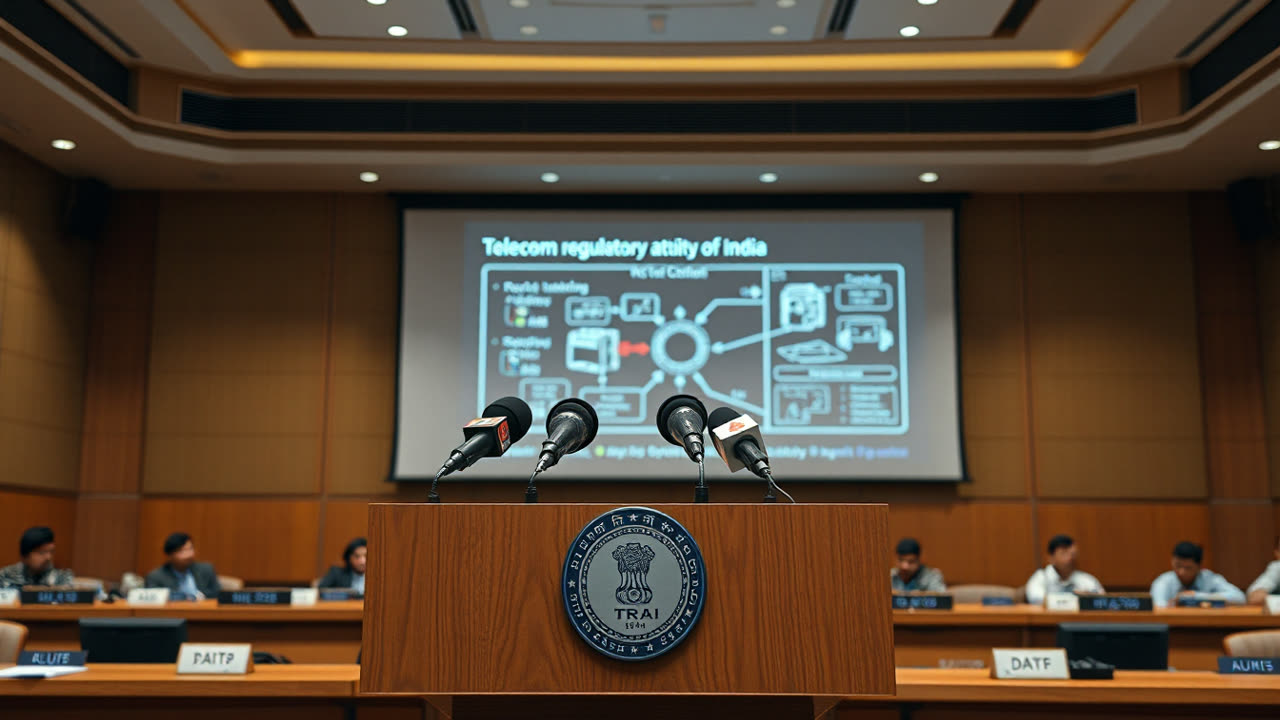
India's Telecom Regulatory Authority (TRAI) has mandated that caller-ID and call-management applications must share user-reported spam data with a blockchain-based platform operated by telecom providers, a move that has ignited a fierce debate over data ownership and competition in the country's burgeoning digital economy. This new regulation, enacted through amendments to the Telecom Commercial Communications Customer Preference Regulations, 2018 (TCCCPR, 2018), aims to bolster India's defenses against the escalating tide of unsolicited commercial communications (UCC) and fraudulent calls, which saw Truecaller users in India encounter an estimated 42 billion spam calls in 2025 alone. However, the requirement has drawn sharp criticism from leading caller-ID app Truecaller, which asserts that this "one-way exchange" effectively compels it to hand over a commercially valuable proprietary asset to its potential rivals, the telecom operators.
The core of the new TRAI directive, announced on Friday, September 18, 2026, is to integrate the robust spam reporting mechanisms of third-party applications with the telecom industry's enforcement infrastructure. Previously, user-flagged spam reports remained largely within the confines of individual apps, limiting their broader impact on the telecom network. Under the revised framework, apps that allow users to mark calls as spam or junk are now obliged to transmit these reports to a centralized blockchain platform managed by telecom operators. This platform is designed to track commercial communications and facilitate anti-spam measures across the industry. Furthermore, TRAI has lowered the threshold for regulatory action against suspected spammers, allowing operators to initiate investigations and graded enforcement actions once three unique complaints are received within 10 days, particularly if corroborated by the operator's AI/ML-based systems. The regulations also extend to application-to-person (A2P) calls, including robocalls and those with recorded or AI-generated voices, mandating advance disclosure to operators and imposing a termination charge of up to 5 paise (approximately 0.052 U.S. cents) per minute for undeclared A2P calls. Notably, certain designated number series, such as 140xx, 1600xx, and 1601xx, used for promotional, service, and transactional communications, are explicitly exempted from blanket spam-tagging by call management apps, though individual users retain the ability to block such calls on their devices.
For users, the immediate impact of this regulation is a potential enhancement in the fight against spam and fraudulent calls. By pooling data from popular caller-ID apps like Truecaller – which boasts over 350 million monthly active users in India, representing more than 70% of its global user base – with the telecom operators' network-level capabilities, the system theoretically gains a more comprehensive and real-time understanding of spam trends. This could lead to more effective blocking and faster identification of emerging spamming patterns, offering some relief to Indian consumers who face an "enormous scale" of unwanted calls. The introduction of an appeal mechanism for users dissatisfied with spam complaint resolutions further empowers consumers.
However, the industry implications are far more complex, particularly for companies like Truecaller, for whom India is its largest market. Truecaller's business model is heavily reliant on its proprietary database, which is built on community reports, automated detection, and other signals, creating a powerful network effect. The mandatory sharing of user spam reports with telecom operators, who are increasingly developing their own AI-based spam filters and caller ID systems (such as Calling Name Presentation, or CNAP), is perceived by Truecaller as anti-competitive. This "one-way exchange" risks undermining Truecaller's competitive edge by providing its valuable, crowdsourced data to entities that are both its partners in the anti-spam effort and its rivals in the broader caller identification space. The company has previously expressed concerns about TRAI's attempts to regulate it, arguing that its service is optional and distinct from telecom network operations. This data transfer could dilute the unique value proposition of third-party apps, potentially impacting their monetization strategies, which include ads, premium subscriptions, and verified IDs for businesses. There's also the underlying concern about data privacy and how user consent will be managed when this information is shared across multiple entities, although TRAI's stated intent is to expand the pool of reports for anti-spam action.
Looking ahead, this regulation marks a significant shift in India's approach to digital governance, emphasizing a more integrated, top-down strategy to combat online nuisances. While the immediate goal is to curb spam, the broader implications touch upon the delicate balance between regulatory oversight, data ownership, and market competition. Truecaller may need to adapt its business strategy in India, potentially focusing more on advanced features beyond basic spam identification or seeking alternative revenue streams that are not directly impacted by shared spam data. The development of network-level caller ID systems by telcos, spurred by TRAI's initiatives, suggests a future where the distinction between native telecom services and third-party apps for call management becomes increasingly blurred. This could lead to a more consolidated anti-spam ecosystem, but also raises questions about innovation and consumer choice if third-party developers find their core functionalities undermined. Globally, regulators are grappling with similar issues; for instance, the FCC in the US is exploring "call branding" technologies to enhance caller ID verification and provide more information to consumers, while Europol highlights the need for seamless information sharing among ISPs, telcos, law enforcement, and regulatory bodies to combat caller ID spoofing. India's aggressive stance, however, is unique in explicitly mandating data sharing from proprietary app platforms to telecom operators. The success of this model will depend on the efficacy of the blockchain platform, the transparency of data usage, and TRAI's ability to navigate the ensuing competitive landscape without stifling innovation.