Indian Startup Alteon Secures Backing for Year-Long Autonomous Wind-Powered Flight
A 20-year-old's Indian startup, Alteon, has secured investment from Lachy Groom for its ambitious project to develop autonomous aircraft capable of year-long flight by harvesting wind energy, signaling a major leap in aerospace endurance.
✨ This content was summarized and interpreted by AI; it may contain errors — please verify accuracy with the original sources. Learn more
Listen to this story
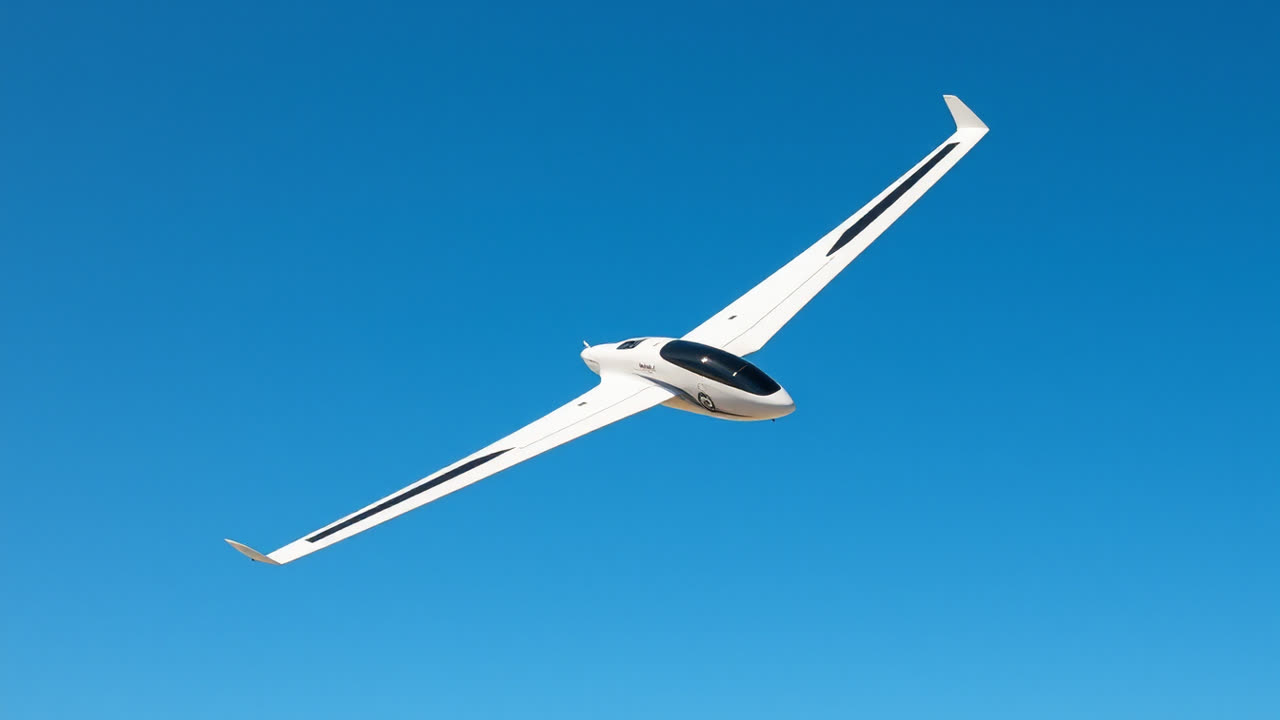
An ambitious Indian startup, Alteon, founded by a 20-year-old, has secured backing from prominent investor Lachy Groom for its audacious goal: developing autonomous aircraft capable of remaining airborne for an entire year by harvesting wind energy. This significant investment, reported on August 31, 2026, signals a serious push into a frontier of aerospace technology that promises to redefine aerial endurance and utility. Alteon's vision centers on creating a new class of high-endurance aerial platforms that could disrupt multiple industries, from telecommunications to climate monitoring, by offering persistent, cost-effective aerial presence without the limitations of traditional aircraft or satellite infrastructure.
The core innovation lies in Alteon's proprietary system for harvesting wind energy, designed to keep their autonomous aircraft aloft for months, potentially extending to a full year. Unlike conventional drones limited by battery life or fuel, or even solar-powered high-altitude pseudo-satellites (HAPS) that rely heavily on daylight, Alteon's approach suggests a mechanism to continuously extract energy from atmospheric conditions. This could allow for sustained operations in diverse weather patterns and latitudes, circumventing the diurnal and seasonal energy fluctuations that challenge solar-electric platforms. The development of such a system by a young founder, whose name has not been widely disclosed but whose vision has evidently captivated early investors like Groom, underscores a growing global trend of rapid innovation in aerospace driven by agile startups rather than solely established defense or aviation giants. Lachy Groom, known for his early-stage investments in disruptive technologies, including notable successes in space and logistics, brings not just capital but also a strategic validation to Alteon’s bold claims, suggesting a belief in the technical feasibility and market potential of this long-duration flight concept.
The implications of year-long autonomous flight are profound, offering a paradigm shift in how persistent aerial data collection and communication services are delivered. For surveillance and reconnaissance, these aircraft could provide uninterrupted monitoring of vast areas, critical for border security, disaster response, and environmental protection, far exceeding the operational windows of current drones that require frequent landings for recharging or refueling. In telecommunications, they could act as "atmospheric satellites," providing broadband internet access to remote or underserved regions, potentially at a fraction of the cost and complexity of launching and maintaining geostationary or low-Earth orbit satellites. Imagine a persistent platform that could circle over a disaster zone for months, providing real-time communication infrastructure and damage assessment without interruption. Climate scientists could deploy these aircraft to continuously monitor atmospheric conditions, ice caps, or ocean currents over extended periods, gathering unprecedented datasets crucial for understanding long-term environmental changes. The operational cost reduction, due to minimal ground crew intervention and elimination of fuel resupply, could make such services economically viable on a scale previously unimaginable.
Comparing Alteon's proposed technology to existing solutions highlights its potential disruptive edge. Current long-endurance platforms typically fall into a few categories: large, expensive HAPS like Airbus's Zephyr or various Google/Facebook initiatives, which are solar-powered and operate in the stratosphere (60,000-70,000 feet) for weeks or months; and medium-altitude, fuel-powered uncrewed aerial vehicles (UAVs) like the Global Hawk, which offer days of endurance but require significant logistical support and operational costs. While HAPS have demonstrated impressive endurance, their high altitude makes them susceptible to stratospheric winds and specific weather phenomena, and their reliance on solar power necessitates substantial battery capacity for night operations, adding weight and complexity. Alteon's wind-harvesting approach, if successful, could potentially operate at lower altitudes, offering greater payload flexibility and potentially more stable flight conditions, while sidestepping the solar-dependence issue. This could position Alteon as a more versatile and perhaps more robust alternative for persistent aerial presence, especially in regions with less consistent sunlight or specific wind patterns that could be exploited. Previous attempts at leveraging wind for propulsion, such as dynamic soaring, have been explored for shorter-duration flights, but Alteon's ambition to sustain flight for a year through wind energy represents a significant leap in scale and technological complexity.
Looking ahead, Alteon faces formidable technical and regulatory challenges. Developing a system that can reliably harvest sufficient wind energy to power an aircraft for a year, while maintaining structural integrity against diverse atmospheric stresses, is an immense engineering feat. The design must be extremely efficient, lightweight, and capable of autonomous navigation and energy management over extended periods without human intervention. Regulatory bodies worldwide will also need to establish new frameworks for aircraft operating autonomously for such prolonged durations, particularly concerning air traffic control integration, safety protocols, and liability. However, if Alteon can navigate these hurdles, the market potential is enormous. The ability to deploy a persistent aerial platform on demand, for months at a time, could create entirely new service models and data economies. We could see the proliferation of "always-on" aerial sensors and communication nodes, fundamentally changing how we monitor our planet, connect populations, and respond to crises. The success of Alteon could catalyze a new era of ultra-endurance aerial systems, shifting the focus from speed and payload capacity to sustained presence and operational autonomy, thereby unlocking unprecedented possibilities for global connectivity and data intelligence.