Inflight 'Evil Twin' Wi-Fi Attack on Delta Flight Triggers Federal Investigation
A passenger returning from a hacking conference deployed a sophisticated 'evil twin' Wi-Fi attack on a Delta Air Lines flight, leading to federal authorities seizing hardware and launching an investigation into the airborne cybersecurity breach.
✨ This content was summarized and interpreted by AI; it may contain errors — please verify accuracy with the original sources. Learn more
Listen to this story
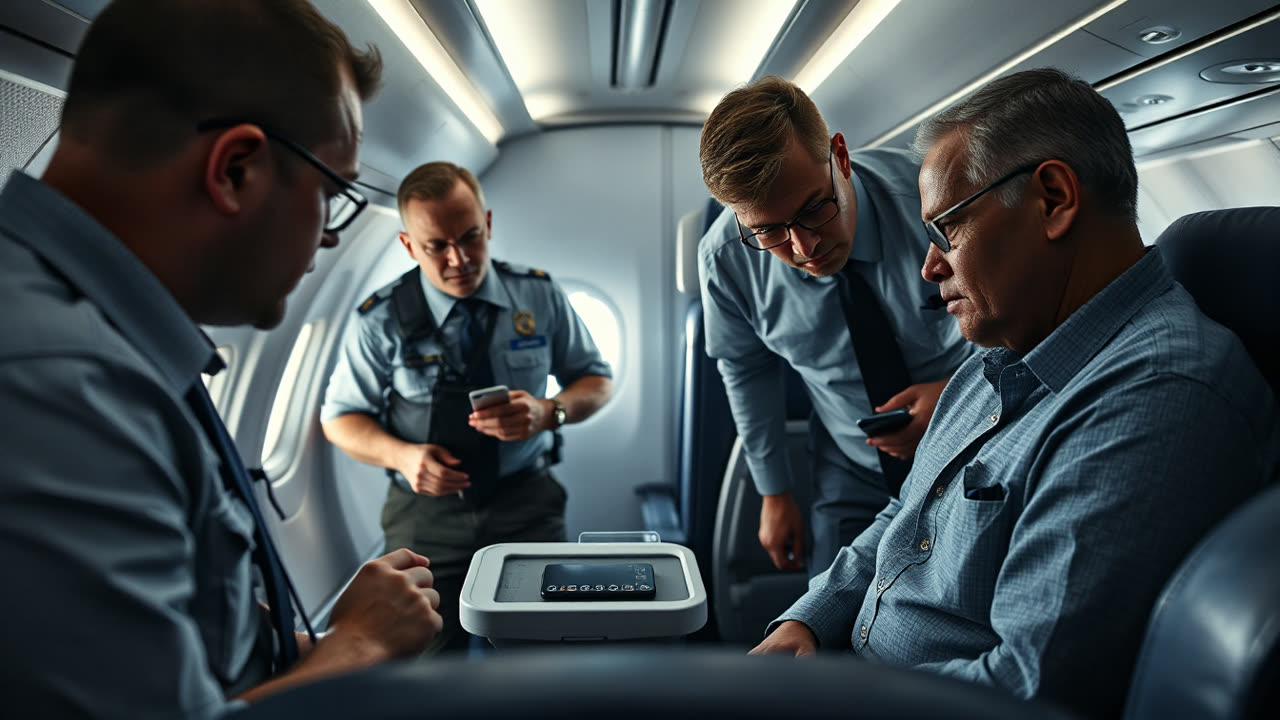
A Delta Air Lines flight from Las Vegas to Atlanta became the unwitting stage for an inflight cybersecurity incident on August 10, 2026, when a passenger, reportedly returning from the DEF CON 34 hacking conference, deployed a sophisticated "evil twin" Wi-Fi attack. This incident, occurring just one day after the conclusion of the major cybersecurity event (which ran from August 6-9, 2026), saw the aircraft's legitimate Wi-Fi network "jammed" through deauthentication attacks, replaced by a rogue hotspot named "Delta WiFi Fast" designed to harvest passenger credentials via a phishing website. The pilots, recognizing the threat, utilized the Aircraft Communications Addressing and Reporting System (ACARS) to alert ground crews and corporate security, explicitly noting the presence of "a bunch of passengers that were at a cybersecurity conference". The cabin crew swiftly deactivated the aircraft's Wi-Fi for approximately 30 minutes, and upon landing, federal authorities and airport police reportedly boarded the Boeing 757, questioning suspects and seizing portable Wi-Fi hardware. While Delta confirmed the incident and initiated a full investigation in partnership with federal law enforcement and aviation regulators, the airline maintained that "safety of flight was never in question, and no aircraft operating systems were affected".
This airborne breach carries significant implications for both passengers and the aviation industry, far beyond the initial disruption. For users, the primary concern is data security and privacy. Passengers, often in a relaxed or distracted state during travel, are particularly vulnerable to "evil twin" attacks, where a seemingly legitimate network tricks devices into connecting. The attacker's goal of harvesting Google credentials and other personal information highlights the pervasive threat of identity theft and account compromise. Such incidents erode passenger trust in the security of inflight services, which are increasingly seen as essential for both work and entertainment. The Federal Communications Commission (FCC) prohibits interfering with Wi-Fi signals, and phishing attempts can lead to severe legal charges like wire fraud or identity theft.
From an industry perspective, the Delta incident underscores the persistent and evolving cybersecurity challenges facing commercial aviation. While airlines consistently assert the segregation of passenger Wi-Fi from critical flight avionics, the very act of a successful deauthentication and "evil twin" attack at 35,000 feet exposes a soft underbelly in passenger-facing systems. The aviation ecosystem, with its complex web of interconnected digital systems managing everything from navigation to maintenance and inflight entertainment, presents numerous attack surfaces. Prior incidents, such as an Australian passenger arrested for similar evil twin attacks at an airport and inflight, demonstrate that this is not an isolated phenomenon. The fact that DEF CON 34 itself reportedly experienced "multiple similar 'deauthorization' Wi-Fi attacks" impacting some of its operations suggests a broader trend among certain individuals to test boundaries, regardless of the venue.
The incident highlights a critical gap in current inflight Wi-Fi security, which is often unencrypted and susceptible to readily available penetration testing tools like the Wi-Fi Pineapple, reportedly used in this attack. While the aviation cybersecurity market is robust, valued at an estimated USD 12.99 billion in 2026 and projected to reach USD 23.80 billion by 2031, this growth is primarily driven by securing core operational technology and critical infrastructure against more severe threats. Passenger Wi-Fi, often treated as a convenience, may not receive the same stringent security oversight. This contrasts with broader efforts by regulatory bodies like the FAA, which has proposed new design standards to address cybersecurity threats for transport category airplanes, engines, and propellers, focusing on protecting against "intentional unauthorized electronic interactions (IUEI) that could create safety hazards". However, these regulations primarily target systems directly impacting airworthiness, leaving passenger networks in a potentially less protected state.
Looking ahead, this incident will likely accelerate calls for more robust and standardized cybersecurity measures for inflight passenger Wi-Fi. Airlines may be compelled to implement stronger encryption protocols, multi-factor authentication for network access, and sophisticated rogue access point detection systems. The industry will need to move beyond simply separating passenger networks from flight controls and actively secure the passenger experience itself. This could involve real-time monitoring for malicious Wi-Fi activity and automated alerts to crew, allowing for quicker mitigation than the 30-minute shutdown observed on Delta Flight 591. Furthermore, the ethical boundaries of "security research" in public, confined spaces like an aircraft will undoubtedly be debated within the hacking community and by legal authorities. While DEF CON encourages vulnerability disclosure, the conference's head of press stated that individuals caught performing such attacks at the conference would be "removed and banned", suggesting a clear distinction between controlled environments and commercial flights. This Delta incident serves as a stark reminder that as digital connectivity becomes ubiquitous, the responsibility for cybersecurity extends to every corner of our lives, even at 35,000 feet, demanding continuous vigilance from operators, regulators, and passengers alike.