Initial In-Car Setup Essential for iPhone CarKey Activation
Activating Apple's CarKey feature requires a physical presence and an initial in-car setup, often involving placing the iPhone on the vehicle's NFC reader to securely pair the device.
✨ This content was summarized and interpreted by AI; it may contain errors — please verify accuracy with the original sources. Learn more
Listen to this story
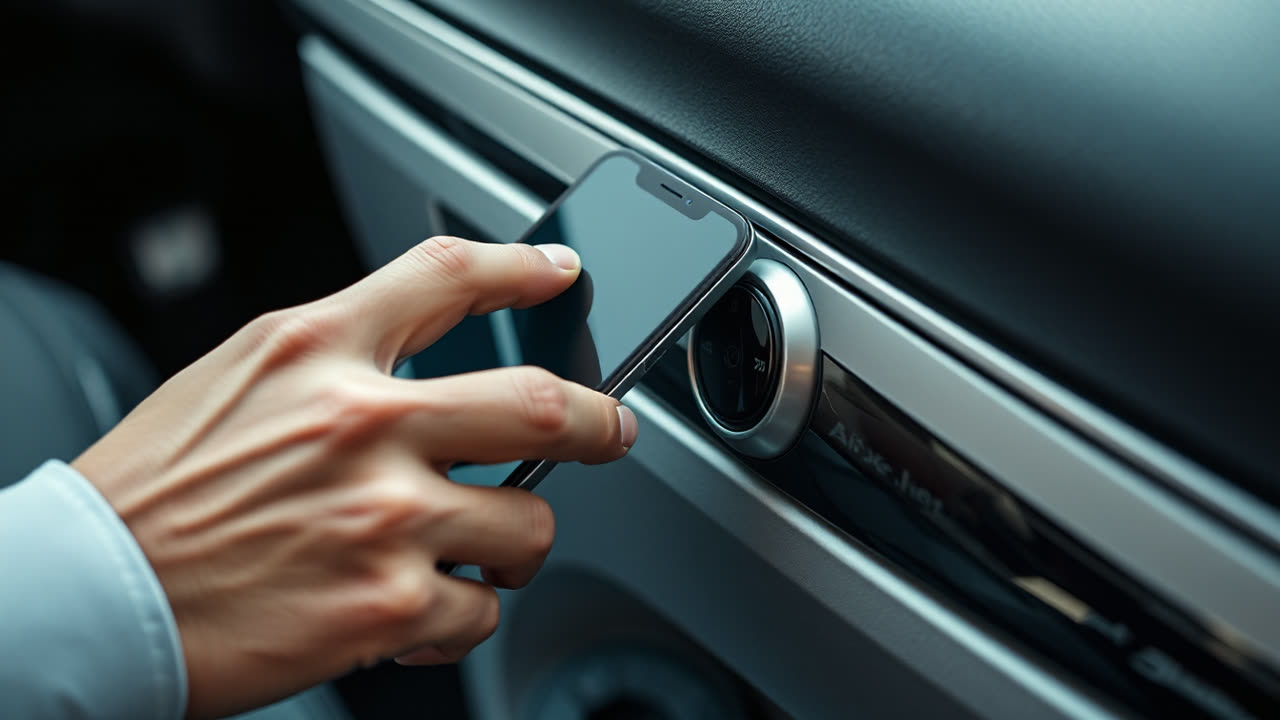
The revolutionary convenience of using an iPhone as a car key typically requires an initial in-car setup, a detail often overlooked in the allure of smartphone-powered vehicle access. While the promise of ditching physical fobs is compelling, activating Apple's CarKey feature mandates a physical presence, often involving placing the iPhone on the vehicle's NFC reader to complete the pairing process through the car manufacturer's dedicated app. This critical first step ensures secure cryptographic binding between the device and the vehicle, verifying ownership before the digital key is provisioned into the iPhone's Wallet app.
This setup, while a minor hurdle, underscores the significant security underpinnings of digital car keys. Apple's CarKey, introduced with iOS 14 in 2020, leverages a combination of Near-Field Communication (NFC) and Ultra-Wideband (UWB) technologies. NFC enables "tap-to-unlock" functionality, requiring the iPhone (XS or later) or Apple Watch (Series 5 or later) to be held near the car's door handle or interior reader. For enhanced convenience, UWB, available on iPhone 11 and newer and Apple Watch Series 6 and later, facilitates passive entry and start, allowing the car to unlock as the owner approaches and start with the phone in a pocket or bag, without direct interaction. This UWB capability is also crucial for mitigating relay attacks, as it precisely measures the distance between the phone and the car. The digital key itself is stored within the iPhone's Secure Element, a hardware-isolated chip designed to protect sensitive data, ensuring that even Apple cannot access information about when or how often a user unlocks their car. Furthermore, the system is designed to function offline, without cellular or Wi-Fi connectivity, and even offers a power reserve feature that allows NFC-based unlocking for several hours after the iPhone's battery has seemingly died.
The impact of this technology on users is profound, transcending mere convenience. The ability to share digital keys via iMessage, with customizable access levels—such as restricting maximum speed or audio volume for teenage drivers or valets—offers unprecedented control and flexibility that physical keys simply cannot match. This granular control can be revoked remotely at any time, enhancing security and peace of mind. For everyday use, features like Express Mode streamline the experience, allowing immediate access without Face ID, Touch ID, or a passcode authentication. This seamless integration into the Apple ecosystem makes the iPhone an increasingly indispensable personal device, consolidating identity, payment, and now, vehicle access.
From an industry perspective, Apple CarKey is a significant driver in the broader shift towards digital vehicle access. It adheres to the Car Connectivity Consortium (CCC) Digital Key specification, a standard co-developed by Apple, BMW, Hyundai, and other automotive and tech giants to ensure interoperability across various devices and car brands. While BMW was the first to adopt CarKey with its 2021 5 Series in July 2020, support has rapidly expanded. As of mid-2026, over twenty vehicle brands offer CarKey, including Audi (2025+), BYD (2022+), Genesis (2023+), Hyundai (2023+), Kia (2023+), Lotus (2024+), Mercedes-Benz (2024+), MINI (2023+), Polestar (2023+), RAM (2025+), Rivian (December 2025), Toyota (February 2026), and Volvo (2024+), with more brands like Cadillac, Porsche, and GM expected to join soon.
Compared to rivals, Apple's implementation sets a high bar. Google introduced its digital car key feature with Android 12 in 2021, also based on the CCC standard and utilizing NFC, Bluetooth, and UWB. However, Apple gained an early advantage by integrating UWB into its flagship iPhones starting in 2019, two years before Android devices widely adopted it, leading to a more polished passive entry experience for iPhone users. The fragmented nature of Android's ecosystem also means less consistent support across devices and manufacturers compared to Apple's more controlled environment.
Looking ahead, the trajectory for digital car keys is clear: widespread adoption and increasing sophistication. The automotive digital key market is projected to grow at a compound annual growth rate (CAGR) of over 21% between 2023 and 2031, driven by demand for contactless solutions and enhanced security. Future innovations are anticipated to include deeper integration with biometric authentication (fingerprint, facial scans) for personalized in-car experiences, automatically adjusting settings like seat position and climate for individual drivers. Blockchain technology is also being explored for even more secure and transparent key management. The technology will extend beyond personal vehicles, transforming car-sharing, rental services, and fleet management by enabling remote and secure access control. Ultimately, digital keys are poised to become a ubiquitous standard, further blurring the lines between our digital and physical worlds, making the initial in-car setup a small, almost forgotten step in a seamless, interconnected future of mobility.