Instagram Renames 'AI Creator' to 'AI-Generated Profile' in Major Authenticity Push
Instagram is escalating its fight against deceptive AI accounts by rebranding its 'AI creator' label to 'AI-generated profile,' signaling a critical shift towards clearer transparency and combating sophisticated digital mimicry.
✨ This content was summarized and interpreted by AI; it may contain errors — please verify accuracy with the original sources. Learn more
Listen to this story
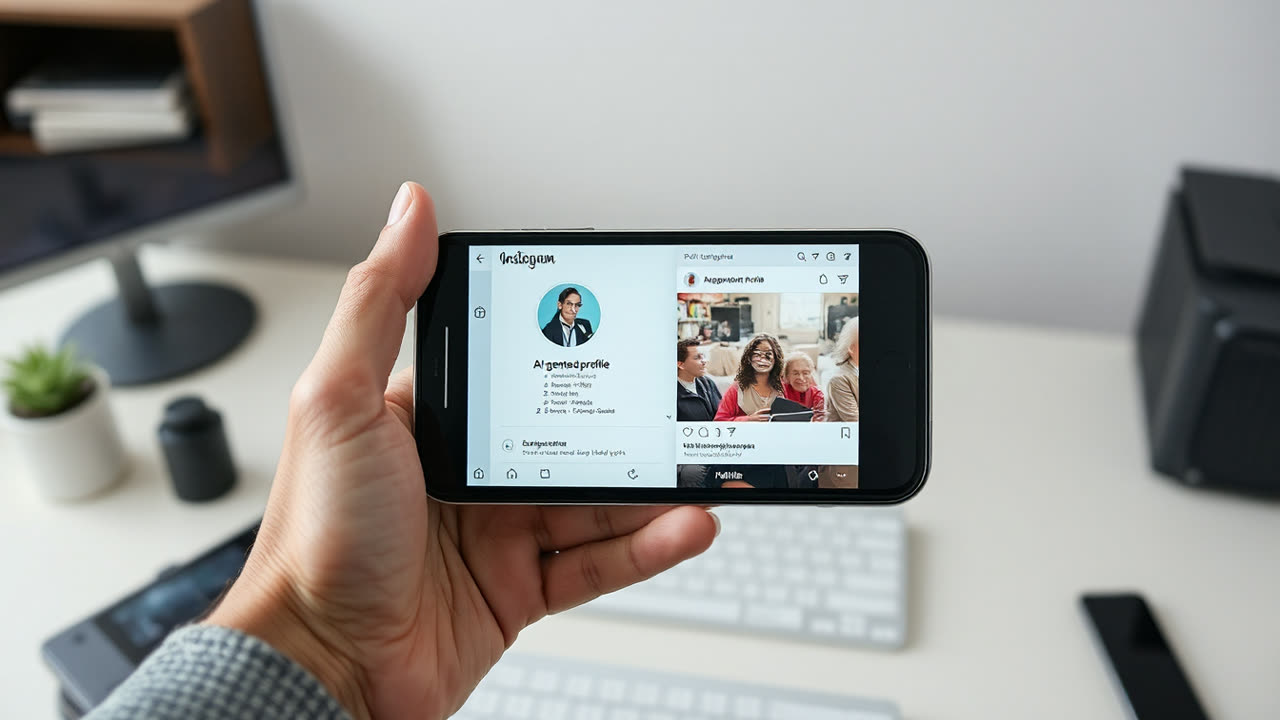
Instagram's recent escalation against deceptive AI accounts, marked by the renaming of its "AI creator" label to the more explicit "AI-generated profile," signals a critical pivot in the platform's battle for authenticity, moving beyond mere disclosure to actively combat the sophisticated mimicry of human identity by artificial intelligence. This strategic shift, initially hinted at in late 2023 and solidified through ongoing policy updates into 2024 and 2025, acknowledges the escalating challenge posed by increasingly photorealistic and autonomously interacting AI entities that blur the lines between genuine human engagement and algorithmic fabrication. The change in nomenclature is more than semantic; it reflects a deeper commitment to transparency, aiming to equip users with clearer cues to discern AI-generated personas from human ones and to mitigate the potential for manipulation inherent in their indistinguishability.
The significance of this crackdown extends far beyond superficial labeling, reaching into the core dynamics of user trust, content monetization, and the very definition of digital identity. For users, the proliferation of undetectable AI profiles has fostered a climate of suspicion, eroding confidence in online interactions and making it harder to distinguish authentic communities from curated digital illusions. A 2024 survey revealed that nearly 60% of social media users expressed concern about interacting with AI accounts unknowingly, highlighting a growing demand for clearer identification. The impact on mental health, particularly among younger demographics, is also a burgeoning concern, as the idealized, often unattainable, aesthetics of AI influencers further distort perceptions of reality and self-worth. Instagram's move, therefore, represents a vital step towards restoring a degree of digital hygiene, safeguarding users from potential scams, misinformation, and the psychological toll of an increasingly synthetic online environment.
For the industry, the implications are profound, fundamentally challenging the influencer economy and the ethical boundaries of digital marketing. Before this intensified crackdown, AI influencers like Lil Miquela, with millions of followers and lucrative brand deals, demonstrated the immense commercial potential of synthetic personalities, reportedly generating millions in revenue annually for their creators. This success, however, was predicated on a degree of ambiguity regarding their artificial nature, allowing them to tap into the same emotional and aspirational connections typically reserved for human personalities. Instagram's updated policy and enforcement mechanisms, which include more robust detection tools and potential penalties for non-compliance, force brands and marketers to re-evaluate their strategies. The shift towards explicit labeling means that the perceived authenticity, a cornerstone of influencer marketing, will now be inherently compromised for AI-generated profiles, potentially diminishing their appeal for campaigns seeking genuine human connection. This could lead to a bifurcation of the influencer market, with a clear distinction between human and AI talent, each serving different marketing objectives.
Comparing Instagram's approach to its rivals reveals a broader industry struggle with the rapid evolution of generative AI. While platforms like TikTok and YouTube have also introduced measures to label AI-generated content, often focusing on videos and audio, Instagram's particular emphasis on *profiles* pretending to be human addresses a distinct and insidious form of deception. Earlier iterations of AI content, such as rudimentary chatbots or visibly artificial avatars, were relatively easy to spot. However, advancements in generative adversarial networks (GANs) and large language models (LLMs) have enabled the creation of AI personas that are visually indistinguishable from humans and capable of generating conversational text and even voice that mimics human interaction with startling accuracy. This leap in sophistication has rendered older detection methods obsolete, necessitating a more proactive and nuanced regulatory framework. Meta, Instagram's parent company, has also expanded its broader AI content labeling policies across Facebook and Threads, requiring creators to disclose when content, including images, audio, and video, is digitally altered or generated by AI, particularly when it depicts realistic scenarios. This unified approach underscores the systemic nature of the challenge and the coordinated effort required to manage it across interconnected platforms.
Looking ahead, the landscape of social media and AI-generated content will undoubtedly continue to evolve at a rapid pace. Instagram's current measures, while significant, are likely just the beginning of an ongoing arms race between AI creators pushing the boundaries of realism and platforms striving for authenticity. We can anticipate further refinements in AI detection technologies, potentially leveraging advanced forensic analysis of digital artifacts or even behavioral patterns unique to AI. Furthermore, the legal and ethical frameworks surrounding AI ownership, intellectual property, and liability for AI-generated misinformation will become increasingly critical. Regulators globally are beginning to grapple with these complex issues, and platform policies will likely be influenced by emerging legislation. The future may also see the rise of "verified AI" identities, where explicitly labeled AI profiles operate transparently, perhaps offering unique forms of entertainment or utility without the pretense of being human. Ultimately, Instagram's proactive stance is a necessary step towards fostering a more transparent and trustworthy digital ecosystem, but the full impact will depend on sustained enforcement, continuous technological adaptation, and a collective industry commitment to prioritizing human experience over algorithmic illusion.