Instant Cameras Stage a Surprising Comeback, Blending Retro Charm with Modern Tech
Despite the dominance of smartphone cameras, the instant camera market continues its surprising resurgence, projected to grow at a compound annual growth rate (CAGR) of 4.5% from 2024 to 2032, driven by a renewed appreciation for tangible memories and retro aesthetics.
✨ This content was summarized and interpreted by AI; it may contain errors — please verify accuracy with the original sources. Learn more
Listen to this story
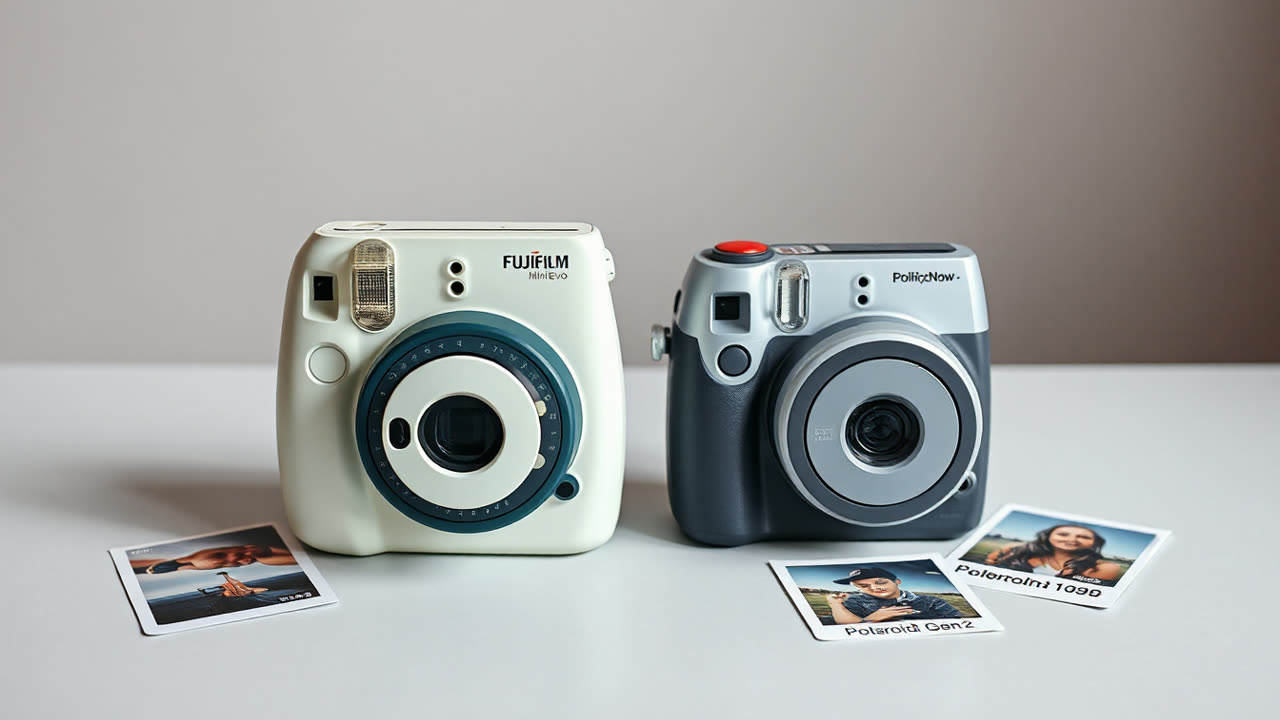
Despite the dominance of smartphone cameras, the instant camera market continues its surprising resurgence, projected to grow at a compound annual growth rate (CAGR) of 4.5% from 2024 to 2032, driven by a renewed appreciation for tangible memories and retro aesthetics. This sustained growth underscores a fundamental truth: while smartphone photography prioritizes perfection and digital permanence, instant cameras offer an imperfect, immediate, and shareable physical artifact that digital files simply cannot replicate. The most compelling options for consumers today navigate a spectrum between pure analog charm and judicious digital integration, with Fujifilm’s Instax line and Polaroid’s refreshed offerings leading the charge, alongside intriguing hybrid models.
The core appeal lies in the unique experience. Unlike the endless scroll of a digital gallery, an instant print is a singular, physical object, often shared or gifted immediately, fostering a unique social interaction. This tangible output, with its inherent imperfections—soft focus, slightly muted colors, and often white borders—serves as a counter-narrative to the curated, often filtered, perfection sought on social media. These cameras aren't about pristine image quality; they're about the moment, the aesthetic, and the physical memento. For users, this translates into a more deliberate approach to photography, where each shot carries a higher perceived value due to the finite nature and cost of film, encouraging more thoughtful composition.
Fujifilm's Instax series, particularly the Instax Mini 12 and the Instax Mini Evo, exemplifies the current market's duality. The Instax Mini 12, often retailing around $79.95, represents the quintessential point-and-shoot instant experience. It's an evolution of its popular predecessors, offering automatic exposure and a close-up mode, making it incredibly user-friendly and reliable for quick, vibrant credit-card-sized prints. Its simplicity is its strength, appealing to those who want the classic instant gratification without any digital fuss. The cost per print for Instax Mini film typically ranges from $0.75 to $1.00, making it one of the more accessible film formats.
In contrast, the Instax Mini Evo, priced around $199.95, embodies the successful integration of digital convenience with analog charm. It's a hybrid camera that captures digital images, allowing users to review and select photos before printing. This significantly reduces film waste, a common frustration with purely analog instant cameras. Furthermore, the Mini Evo boasts a 2.7-inch LCD screen, a microSD card slot for storing up to 850 images, and a companion app that transforms it into a smartphone printer, enabling users to print photos from their phone or use their phone as a remote shutter. It also features 10 lens effects and 10 film effects, offering creative control previously unseen in instant cameras. This hybrid approach directly addresses the primary pain point of film cost and wasted prints, offering a "best of both worlds" solution that appeals to a broader demographic, including smartphone natives.
Polaroid, the original instant camera pioneer, has also revitalized its offerings, focusing on larger, more nostalgic prints. The Polaroid Now+ Gen 2, available for approximately $149.99, is a compelling choice for those seeking the iconic square format. It improves upon its predecessor with autofocus, double exposure, and a self-timer, but its key differentiator is Bluetooth connectivity, enabling app control for features like aperture priority, tripod mode, and light painting. The larger Polaroid i-Type film, while more expensive at around $2.00 per print, delivers a distinct aesthetic that resonates deeply with the brand's heritage. The more compact Polaroid Go Gen 2, priced at $79.99, offers a miniature square format for ultimate portability, making it an attractive, more affordable entry point into the Polaroid ecosystem.
Compared to previous generations, current instant cameras exhibit greater reliability, improved automatic exposure systems, and in many cases, smarter integrations. Older instant cameras often suffered from inconsistent exposure and higher rates of wasted film. Modern iterations, particularly the hybrids, offer a more forgiving and versatile experience. While digital cameras and smartphones excel in resolution, low-light performance, and post-processing flexibility, they fundamentally lack the tactile, immediate output that defines instant photography. The imperfections, once a technical limitation, are now a celebrated stylistic choice, distinguishing instant prints from the sterile perfection of digital images.
Looking ahead, the instant camera market is poised for continued innovation, particularly in the hybrid space. Expect to see further refinement in digital-analog convergence, with improved sensors, more sophisticated in-camera editing options, and potentially expanded connectivity features that allow for seamless integration with cloud services or social platforms, while still preserving the physical print as the ultimate output. There's also potential for new film formulations offering enhanced color accuracy, faster development times, or even novel effects. However, the core magic will remain: the unique, immediate gratification of holding a physical memory in hand. As digital overload intensifies, the deliberate, tangible nature of instant photography will likely continue to carve out a significant and cherished niche, proving that some experiences are simply better when they're printed.
FACTS: The only instant cameras worth your money — There’s something magical about using instant cameras that smartphones can’t match. You can capture a moment, print it out, and then give the photo as a gift or hold onto it. Image quality won’t be all that good, but imperfections are part (kaynak: The Verge AI, https://www.theverge.com/23133103/best-instant-cameras-fujifilm-polaroid-kodak)