Intel's Arc Pro B70 GPU Price Surges by 48% Amid AI Demand
Intel's high-end Battlemage workstation GPU, the Arc Pro B70 with 32GB VRAM, has seen its price jump by nearly 50% to almost $2,000, signaling a strategic pivot towards the lucrative AI workstation market.
✨ This content was summarized and interpreted by AI; it may contain errors — please verify accuracy with the original sources. Learn more
Listen to this story
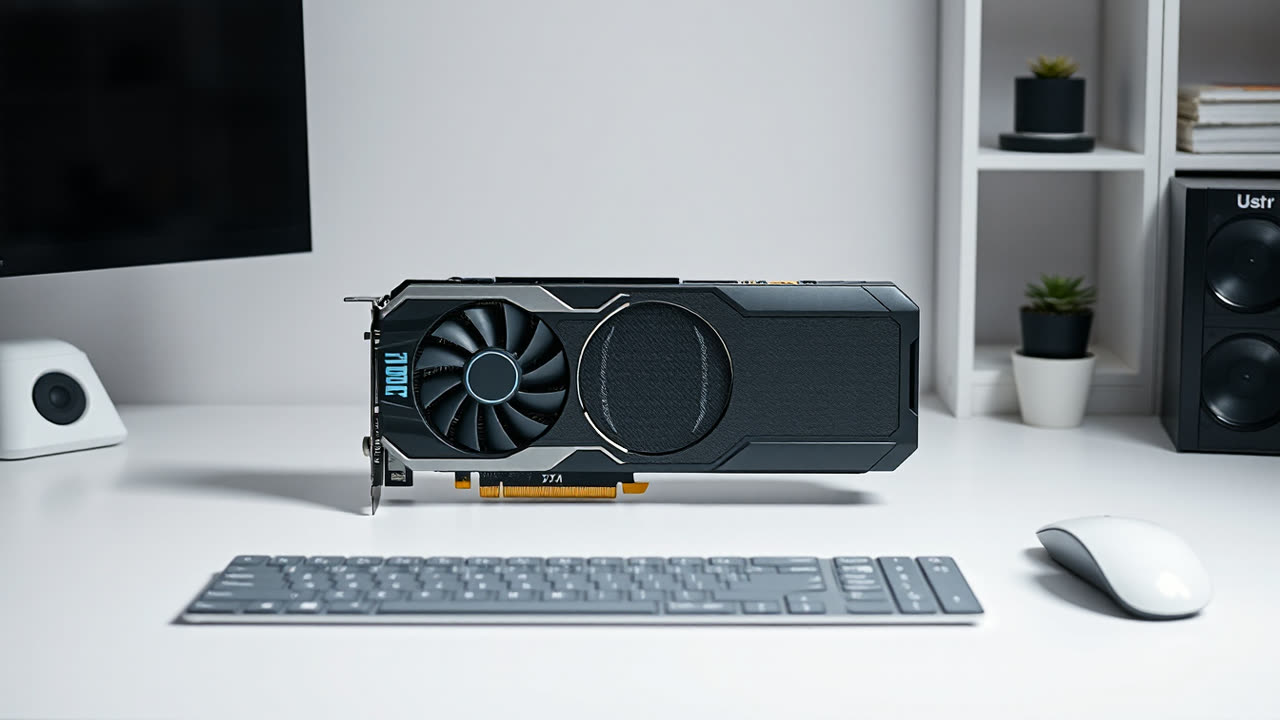
Intel's Arc Pro B70 workstation GPU, a 32GB Battlemage-based card, has seen its price surge by up to 48% in the past month, pushing its cost towards the $2,000 mark. This dramatic escalation, first reported in late July 2026, positions Intel's top-tier professional Battlemage offering as a significantly more expensive, yet potentially more valuable, asset in the burgeoning market for AI-accelerated workstations. The core driver behind this abrupt price adjustment appears to be the card's substantial 32GB of GDDR6 memory, a critical feature for demanding AI development and inference workloads that are increasingly migrating from data centers to local professional environments.
The significance of this price hike extends far beyond a simple product cost adjustment; it signals Intel's strategic intent to capture a larger share of the high-margin professional and AI workstation market. For users, particularly AI developers, data scientists, and creative professionals working with large datasets and complex models, the Arc Pro B70 offers a compelling value proposition through its memory capacity. While previous generations of Intel's Arc GPUs, based on the Alchemist architecture, struggled to gain significant traction against entrenched rivals like Nvidia and AMD in the gaming and entry-level professional segments, the Battlemage generation, particularly in its Pro iteration, appears to be targeting a more specialized niche. The 32GB VRAM pool on the Arc Pro B70 directly addresses a critical bottleneck in many AI applications, allowing for the loading of larger models and datasets directly onto the GPU, thereby accelerating training, fine-tuning, and inference processes that would otherwise be constrained by smaller memory buffers on competing cards. This capability can translate into substantial time savings and increased productivity for professionals, potentially justifying the higher investment.
Comparing the Arc Pro B70 to its rivals highlights Intel's calculated move. Nvidia's professional offerings, such as the RTX 4000 Ada Generation with 20GB GDDR6, the RTX 4500 Ada with 24GB, or even the higher-end RTX 5000 Ada with 32GB, often command significantly higher prices, with the RTX 5000 Ada typically retailing well above $4,000. AMD's Radeon Pro W7800 offers 32GB of GDDR6, often priced around $2,500-$3,000, while the W7900 ups it to 48GB at a premium closer to $4,000. Against this backdrop, even at its increased price point approaching $2,000, the Arc Pro B70 32GB carves out a competitive position, offering substantial memory capacity at a price point that undercuts many directly comparable Nvidia and AMD professional cards. This pricing strategy, even after the hike, suggests Intel is aiming for a sweet spot where memory-intensive AI workloads are prioritized without the prohibitive cost associated with the very highest-end professional accelerators. The architectural enhancements of Battlemage, which reportedly include improved AI acceleration capabilities and better ray tracing performance compared to Alchemist, further bolster its appeal in these professional contexts.
The background to this development lies in the escalating demand for local AI processing capabilities. As AI models grow in complexity and size, the need for GPUs with large amounts of high-bandwidth memory has become paramount. This demand has been a significant factor in driving up prices across the entire GPU market, particularly for cards equipped with 24GB or more VRAM. Intel, having made substantial investments in its Xe-HPG (Alchemist) and subsequently Xe2-HPG (Battlemage) architectures, is now strategically leveraging this market trend. The company's long-term vision for Arc has always included a strong professional segment, and the Arc Pro B70 with its 32GB memory is a clear manifestation of that ambition, particularly as it intersects with the AI boom.
Looking ahead, this price adjustment for the Arc Pro B70 is likely a precursor to Intel's more aggressive push into the professional AI hardware market. It signals confidence in the Battlemage architecture's performance for these specific workloads and a recognition of the card's intrinsic value. We can expect Intel to continue refining its professional Arc lineup, potentially introducing even higher-memory configurations or specialized AI accelerators under the Battlemage or future Celestial architectures. The sustained demand for AI processing power, coupled with the increasing need for local and edge AI capabilities, will continue to fuel innovation and competition in this segment. For the broader industry, Intel's growing presence in the professional GPU space, particularly with competitively priced, high-VRAM offerings, could lead to increased pressure on Nvidia and AMD to adjust their own professional product strategies, potentially benefiting end-users with more diverse options and competitive pricing in the long run. The current trajectory suggests Intel is not merely participating but actively shaping the landscape of professional AI workstations.