Intel Unveils Xeon 7 'Diamond Rapids' with 256 P-cores and 1.28TB Cache, Redefining Server Performance
Intel's forthcoming Xeon 7 'Diamond Rapids' processors promise a monumental leap in server CPU capabilities with an unprecedented architecture featuring up to 256 P-cores and a staggering 1.28 terabytes of last-level cache.
✨ This content was summarized and interpreted by AI; it may contain errors — please verify accuracy with the original sources. Learn more
Listen to this story
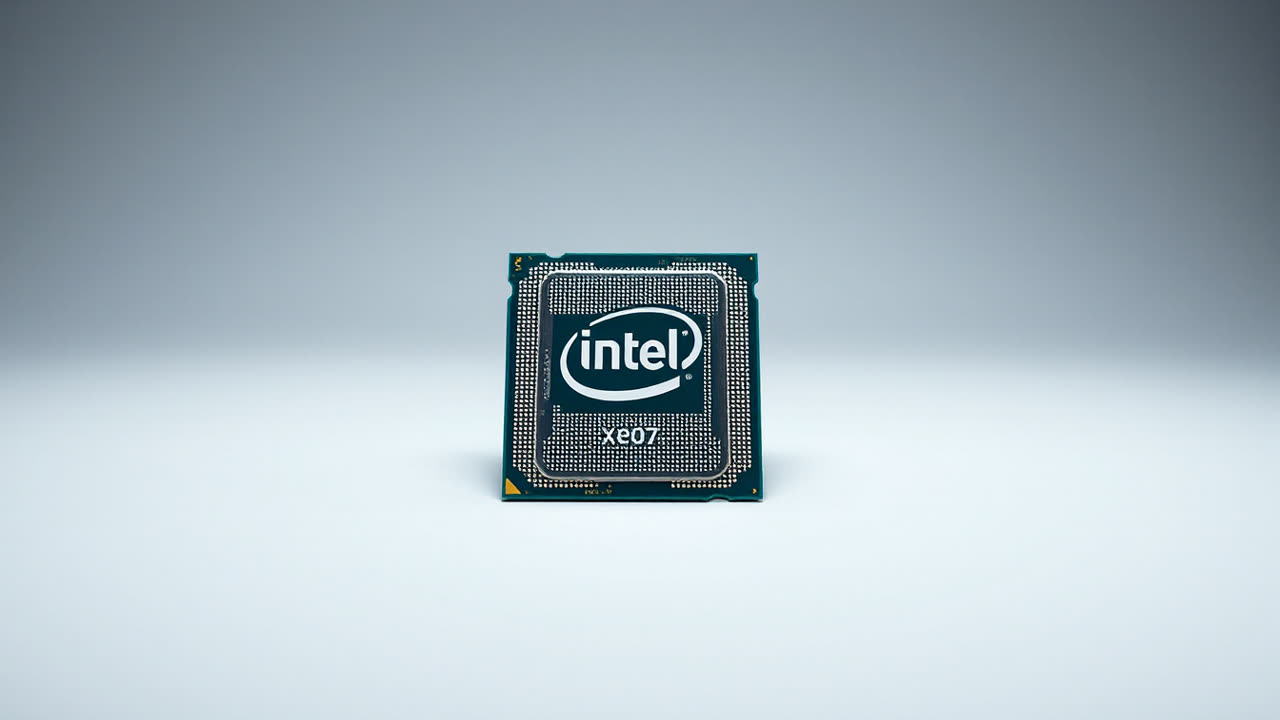
Intel has unveiled its forthcoming Xeon 7 'Diamond Rapids' processors, boasting an unprecedented architecture that integrates up to 256 P-cores and a staggering 1.28 terabytes of last-level cache, signaling a monumental leap in server CPU capabilities. This next-generation 18A-P CPU also introduces AVX 10.2 instruction set extensions and transitions to UCIe-S for chiplet interconnects, moving away from its traditional EMIB packaging. The sheer scale of core count and cache capacity in Diamond Rapids positions it as a direct challenge to the escalating demands of high-performance computing (HPC), artificial intelligence (AI) workloads, and hyperscale data centers, where raw computational power and efficient data access are paramount.
The introduction of 256 P-cores represents a dramatic escalation from current and immediate prior generations. For context, Intel's upcoming Xeon 6 'Granite Rapids' is expected to offer up to 128 P-cores, while the current top-tier 5th Gen Xeon Scalable 'Emerald Rapids' peaks at 64 cores. This doubling, and in some cases quadrupling, of core density within a single socket translates directly into significantly higher thread parallelism, crucial for complex simulations, large-scale data analytics, and concurrent virtual machine environments. Workloads requiring intensive floating-point operations and vector processing, such as scientific research, financial modeling, and AI model training, stand to benefit immensely from the enhanced core count and the new AVX 10.2 instructions, which promise improved performance for these specialized tasks.
Perhaps even more striking than the core count is the colossal 1.28 terabytes of last-level cache (LLC). This massive on-chip memory pool fundamentally redefines how data-intensive applications will interact with the CPU. Traditional memory hierarchies often bottleneck performance, especially in scenarios where data sets exceed typical L3 cache sizes, forcing frequent and slower accesses to DDR5 or HBM memory. With 1.28 TB of LLC, Diamond Rapids can keep enormous working sets closer to the processing units, drastically reducing latency and increasing effective memory bandwidth for applications that are sensitive to data access times. This will be particularly transformative for in-memory databases, large graph processing, and certain AI inference models that require rapid access to vast amounts of parameters. It effectively blurs the line between traditional cache and system memory for many critical workloads, offering a performance advantage that rivals would struggle to match without resorting to more complex and potentially costly HBM integration.
Intel's shift from EMIB (Embedded Multi-die Interconnect Bridge) to UCIe-S (Universal Chiplet Interconnect Express - Standard) for its chiplet-based design is a strategic move with significant long-term implications. While EMIB has served Intel well for integrating various dies within a package, UCIe-S is an open industry standard designed to facilitate interoperability between chiplets from different vendors. This adoption signals Intel's commitment to a more modular and potentially more flexible future for its server platforms. By embracing UCIe, Intel could theoretically integrate specialized accelerators or memory chiplets from third parties more seamlessly, fostering a broader ecosystem and potentially reducing development costs and time-to-market for future custom solutions. This move also aligns with the industry's broader trend towards disaggregated architectures, offering greater scalability and customization options for hyperscalers and enterprises with unique workload requirements.
Manufacturing on the 18A-P process node underscores Intel's aggressive roadmap to regain process leadership. The 'A' in 18A signifies Angstrom-era technology, representing a crucial step in Intel's "five nodes in four years" strategy. This advanced process is expected to deliver substantial improvements in power efficiency and transistor density compared to current nodes, enabling the integration of 256 P-cores within acceptable power envelopes while potentially offering higher clock speeds. The 'P' suffix likely indicates a performance-optimized variant of the 18A process, tailored for demanding server workloads. This process technology is vital for Intel to compete effectively against rivals like TSMC and Samsung, whose advanced nodes power competing server CPU architectures.
In the competitive arena, Diamond Rapids will contend with future iterations of AMD's EPYC processors, which have made significant inroads with their high core counts (e.g., Genoa/Bergamo offering up to 96/128 cores) and robust cache architectures. While AMD has focused on high core density using smaller Zen 4c cores in Bergamo for cloud-native workloads, Intel's Diamond Rapids aims to deliver an unparalleled density of performance-optimized P-cores. The 1.28 TB LLC also sets a new benchmark that AMD's existing EPYC designs, typically featuring hundreds of megabytes of L3 cache, do not directly address. NVIDIA's Grace CPU Superchip, with its ARM Neoverse V2 cores and NVLink-C2C interconnect, targets a different, more accelerator-centric segment, often paired with GPUs for AI and HPC. Diamond Rapids, with its x86 foundation and immense core/cache capacity, asserts Intel's continued dominance in general-purpose server computing, albeit at an extreme scale.
Looking ahead, Diamond Rapids represents not just a product, but a statement of intent from Intel. It showcases their ability to push the boundaries of core count and on-die cache, leveraging advanced packaging and process technology. The adoption of UCIe-S also signals a future where server CPUs might become even more modular and customizable, potentially leading to a more diverse and specialized server landscape. The sheer scale of these processors suggests that future data centers will increasingly rely on fewer, but significantly more powerful, individual CPU sockets to handle ever-growing computational demands. This could lead to shifts in rack density, cooling requirements, and overall data center design. Intel's ability to deliver on the promises of 18A-P and the complex integration of such a high core and cache count will be critical to solidifying its position in the fiercely competitive server market, especially as AI and HPC continue to drive demand for unprecedented levels of performance.