International Google Pixels are different than American models - here's how
Google Pixel phones purchased in the United States arrive with distinct hardware and software configurations compared to their international counterparts, a crucial difference for global travelers and expatriates.
✨ This content was summarized and interpreted by AI; it may contain errors — please verify accuracy with the original sources. Learn more
Listen to this story
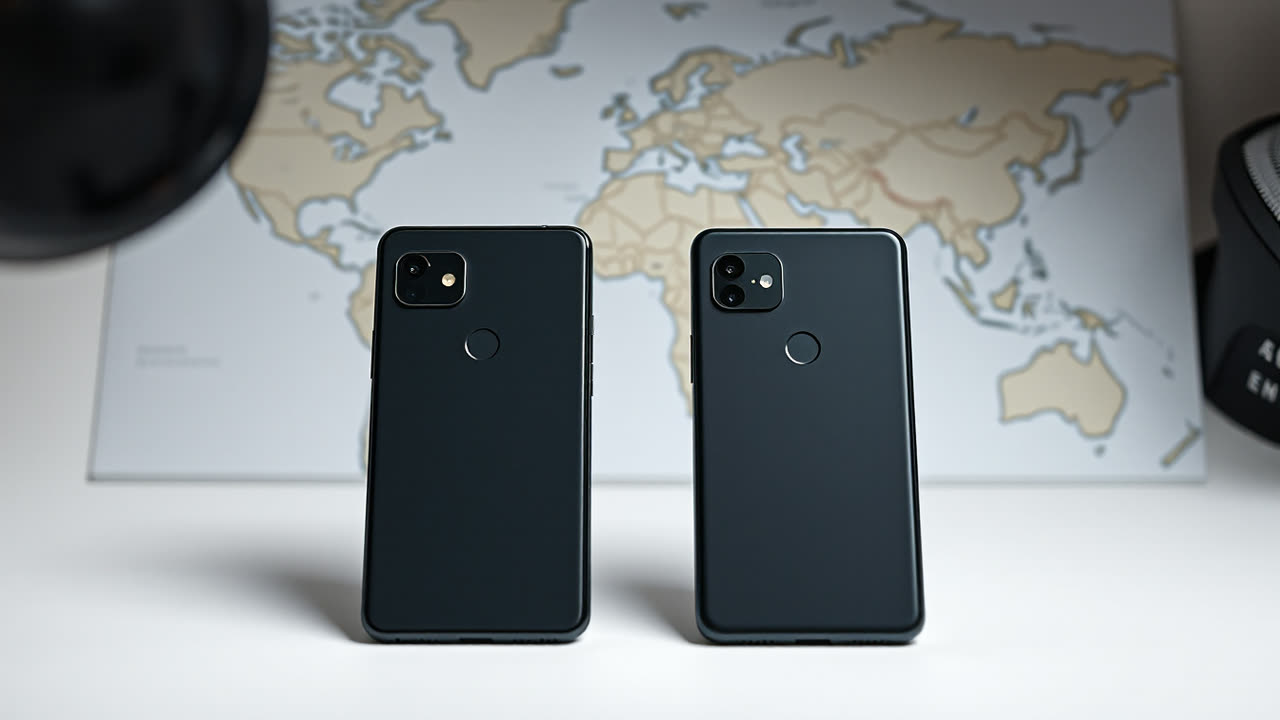
Google Pixel phones purchased in the United States arrive with distinct hardware and software configurations compared to their international counterparts, a crucial difference for global travelers and expatriates. The most striking divergence lies in cellular connectivity and SIM card support. US Pixel models, including the latest Pixel 10, 10 Pro, and 10 Pro XL, are designed to support mmWave 5G, enabling ultra-fast speeds in specific, densely covered urban areas. To accommodate the necessary antenna hardware for mmWave, these American variants are now exclusively eSIM-only, foregoing a physical SIM card slot.
Conversely, international Pixel models typically prioritize broader sub-6GHz 5G support, which offers wider coverage but generally slower speeds than mmWave, reflecting the differing 5G infrastructure investments outside the US. Crucially, these global versions retain a physical Nano SIM slot alongside eSIM functionality, providing greater flexibility for users who frequently switch carriers or travel internationally.
Beyond hardware, software features also exhibit regional limitations. Key AI-enhanced functionalities like the advanced Call Screen, Gboard's proofreading, and the Summarize tool are often restricted to US users or require the device to be set to US English. Furthermore, essential carrier features such as Wi-Fi Calling and VoLTE may be disabled at a software level when using international SIMs in unsupported countries, even if the underlying hardware is capable.
Perhaps the most significant caveat for a "world traveler" is Google's warranty policy: there is no international or global warranty. Support and claims are strictly tied to the country of purchase, often requiring the device to be physically returned to that region for service. This regional fragmentation, while arguably optimizing for local network specifics and carrier partnerships, creates an unnecessary hurdle for consumers expecting a seamless global experience from a premium device. It forces a careful consideration of where to buy a Pixel, rather than simply where to use it.