iOS 27 AI Clean Up Redefines Mobile Photo Editing with On-Device Generative AI
Apple's latest Photos app feature moves beyond simple object removal, intelligently reconstructing complex backgrounds with uncanny realism directly on iPhone, leveraging its powerful Neural Engine.
✨ This content was summarized and interpreted by AI; it may contain errors — please verify accuracy with the original sources. Learn more
Listen to this story
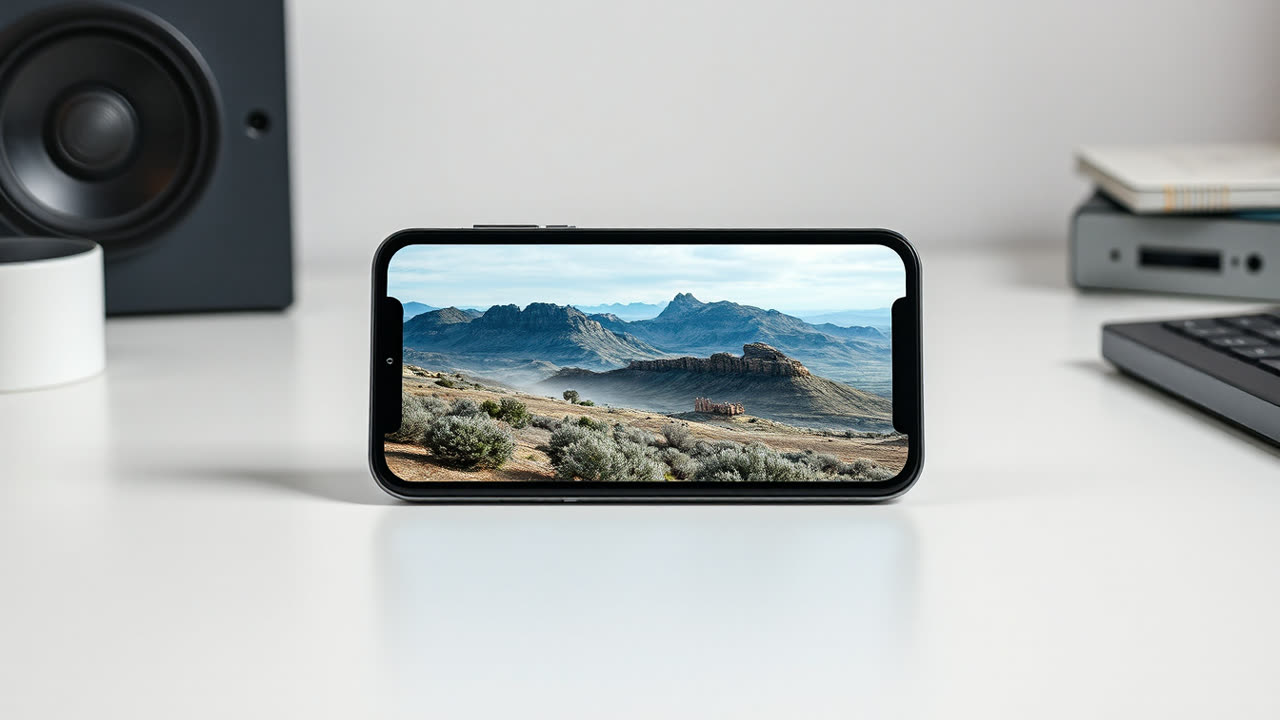
The iOS 27 AI Clean Up tool fundamentally redefines mobile photo editing, transcending the basic object removal capabilities seen in previous iterations like the hypothetical iOS 18 version and setting a new benchmark for on-device generative artificial intelligence. This advanced functionality moves far beyond simply erasing unwanted elements; it intelligently reconstructs complex backgrounds with uncanny realism, seamlessly filling in gaps left by removed objects, shadows, and even reflections. The leap in computational photography means users can effortlessly transform cluttered snapshots into pristine compositions, handling intricate patterns and textures that previously stumped even sophisticated algorithms.
This dramatic enhancement in photo manipulation capabilities matters profoundly for both the everyday user and the broader tech industry. For the casual iPhone photographer, it democratizes professional-grade editing, enabling them to achieve flawless images without requiring specialized skills or expensive desktop software. Imagine a tourist effortlessly removing a crowd from a landmark photo, or a parent vanishing a stray toy from a cherished family portrait. The tool’s intuitive interface, deeply integrated within the Photos app, means these complex edits are accessible to everyone, significantly reducing the need for multiple retakes and expanding creative possibilities directly on the device. This newfound ease empowers users to produce high-quality visual content for social media, personal archives, or even professional portfolios, blurring the lines between amateur and expert photography.
From an industry perspective, iOS 27’s AI Clean Up tool establishes a formidable new standard for mobile computational photography. Apple's continued emphasis on on-device processing, leveraging its powerful Neural Engine, is a critical differentiator. While rivals often rely on cloud-based AI for more intensive tasks, Apple's approach ensures superior privacy by keeping user data local and delivers real-time performance even without an internet connection. The Neural Engine, a dedicated hardware chip designed for machine learning, has steadily evolved since its introduction in the A11 Bionic chip in 2017, with later iterations in chips like the A17 Pro (capable of 35 trillion operations per second) and the M4 (reaching 38 trillion operations per second) dramatically accelerating AI tasks. This architectural advantage allows iOS 27 to perform complex generative AI tasks with minimal latency and high energy efficiency.
The precursor to this advanced tool, the Clean Up feature in iOS 18, would have represented Apple’s initial foray into AI-powered object removal, likely offering functionality comparable to existing market leaders. Today, Google Photos’ Magic Eraser, available to Google One members and Pixel owners, allows users to remove photobombers, power lines, and other distractions by tapping or circling them, with AI inpainting reconstructing the background. Samsung’s Object Eraser, a built-in feature on Galaxy smartphones since the S21 series, offers similar one-tap removal, and recent updates have optimized processing speed, resolution, and image quality, even adding "Shadow Erase" and "Light Reflection Erase" capabilities. These tools are highly effective for straightforward removals and background fills.
However, iOS 27's AI Clean Up elevates this further by incorporating advanced generative AI, akin to the capabilities seen in professional desktop software. Adobe Photoshop's Generative Fill, powered by the Firefly Image 3 Foundation Model, currently represents the gold standard for creative AI editing, enabling users to add, remove, or replace content and generate entirely new backgrounds with remarkable control and realism. This includes features like "Reference Image" for stylistic guidance and "Generate Similar" for exploring variations. Recent updates to Photoshop's Generative Fill have also significantly boosted resolution, now generating images up to 2048x2048 pixels, addressing a common limitation of early generative AI. By integrating such sophisticated generative capabilities directly into the iPhone's Photos app and leveraging its on-device Neural Engine, Apple positions iOS 27’s Clean Up tool to rival, and potentially surpass, the convenience and quality of even dedicated desktop applications for many common use cases.
Looking ahead, the evolution of AI Clean Up in iOS is poised for even deeper integration and expanded functionality. We can anticipate the tool moving beyond static images to offer real-time object removal and generative infill within videos, transforming mobile videography. Future iterations of Apple Silicon will undoubtedly feature even more powerful Neural Engines, enabling the processing of larger, more complex generative models directly on-device, further enhancing realism and speed. This could lead to a more personalized AI experience, where the Clean Up tool learns user preferences and anticipates desired edits based on past interactions. Furthermore, with Apple’s Foundation Models Framework and Core ML, developers may gain more refined access to these generative capabilities, fostering a new ecosystem of third-party apps that leverage Apple’s on-device AI for innovative creative tools. The continuous advancement of such tools signals a future where the distinction between a casual snapshot and a meticulously edited photograph becomes increasingly imperceptible, all from the palm of one’s hand.