iOS 27 Transforms Apple Wallet with AI Bill Splitting and Dynamic Passes
The iOS 27 update fundamentally redefines Apple Wallet's utility and user experience by introducing Visual Intelligence-powered bill splitting and advanced pass customization, moving beyond simple payments to sophisticated financial management.
✨ This content was summarized and interpreted by AI; it may contain errors — please verify accuracy with the original sources. Learn more
Listen to this story
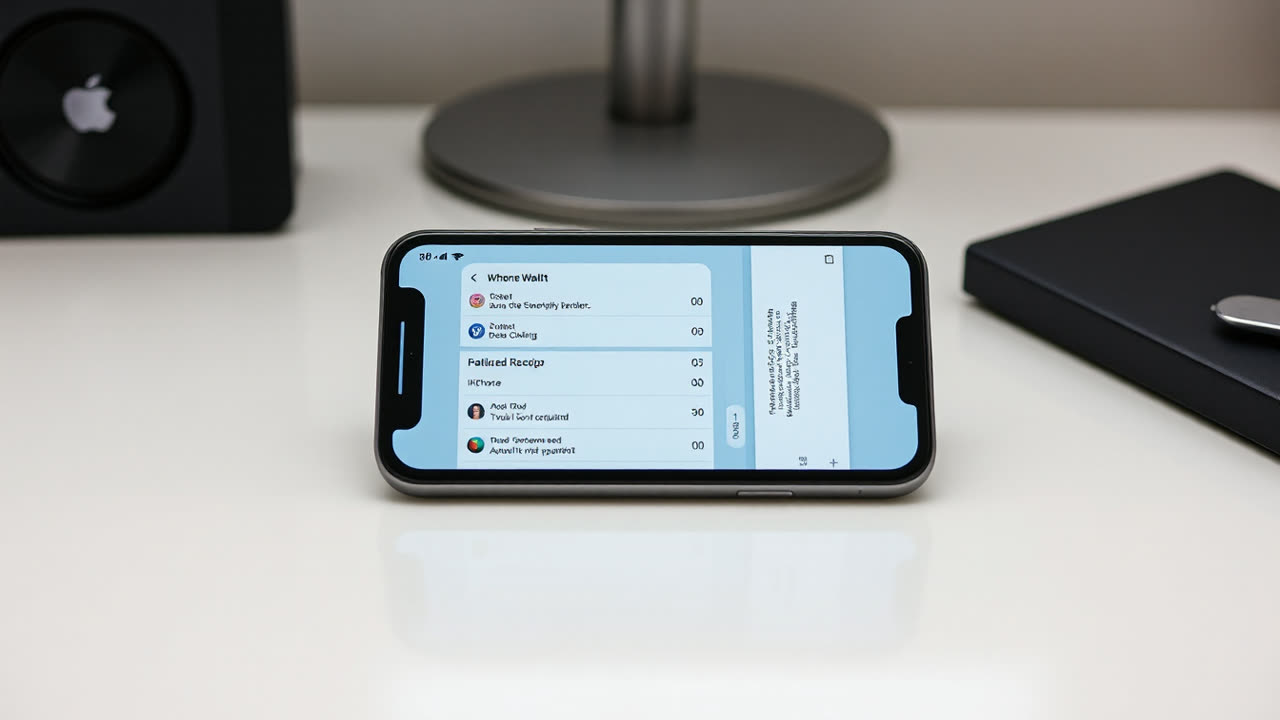
The introduction of Visual Intelligence-powered bill splitting and advanced pass customization in Apple Wallet with the iOS 27 update fundamentally redefines the utility and user experience of digital wallets, moving beyond simple tap-to-pay functionality to sophisticated financial management. This anticipated evolution, highlighted by early reports, positions Apple to significantly deepen its integration into users' daily financial interactions, transforming what was once a convenient payment tool into an indispensable financial co-pilot.
The core innovation lies in Apple's Visual Intelligence, which will enable Wallet to intuitively parse receipts via the device's camera, automatically identifying individual line items, quantities, and prices. This capability promises to streamline the often-cumbersome process of splitting restaurant checks or shared household expenses. Instead of manual entry or awkward calculations, users could simply scan a receipt, and Visual Intelligence would present an itemized breakdown, allowing for easy selection of who owes what, even accommodating complex scenarios like shared appetizers or specific dietary requests. This is a significant leap from existing peer-to-peer payment apps like Venmo or Zelle, which facilitate money transfers but typically require users to manually calculate and input amounts themselves. While some third-party apps offer receipt scanning, integrating this directly into Apple Wallet leverages the company's robust on-device processing and security infrastructure, offering a more seamless and trustworthy experience.
Beyond bill splitting, iOS 27's enhancements to pass customization promise a new level of personalization and utility for digital tickets, loyalty cards, and access passes. Users will reportedly gain granular control over the visual presentation of their passes, potentially allowing for custom backgrounds, dynamic information displays, and integration with other apps or services. This could mean a concert ticket that automatically updates with stage times and artist bios, or a loyalty card that displays real-time point balances and personalized offers directly within Wallet. This level of dynamic customization goes beyond the static QR codes and basic information currently found in most digital passes, providing a richer, more interactive experience. For businesses, this opens avenues for more engaging customer interactions and targeted marketing directly through the Wallet interface, potentially reducing reliance on separate, often underutilized, brand-specific apps.
The impact on users is profound: reduced friction in shared expenses, fewer awkward payment moments, and a more organized, intelligent digital life. For years, bill splitting has been a pain point, often leading to mental math, multiple calculator apps, or reliance on less integrated third-party solutions. Apple's direct integration, powered by Visual Intelligence, removes these hurdles, offering a frictionless experience that feels like a natural extension of the iOS ecosystem. The enhanced pass customization, meanwhile, elevates the digital wallet from a mere repository of cards to a dynamic information hub, making relevant data more accessible and contextual.
Industrially, this move by Apple could accelerate the broader adoption of digital wallets as primary financial tools, challenging traditional banking apps and dedicated expense trackers. By offering superior convenience and intelligent features, Apple Wallet strengthens its position as a central component of the consumer's financial stack. This could also spur competition among other tech giants and financial institutions to integrate more sophisticated AI-driven features into their own payment platforms, pushing the entire industry towards more intelligent, user-centric financial services. Furthermore, the security implications of on-device Visual Intelligence for sensitive financial data are critical. Apple's long-standing commitment to privacy suggests that much of this processing would occur locally, minimizing the risk of data breaches and maintaining user trust.
Looking ahead, the integration of Visual Intelligence into Apple Wallet with iOS 27 is likely just the beginning. The foundational technology for scanning and understanding visual information could extend to other areas, such as automated expense categorization from receipts for personal finance management, or even real-time price comparisons by scanning product labels in stores. We might see Wallet passes evolve into truly interactive mini-applications, leveraging augmented reality to provide directions within venues or overlaying product information in retail environments. This strategic enhancement is not merely about adding new features; it's about cementing Apple Wallet as an intelligent, indispensable hub for managing not just payments, but a significant portion of a user's financial and logistical daily life, setting a new benchmark for what a digital wallet can achieve.