iPad Charging Woes and the USB-C Transition: A Shift Towards Durability and Standardization
Millions of iPad users annually confront the frustrating reality of a device that refuses to charge, a pervasive issue that often stems from surprisingly mundane origins yet carries significant implications for user experience, product longevity, and the broader tech industry, pushing Apple towards USB-C standardization and a future of enhanced durability and repairability.
✨ This content was summarized and interpreted by AI; it may contain errors — please verify accuracy with the original sources. Learn more
Listen to this story
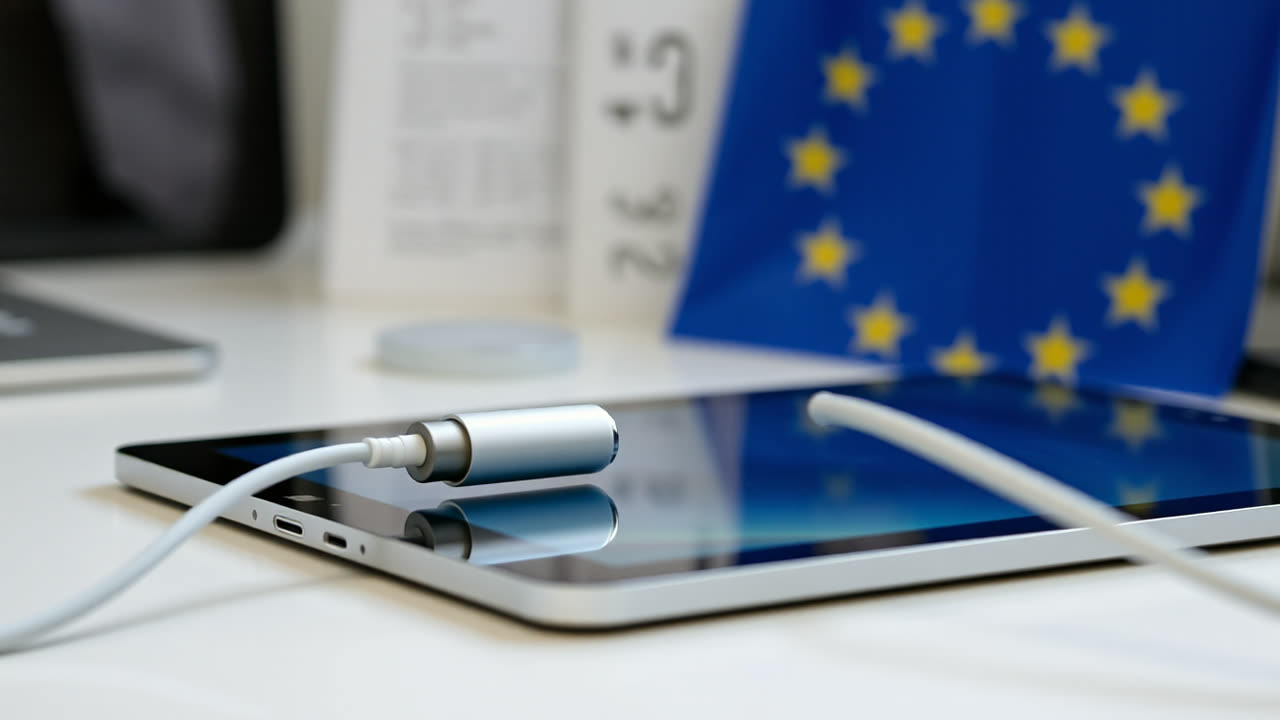
Millions of iPad users annually confront the frustrating reality of a device that refuses to charge, a pervasive issue that often stems from surprisingly mundane origins yet carries significant implications for user experience, product longevity, and the broader tech industry. The primary culprits behind an unresponsive charging indicator are typically frayed or damaged cables, faulty power adapters, or obstructions within the device's charging port, often accumulated lint or debris. Software glitches, particularly after iOS updates, and degrading battery health over time also contribute to these charging woes, sometimes preventing the iPad from drawing power efficiently or even recognizing a connected charger.
This seemingly trivial problem, which often forces users into troubleshooting steps like meticulously cleaning ports with non-conductive tools or testing multiple charging accessories, underscores a critical vulnerability in modern portable electronics. For users, a non-charging iPad can halt productivity, disrupt entertainment, and even lead to data loss if the device's battery fully depletes before a backup can be performed. The immediate economic impact involves the potential purchase of new, often expensive, MFi-certified cables and power bricks, a cost that quickly adds up when troubleshooting requires trial-and-error replacement. Beyond individual inconvenience, the prevalence of these issues highlights a tension between sleek industrial design and practical durability, raising questions about the longevity of components like charging ports and the environmental footprint of discarded, prematurely failed accessories.
Apple's journey through various charging technologies for the iPad illustrates an evolution marked by both proprietary innovation and, more recently, regulatory pressure. Early iPads utilized the robust, albeit bulky, 30-pin connector, which was succeeded by the more compact and reversible Lightning port in 2012. While the Lightning connector offered convenience and a smaller footprint, its eight small pins were arguably more susceptible to damage from repeated insertion and removal, as well as corrosion or debris accumulation, compared to the larger 30-pin design. The recent mandated shift to USB-C across the iPad lineup, driven largely by European Union regulations aimed at reducing e-waste and standardizing charging, marks a significant turning point. USB-C, already widely adopted across Android tablets, laptops, and other peripherals, boasts a more physically robust design with a single, reversible connector that theoretically offers greater durability and universal compatibility. This standardization promises to mitigate some charging issues by reducing reliance on proprietary cables and fostering a more resilient accessory ecosystem, though initial adoption still faces challenges like ensuring proper power delivery standards across diverse chargers.
Compared to rivals, Apple's proprietary Lightning port historically created a walled garden for accessories, ensuring quality control through its MFi (Made For iPhone/iPad) program but also limiting user options and often leading to higher accessory costs. Android tablets, almost universally employing USB-C for several years, have long benefited from the widespread availability of compatible chargers and cables, albeit with varying degrees of quality. While USB-C's physical design is generally considered more durable than Lightning, it is not immune to issues such as lint accumulation or internal pin damage from improper insertion, underscoring that no port design is entirely foolproof. The transition to USB-C for iPads, therefore, levels the playing field in terms of port technology, shifting the focus to overall device construction, software optimization for battery management, and the quality of third-party accessories.
Looking ahead, the future of iPad charging points towards enhanced durability, faster charging speeds, and a potential expansion of wireless charging capabilities. The full integration of USB-C across the entire iPad range is expected to gradually reduce the frequency of port-related charging failures as the more robust standard becomes ubiquitous. Apple is also likely to continue refining its power management software, addressing battery degradation through optimized charging cycles and offering more transparent battery health diagnostics to users. While MagSafe-style wireless charging has proven successful for iPhones, its adoption for the larger form factor of iPads remains a technical challenge, primarily due to power delivery requirements and heat management. However, advancements in wireless charging efficiency and coil design could eventually bring a more convenient, port-free charging experience to future iPads, further reducing reliance on physical connectors. Moreover, the growing global emphasis on the "right to repair" movement could lead to greater user access to parts and repair guides, empowering individuals to address common issues like port cleaning or cable replacement without needing professional intervention, thereby extending device lifespans and reducing electronic waste. This convergence of hardware standardization, software intelligence, and user empowerment promises a future where a non-charging iPad becomes a far less common, and more easily resolvable, problem.