iPhone 18 Pro and Pro Max: Size and Battery Life as Key Differentiators
Apple's iPhone 18 Pro and 18 Pro Max, launched in September 2026, largely identical in core features, delineate a premium smartphone strategy where display size and battery endurance are the primary differentiators, signaling a shift towards user preference for ergonomics and longevity over a tiered feature set in the high-end market.
✨ This content was summarized and interpreted by AI; it may contain errors — please verify accuracy with the original sources. Learn more
Listen to this story
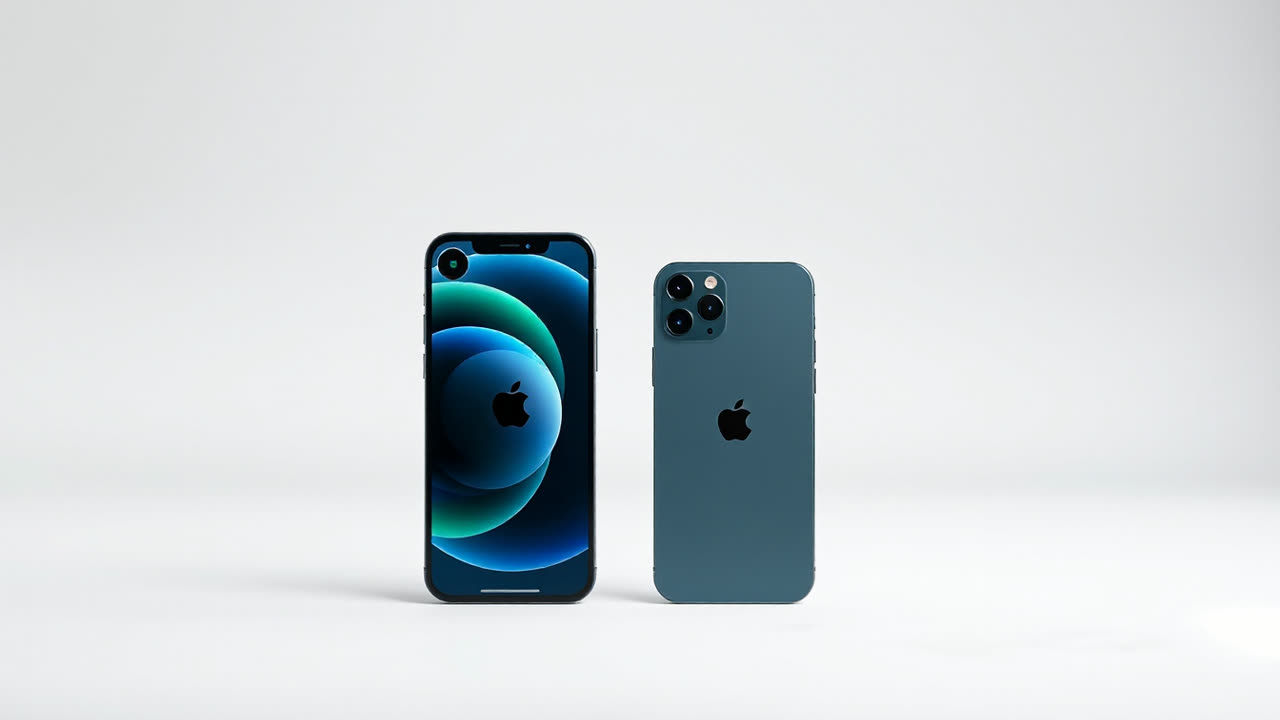
The iPhone 18 Pro and iPhone 18 Pro Max, launched in September 2026, delineate Apple's premium smartphone strategy by offering largely identical core features, with key differentiators residing almost exclusively in their display dimensions and battery endurance. This approach emphasizes user preference for size over a tiered feature set, a subtle but significant shift in high-end smartphone segmentation.
The iPhone 18 Pro Max commands a larger 6.9-inch Super Retina XDR OLED display, boasting a resolution of 2868 by 1320 pixels at 460 ppi, while its smaller sibling, the iPhone 18 Pro, features a 6.3-inch Super Retina XDR OLED display with a 2622 by 1206 pixel resolution, also at 460 ppi. Both displays are equipped with ProMotion technology, offering adaptive refresh rates up to 120Hz, an Always-On display, and an impressive outdoor peak brightness of 3,000 nits, along with HDR support and improved anti-reflection properties. A notable enhancement across both models is the redesigned Dynamic Island, which is now smaller and capable of displaying up to three Live Activities simultaneously, integrating Face ID and authentication features. The Pro Max's larger screen, measuring 6.86 inches diagonally in a standard rectangular shape, offers a more expansive canvas for content consumption and productivity, a clear advantage for users prioritizing immersive viewing experiences. In contrast, the iPhone 18 Pro, at 6.27 inches diagonally, caters to those who prefer a more compact and pocket-friendly device. Both phones are protected by Ceramic Shield 2 on the front and feature an aluminum unibody design with color-matched back glass.
Battery life presents the most substantial practical divergence between the two models, with the iPhone 18 Pro Max delivering significantly longer endurance. The Max model features a substantial 5,391 mAh battery capacity in its physical SIM tray version, and an even larger 5,567 mAh in the eSIM-only variant, representing an approximately 11.7% increase over the iPhone 17 Pro Max's 4,823 mAh battery (or 10% for eSIM models). This translates to an Apple-rated "up to 30 hours of typical use" and an impressive "up to 45 hours of video playback" for the eSIM-only iPhone 18 Pro Max. The iPhone 18 Pro, while also improved, has a 4,056 mAh battery (4,288 mAh for eSIM-only models), a modest 1.7% increase over the iPhone 17 Pro's 3,988 mAh, and offers "up to 24 hours of typical use" or "up to 36 hours of video playback". Independent testing shows the iPhone 18 Pro Max lasting an average of 18 hours and 27 minutes, while the iPhone 18 Pro achieves 16 hours and 17 minutes, both showing year-over-year gains, albeit modest ones for the Max. The Pro Max's charging is also faster, reaching 50% in approximately 15 minutes via wired charging, with five minutes of wired charging providing around seven hours of video playback.
The minimal feature differentiation beyond size and battery capacity in the iPhone 18 Pro lineup signifies a mature product segment where core technologies have largely converged. Both models share the powerful A20 Pro chip with a next-generation vapor chamber and a Dual 16-core Neural Engine, ensuring identical performance and AI capabilities. They also feature the same advanced 48MP Pro Fusion main camera system with variable aperture, 8x optical-quality zoom, and an 18MP Center Stage front camera, alongside Wi-Fi 7 and Bluetooth 6 connectivity. This strategy allows Apple to streamline manufacturing and software development, while empowering consumers to choose based primarily on ergonomics and endurance. For users, this means the decision between the Pro and Pro Max is less about feature disparity and more about how a larger screen and extended battery life fit into their daily usage patterns and preferences for portability versus immersion. Professionals and power users who demand maximum screen real estate for multitasking or media editing, and those who require all-day-plus battery life without constant recharging, will naturally gravitate towards the Pro Max, despite its heavier 249-gram weight compared to the Pro's 211 grams. The starting prices reflect this premium, with the iPhone 18 Pro at $1,199 and the iPhone 18 Pro Max at $1,299 for the 256GB base configuration, a $100 increase over the iPhone 17 Pro series.
Comparing these models to rivals, the displays stand out with their exceptional 3,000 nits peak outdoor brightness, surpassing even some Android flagships like the Samsung Galaxy S27 Ultra, which is rumored to feature a 6.9-inch QHD+ 120Hz LTPO M16 OLED panel with up to 3,000 nits peak brightness. Google's Pixel 11 Pro XL also offers a 6.8-inch Super Actua LTPO OLED display with up to 3,600 nits peak brightness, indicating a competitive landscape at the very top end of display technology. In battery, while Apple has made strides, some Android competitors are pushing boundaries further. The Samsung Galaxy S27 Ultra is expected to feature a 5,700 mAh silicon-carbon battery, and other Android phones in 2026, particularly from Chinese brands, are adopting silicon-carbon battery technology to achieve capacities of 7,000 mAh or even up to 11,000 mAh in models like the Honor X80 Pro Max and Redmi Note 17 Pro Max, offering significantly longer endurance than Apple's latest. This silicon-carbon technology allows for higher energy density in slimmer designs, a trend Apple will likely need to address in future iterations to maintain battery leadership against certain rivals. The iPhone 18 Pro Max, however, still holds its own against the Samsung Galaxy S26 Ultra and Pixel 11 Pro XL in real-world endurance tests, beating the S26 Ultra by nearly two hours and the Pixel 11 Pro XL by almost four hours, a testament to Apple's software optimization and chip efficiency.
Looking ahead, Apple's strategy of minimal differentiation between its Pro models, focusing on size and battery, suggests a possible future where the "Pro" moniker primarily denotes access to the most advanced chip, camera, and display technologies, with size being the main variable. The continuous, albeit incremental, improvements in display brightness and battery efficiency are likely to continue, driven by advancements in OLED panel technology and silicon-carbon battery chemistry. The industry is also seeing trends towards more accessible multi-screen and foldable devices, with Apple rumored to be exploring an "iPhone Fold". This could introduce a new dimension of differentiation in future Pro lineups, potentially offering a "Pro Fold" model that combines the best of current Pro features with the versatility of a foldable display. Further innovations in display technology, such as under-display cameras and even holographic displays, are on the horizon, though widespread adoption may be beyond 2026. For batteries, the push towards higher silicon content and new form factors will remain a key battleground, as users increasingly demand longer usage times for AI-powered features and demanding applications. Apple's challenge will be to integrate these emerging technologies without compromising its hallmark design ethos and performance, potentially leading to a more diverse and functionally distinct Pro series in the years to come.