iPhone 18 Pro Earns Provisional 7/10 iFixit Repairability Score, Highlighting Persistent Challenges
The iPhone 18 Pro's 7/10 provisional iFixit repairability rating, while commendable for Apple, reveals ongoing design hurdles and software restrictions that complicate independent and consumer repairs.
✨ This content was summarized and interpreted by AI; it may contain errors — please verify accuracy with the original sources. Learn more
Listen to this story
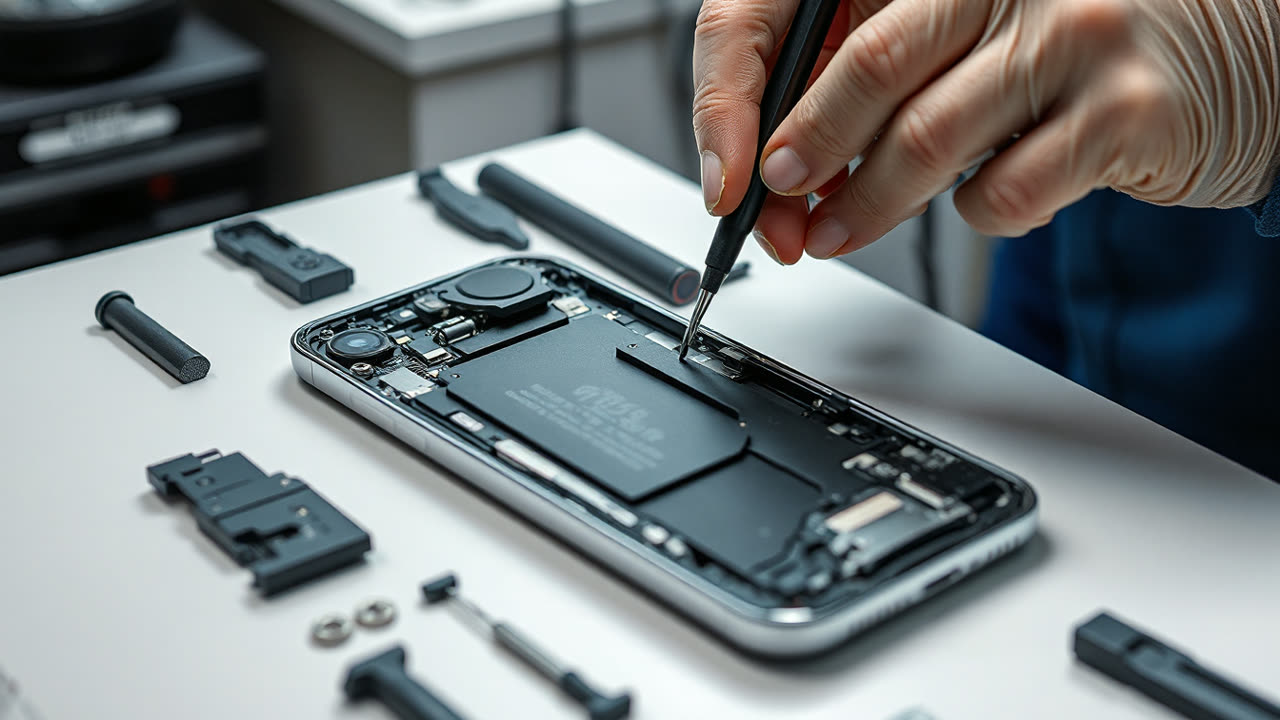
The iPhone 18 Pro has secured a provisional iFixit Repairability Rating of 7 out of 10, a score that, while commendable for an Apple device, still highlights significant hurdles for independent repairs and consumer longevity. This rating, applicable to both the iPhone 18 Pro and Pro Max models, places it on par with its two immediate predecessors, the iPhone 16 Pro and 17 Pro, suggesting a plateau in Apple's incremental, albeit hard-won, strides toward repairability. The provisional nature of the score underscores ongoing scrutiny, particularly regarding parts availability and software pairing checks, which iFixit has yet to finalize.
The core news reveals a mixed bag of progress and persistent design challenges. On the positive side, the iPhone 18 Pro continues the welcome trend of featuring a battery tray secured by screws rather than adhesive, alongside largely removable camera assemblies, which are significant improvements for common repairs. However, the device largely retains the front-entry method for most major repairs, meaning technicians must first remove the display, a process that inherently increases the risk of damaging the expensive, fragile screen. iFixit's teardown notably reported that the plastic frame surrounding the display cracked or pulled away in three of the four iPhone 18 Pro units disassembled, an issue that, while present since the iPhone 15 Pro, appears to be more problematic this generation and for which Apple does not sell a separate replacement part. Furthermore, the innovative mechanical variable aperture camera, a new feature in the 18 Pro, proved nearly impossible to repair at a component level; a stuck aperture blade necessitates replacing the entire camera module, a costly proposition given the iPhone 17 Pro's camera assembly retailed for $249, with the 18 Pro's likely to be higher. Even seemingly straightforward repairs, such as replacing the USB-C port, still demand extensive disassembly.
This repairability score, and its nuances, holds substantial implications for both users and the broader tech industry. For consumers, the ability to repair their devices directly translates to extended product lifespans, reduced ownership costs, and a smaller environmental footprint. The rising out-of-warranty battery replacement fee, now at $129 for the iPhone 18 Pro (up from $119 for the 16 Pro and 17 Pro, and $99 for the 15 Pro), makes independent and self-repair options more economically appealing, despite Apple's own Self Service Repair program. The ongoing challenges with delicate display components and complex camera modules mean that even with a 7/10 score, repairs can still be difficult and expensive, potentially pushing users towards costly official repairs or device replacement.
From an industry perspective, Apple's incremental improvements, particularly since the iPhone 16 series introduced easier battery access and dual-entry design for all models, reflect a response to mounting pressure from the burgeoning Right to Repair movement. In early 2026, federal lawmakers introduced the Fair Repair Act, aiming to mandate manufacturers provide diagnostic information, parts, and tools to consumers and independent repair shops. States like Texas have also enacted legislation, with HB2963, effective September 1, 2026, requiring manufacturers to supply documentation, tools, and parts on "fair and reasonable terms" for products over $100 for at least seven years. These legislative pushes directly counter historical practices of planned obsolescence and proprietary repair ecosystems. While Apple's Self Service Repair program, launched in 2022 and expanded to include iPads and over 65 devices by 2025, offers manuals, genuine parts, and tools, the persistent issue of "parts pairing" remains a significant hurdle. This software-based restriction often limits functionality or displays warning messages when non-Apple-approved or "harvested" parts are used, even if they are genuine. The 2026 Right to Repair legislative template specifically seeks to clarify the prohibition on parts pairing to prevent manufacturers from using software to restrict repairs.
Comparing the iPhone 18 Pro to its rivals further illuminates Apple's position. While a 7/10 is a strong score for an iPhone, it still lags behind the industry gold standard set by devices like the Fairphone 6, which consistently achieves a perfect 10/10 due to its modular design and user-replaceable components. Google's Pixel 9 series also scores a 7/10, and Google's recent Pixel models have generally ranked ahead of both iPhone and Samsung in 2026 repairability scorecards, emphasizing ease of disassembly and access to parts. Samsung's Galaxy S24 series, by contrast, sits lower at 5-6/10, and both Apple (D-) and Samsung (D) received poor grades in the US PIRG Education Fund's "Failing the Fix 2026" report, trailing behind Motorola (B+) and Google (C-). Apple's own EU-mandated self-rating for the iPhone 18 Pro shows a slight improvement to an overall index of 3.14 (from 3.04 for the 17 Pro), indicating minor gains in tool accessibility and disassembly depth.
Looking ahead, the trajectory for iPhone repairability appears to be one of cautious but continuous improvement, largely driven by regulatory mandates rather than a fundamental shift in Apple's design philosophy. The company will likely continue to optimize internal layouts for common repairs, such as battery and display replacements, while still grappling with the complexities introduced by advanced features like the variable aperture camera and under-display Face ID. The ongoing legislative efforts, particularly those targeting parts pairing, will be crucial in determining the true accessibility of repair for consumers and independent shops. While the iPhone 18 Pro represents a significant leap from Apple's traditionally unrepairable past, achieving genuine, widespread repair freedom will require not just hardware design improvements, but also a more open approach to software validation and parts distribution. The industry's future will increasingly hinge on manufacturers balancing innovation with the growing demand for sustainable, long-lasting products that users can truly own and maintain.