iPhone 18 Pro's Variable Aperture Lens Redefines Smartphone Photography
Apple's latest Pro model introduces an unprecedented variable aperture main lens, offering DSLR-like optical control and setting a new benchmark for mobile computational photography.
✨ This content was summarized and interpreted by AI; it may contain errors — please verify accuracy with the original sources. Learn more
Listen to this story
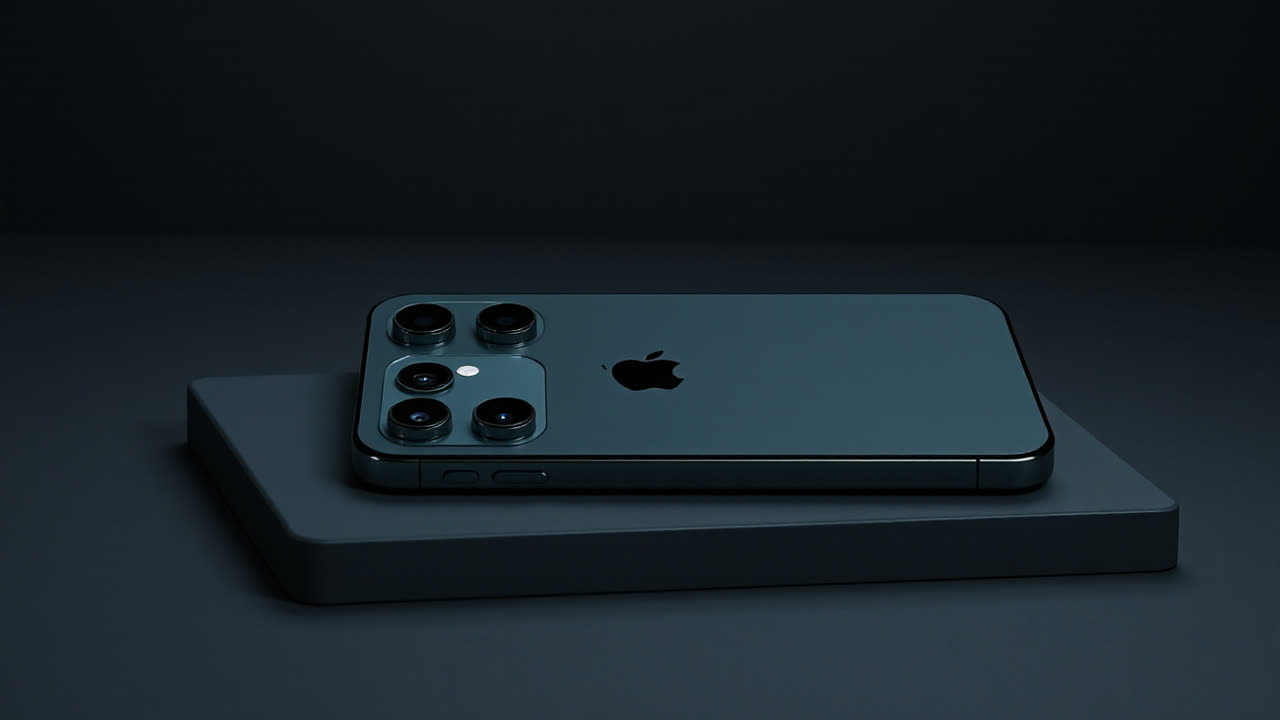
The iPhone 18 Pro's introduction of a variable aperture main lens marks a pivotal shift in smartphone computational photography, extending optical flexibility unprecedented in the mobile sector. This year's Pro model allows users to dynamically adjust the aperture, reportedly spanning a range from an ultra-wide f/1.4 for exceptional light gathering in dim environments to a narrower f/4.0, enhancing depth of field and sharpness in bright conditions. The f/1.4 setting, a significant jump from the iPhone 17 Pro's f/1.7 aperture, promises a substantial improvement in low-light performance, potentially capturing up to 50% more light and drastically reducing noise while preserving finer details in challenging lighting scenarios. This optical engineering feat directly addresses a long-standing compromise in smartphone cameras, where a fixed, wide aperture often led to shallow depth of field in macro shots or overexposed highlights in intensely lit scenes.
The immediate impact on users is a level of creative control previously reserved for dedicated mirrorless or DSLR cameras. Photographers can now intentionally manipulate depth of field to isolate subjects with more pronounced background blur, or conversely, achieve greater sharpness across an entire landscape. For videographers, the variable aperture offers superior control over exposure without relying solely on shutter speed or ISO, crucial for maintaining cinematic motion blur and reducing visual noise. This capability makes the iPhone 18 Pro an even more formidable tool for professional content creation, enabling nuanced visual storytelling directly from a pocket-sized device. The industry ripple effect is profound; by integrating a true mechanical variable aperture, Apple is pushing the boundaries of miniaturization and challenging rivals to innovate beyond purely computational enhancements. This move could accelerate the adoption of similar mechanical solutions across the premium smartphone segment, shifting the focus from simply larger sensors to more versatile optical systems.
Historically, smartphone cameras have primarily relied on fixed apertures, compensating for light variations and depth of field through software algorithms and sensor technology. While computational photography has achieved remarkable results in simulating bokeh and dynamic range, it often struggles with the inherent physical limitations of a static optical system. The iPhone 17 Pro, for instance, relied on its larger sensor and advanced Photonic Engine to improve low-light capture and Smart HDR for dynamic range. Competitors like Samsung have dabbled with variable apertures in past flagship models, such as the Galaxy S9 and S10, offering a simpler f/1.5 and f/2.4 toggle. However, the iPhone 18 Pro's reported continuous or multi-stop variable aperture system represents a more sophisticated and granular approach, providing greater control than its predecessors or current Android flagships, which largely stick to fixed wide apertures like f/1.8 or f/1.9 on their main sensors. This advanced implementation by Apple effectively redefines the benchmark for optical versatility in a smartphone, moving beyond a simple two-stop switch to a more fluid, purpose-driven adjustment.
Looking ahead, the iPhone 18 Pro's variable aperture is likely just the beginning of a broader trend towards more physically adaptable smartphone optics. Future iterations could see even wider aperture ranges, more sophisticated multi-lens systems with independently variable apertures, or even liquid lenses for instant, silent focusing and aperture adjustments. The integration of AI will undoubtedly play an even larger role, not just in post-processing but in intelligent, real-time aperture selection based on scene analysis, user intent, and lighting conditions, effectively automating the optical advantage. We might also see this technology trickle down to non-Pro iPhone models within a few generations, democratizing advanced photographic control. The challenge for Apple and its competitors will be to refine these mechanical systems, ensuring durability and maintaining the slim profiles users expect, while continuing to push the boundaries of computational photography to work in concert with these newly flexible optics. The ultimate goal remains a camera that not only captures reality but offers unparalleled creative freedom, all within the confines of a device that fits in your pocket.