iPhone 18 Pro's Variable Aperture: Native App Limitations Drive Users to Third-Party Solutions
Despite the iPhone 18 Pro's groundbreaking variable aperture main camera, its native iOS app inexplicably restricts users to just four predefined settings, pushing enthusiasts towards third-party applications for full creative control.
✨ This content was summarized and interpreted by AI; it may contain errors — please verify accuracy with the original sources. Learn more
Listen to this story
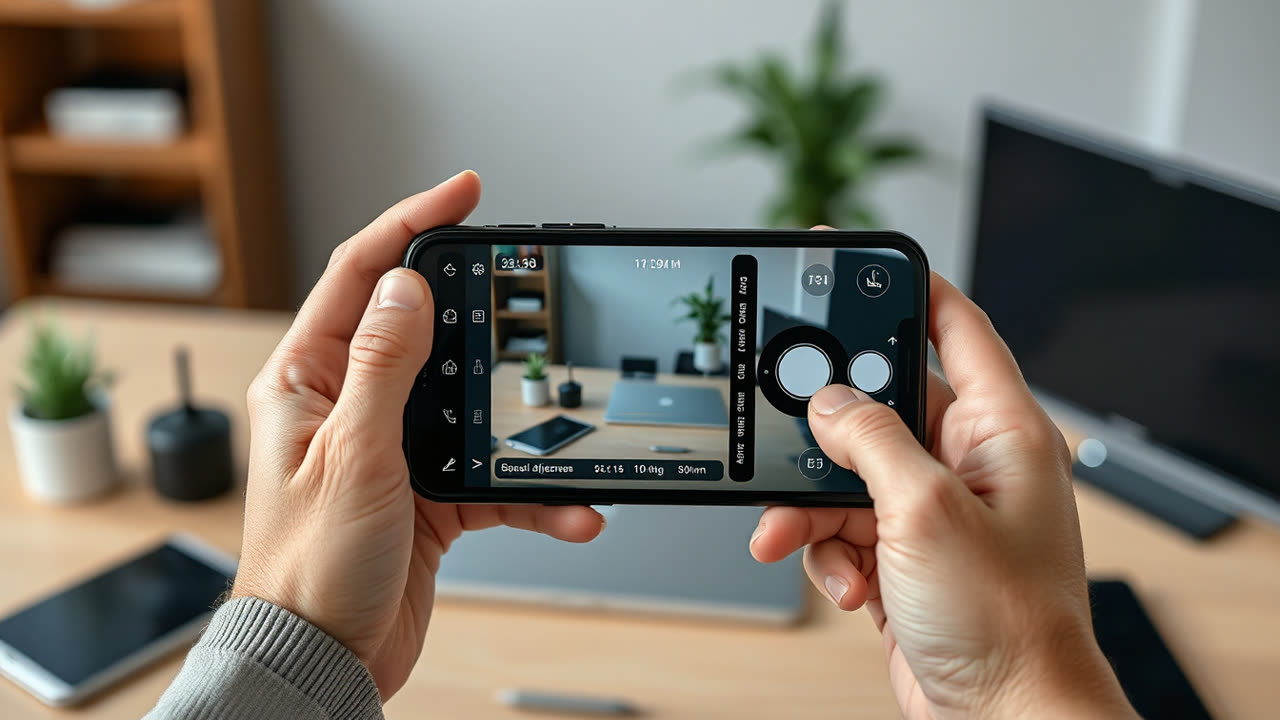
The iPhone 18 Pro's groundbreaking variable aperture main camera, while a significant hardware leap for mobile photography, arrives with a perplexing software constraint: its native iOS camera app inexplicably restricts users to just four predefined aperture settings—f/1.48, f/1.8, f/2.8, and f/4—even in manual mode. This limitation immediately sparked a demand for greater creative control, a void swiftly filled by third-party applications like Moment Pro and Blackmagic Camera II, which leverage the hardware's full potential, offering a far wider, often stepless, range of aperture adjustments.
This dichotomy between hardware capability and native software limitation is not merely an inconvenience; it fundamentally alters the user experience and reshapes the competitive landscape of professional mobile imaging. For enthusiasts and professionals, the ability to precisely control depth of field is paramount. A wider aperture (smaller f-number) like f/1.48 allows for shallower depth of field, creating attractive background blur (bokeh) that isolates subjects, ideal for portraits or artistic shots. Conversely, a narrower aperture (larger f-number) like f/4 increases the depth of field, keeping more of the scene in focus, crucial for landscapes or group photos. The arbitrary four-step limitation in Apple’s own app forces photographers to compromise, often relying on computational photography tricks to simulate depth of field, which, while impressive, can lack the organic quality of optical effects. The immediate availability of third-party apps that unlock the full aperture range turns the iPhone 18 Pro into a truly versatile photographic instrument, but it also raises questions about Apple's strategic intent. Is this a deliberate choice to simplify the user interface for the majority, or an oversight in prioritizing advanced manual controls? The former seems more plausible, aligning with Apple's historical approach to accessibility over granular control in its first-party apps.
The impact on the mobile photography industry is multifaceted. Firstly, it elevates the importance of third-party developers, positioning them as essential partners in maximizing the potential of cutting-edge smartphone hardware. Apps like Moment Pro, which typically retail for around $7.99, or the more advanced Blackmagic Camera II, often a free download with in-app purchases for premium features, become indispensable tools, validating their business models and fostering innovation in mobile imaging software. Secondly, it could influence how rival Android manufacturers approach variable aperture technology. While Samsung pioneered variable aperture in smartphones with the Galaxy S9 and S10, offering f/1.5 and f/2.4 settings, and other brands like Sony have experimented with multi-aperture systems, the iPhone 18 Pro's more advanced, likely continuous or highly granular, variable aperture module sets a new standard. If Apple's native software doesn't fully exploit it, competitors might highlight their own, potentially more open, camera interfaces as a differentiator. This move by Apple also subtly shifts the narrative from pure hardware specifications to the interplay between hardware and software ecosystems, where the "true" capabilities of a device are only realized through a combination of first- and third-party solutions.
Historically, iPhones have been lauded for their "point and shoot" simplicity and exceptional computational photography. Previous iPhone generations offered fixed apertures, relying on software algorithms and larger sensors to achieve desired effects. The introduction of a physical variable aperture in the iPhone 18 Pro marks a significant hardware evolution, bringing a traditional photographic tool to the mobile platform. This places the iPhone 18 Pro in a new league, closer to professional mirrorless cameras in terms of fundamental optical control. Compared to its predecessor, the iPhone 17 Pro, which likely featured a fixed main lens aperture, the 18 Pro's variable aperture is a substantial upgrade, offering genuine optical depth control rather than simulated bokeh. The fact that third-party apps immediately capitalized on this capability underscores a growing demand among power users for DSLR-like manual controls on their mobile devices. These apps often go beyond aperture, providing manual control over ISO, shutter speed, white balance, and even advanced features like focus peaking and zebra patterns for exposure, transforming the iPhone into a truly professional-grade video and photo capture device.
Looking ahead, this situation presents several potential trajectories. Apple may eventually update its native camera app to offer more granular aperture control, perhaps in response to user feedback or competitive pressure, integrating these advanced options more seamlessly into the iOS ecosystem. Alternatively, Apple might continue to cede this niche to third-party developers, focusing its own app on a streamlined experience for the vast majority of users while indirectly fostering a vibrant ecosystem of specialized tools. This approach could lead to an even richer array of professional camera apps, each catering to specific photographic styles or workflows, further solidifying the iPhone's position as a serious tool for content creation. The emergence of more sophisticated hardware, like larger sensors and advanced lens systems, will only amplify the need for equally powerful software interfaces. The iPhone 18 Pro's variable aperture, despite its initial native software limitations, serves as a powerful testament to the ongoing convergence of traditional photography principles with cutting-edge mobile technology, hinting at a future where smartphones offer both computational brilliance and uncompromised optical control.