iPhone 18 Pro Unveiled: Variable Aperture Camera, 2nm A20 Pro Chip, and Satellite 5G NR-NTN
The iPhone 18 Pro, launched on September 18, 2026, introduces a groundbreaking 48MP Fusion Main camera with variable aperture, a first for Apple, which not only redefines mobile photography and videography but also significantly pushes premium smartphone capabilities and pricing, challenging traditional camera manufacturers and setting new industry benchmarks for on-device AI and connectivity.
✨ This content was summarized and interpreted by AI; it may contain errors — please verify accuracy with the original sources. Learn more
Listen to this story
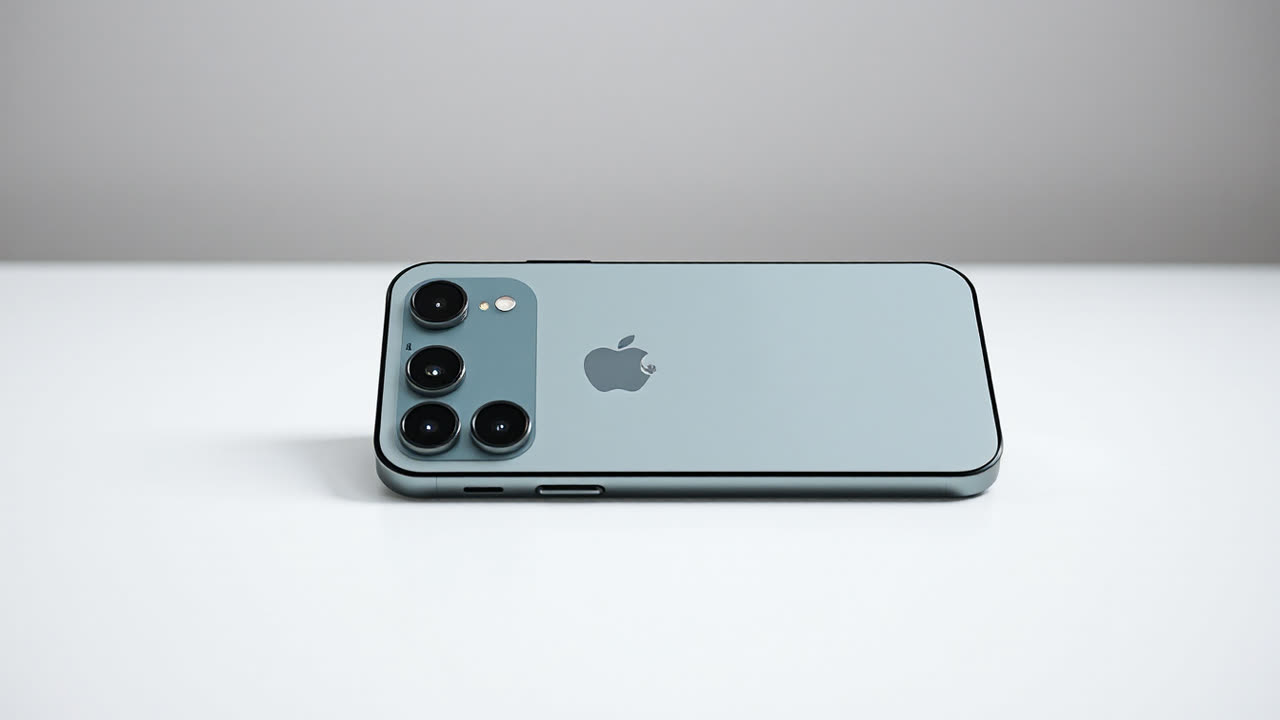
The iPhone 18 Pro, launched on September 18, 2026, introduces a groundbreaking 48MP Fusion Main camera with variable aperture, marking a first for Apple smartphones and offering unprecedented creative control for both photographers and videographers. This significant hardware upgrade, alongside substantial advancements in processing power, battery longevity, a refined Dynamic Island, and transformative satellite connectivity, positions the iPhone 18 Pro as more than just an incremental update, despite its largely familiar design. Starting at $1,200 for the 256GB model and reaching $2,400 for the 2TB iPhone 18 Pro Max, these devices are pushing the boundaries of premium smartphone capabilities and pricing.
The **variable aperture camera system** is arguably the most impactful new feature for creative users. Comprising six laser-cut blades, it smoothly transitions between apertures from ƒ/1.48 to ƒ/4, automatically adjusting for depth of field and lighting, or allowing manual control via new "Pro controls" in the Camera app. This allows the camera to intelligently widen to ƒ/1.48 for impressive low-light shots, optimize portraits at ƒ/1.8, and keep more of a group in focus by narrowing to ƒ/4. Users will immediately notice less reliance on Night Mode in challenging light, and sharper images of moving subjects due to faster shutter speeds enabled by wider apertures. For professionals, the updated Final Cut Camera app now fully supports variable aperture, offering precise control over aperture settings and unlocking Cinematic mode effects for standard video, including ProRes and Apple Log footage. This level of granular control, previously limited to more dedicated camera equipment, democratizes advanced photographic techniques, potentially inspiring a new wave of mobile content creation and challenging traditional camera manufacturers. While Samsung introduced a variable aperture on the Galaxy S9 years ago, Apple's implementation is noted for its greater flexibility and integration with its computational photography pipeline.
Powering these innovations is the **A20 Pro chip**, built on Apple's first 2-nanometer process, which delivers a remarkable leap in performance and efficiency. Early benchmarks indicate a 21% to 23% faster single-core and 27% to 28% faster multi-core CPU performance compared to the A19 Pro in the iPhone 17 Pro. The A20 Pro's new seven-core GPU is up to 40% faster, and its dual 16-core Neural Engine doubles the AI processing power of its predecessor. This raw processing capability, combined with a next-generation vapor chamber that is three times larger than the previous generation for 40% better sustained performance, ensures the iPhone 18 Pro can handle demanding AI tasks, high-fidelity gaming, and complex video editing without throttling. This level of on-device AI grunt is critical as generative AI features become standard, with Counterpoint Research predicting GenAI-equipped smartphones will constitute 52% of global shipments by 2027. Competitors like the Samsung Galaxy S27 Ultra, featuring the Qualcomm Snapdragon 8 Elite Extreme Gen 6, also utilize a 2nm process and boast significant CPU and GPU gains, but Apple's integrated hardware-software approach often translates to optimized real-world performance.
**Massive battery life and significantly faster charging** are another highlight, particularly for the iPhone 18 Pro Max. The Pro Max now features a 5,567 mAh battery (eSIM models), the largest ever in an iPhone, enabling up to 45 hours of video playback and up to 30 hours of general usage on a full charge. The standard iPhone 18 Pro also sees substantial gains, offering up to 36 hours of video playback. Both models support faster wired charging up to 60W with a compatible USB PD 3.2 charger, achieving 50% charge in about 15 minutes, and wirelessly charging to 50% in 30 minutes. This effectively addresses a long-standing desire for extended endurance, surpassing rivals like the Samsung Galaxy S26 Ultra (5,000 mAh) and Google Pixel 11 Pro XL (5,115 mAh) in battery drain tests. The iPhone 18 Pro Max even includes an "innovative battery-firmware solution" to comply with shipping regulations for batteries over 20 Wh, limiting capacity until activation. This improved battery experience is crucial for power users and those relying on their device throughout long days, reducing "charge anxiety" and enhancing mobile productivity.
The **enhanced Dynamic Island** on the iPhone 18 Pro is noticeably smaller and more functional, creating room for additional information and allowing up to three Live Activities to be displayed simultaneously. This refinement comes from moving the Face ID infrared camera underneath the OLED panel, a clever engineering feat that improves screen real estate without compromising Face ID security. While not a radical redesign, this more discreet and efficient Dynamic Island integrates more seamlessly into the user experience, offering at-a-glance information and interactions that feel less intrusive than previous iterations. This iterative improvement demonstrates Apple's commitment to refining existing features rather than discarding them, contrasting with the varied approaches taken by Android manufacturers, some of whom have moved to punch-hole cameras or under-display solutions that can sometimes compromise image quality.
Finally, the iPhone 18 Pro significantly upgrades **satellite connectivity with 5G NR-NTN technology**, moving it from a niche emergency feature to an everyday asset. Powered by Apple's custom C2 modem, which replaces Qualcomm modems, this technology integrates satellite connectivity directly with regular 5G cellular service, enabling automatic and seamless fallback to satellite when cellular coverage is poor. This means users won't need to manually point their iPhone at a satellite, and the device can maintain connection for calls, messages, and potentially even data, even in remote areas. While Apple has extended free access to its satellite features for older iPhone models, this deeper integration in the iPhone 18 Pro highlights a strategic move towards ubiquitous connectivity, offering a substantial competitive advantage, especially in regions with inconsistent cellular infrastructure. This could redefine expectations for mobile connectivity, making "dead zones" a thing of the past for iPhone 18 Pro users.
The iPhone 18 Pro, despite its "S" year design philosophy, where external changes are minimal but internal upgrades are substantial, represents a meaningful step forward. Its focus on camera versatility, raw processing power for AI, extended endurance, and pervasive connectivity directly addresses the evolving demands of today's users. The smartphone industry, grappling with memory chip shortages and a trend towards premiumization, sees Apple and Samsung benefiting from their dominance in the high-end market. Looking ahead, the emphasis on AI capabilities, particularly on-device processing, will only intensify, pushing chip manufacturers to innovate further in 2nm and even 1.4nm processes. Apple's continued integration of custom silicon, from the A20 Pro to the C2 modem, signals a long-term strategy of controlling core technologies to deliver optimized and differentiated experiences. This tight integration will likely continue to challenge rivals, who often rely on third-party components, to match Apple's performance and efficiency gains. The next frontier could involve even more sophisticated AI agents, more advanced spatial computing integrations building on technologies like the Apple Vision Pro, and potentially further breakthroughs in battery chemistry to sustain increasingly powerful hardware.