iPhone Duo's iOS Re-engineering: A Glimpse into Apple's Foldable Future
The advent of a hypothetical iPhone Duo, a dual-screen foldable device, would necessitate a profound re-engineering of iOS, pushing Apple's renowned software ecosystem into uncharted territory far beyond the adaptations seen on standard iPhones, signaling a new era for mobile computing and setting a benchmark for the foldable market.
✨ This content was summarized and interpreted by AI; it may contain errors — please verify accuracy with the original sources. Learn more
Listen to this story
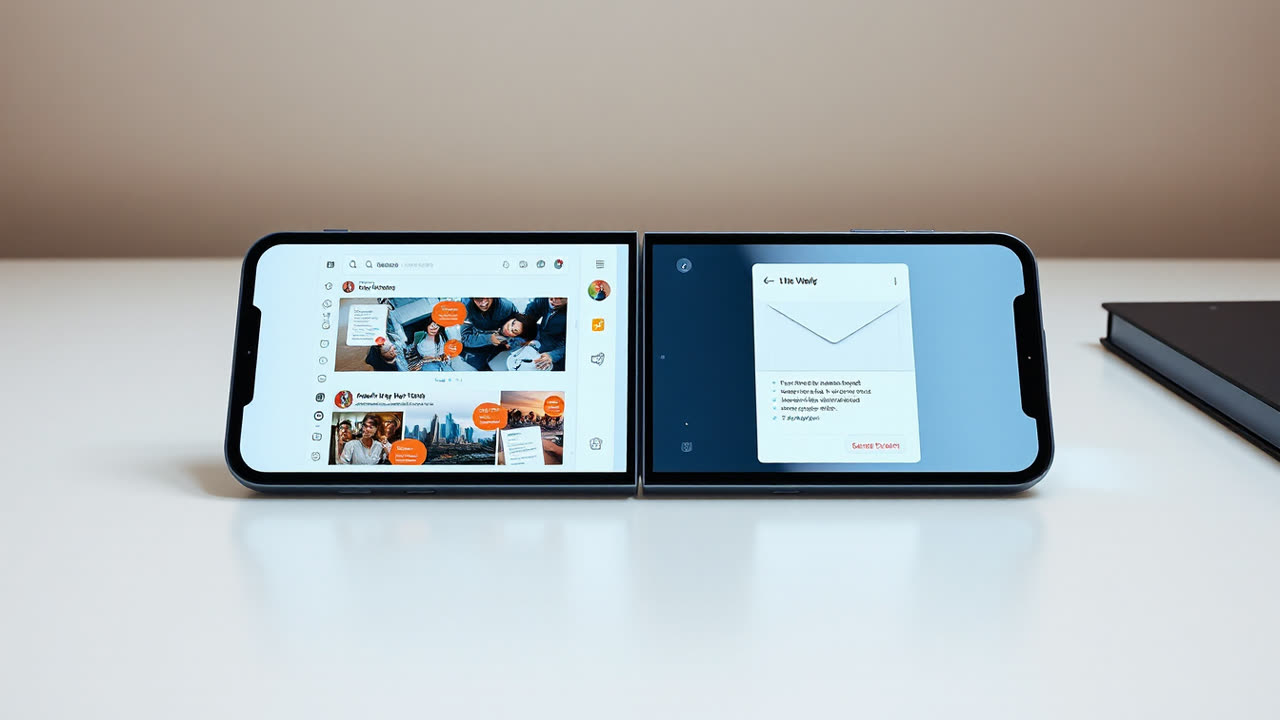
The advent of a hypothetical iPhone Duo, a dual-screen foldable device, would necessitate a profound re-engineering of iOS, pushing Apple's renowned software ecosystem into uncharted territory far beyond the adaptations seen on standard iPhones. While a traditional iPhone operates on a single, continuous display, the Duo's bifurcated architecture fundamentally alters user interaction, requiring dedicated software paradigms for camera functionality, multitasking, and overall user experience that would distinguish it sharply from its monolithic predecessors.
The most striking software divergence would manifest in multitasking, a cornerstone of productivity on dual-screen form factors. Unlike the standard iPhone's split-screen or Slide Over features, which constrain multiple applications to a single panel, the iPhone Duo would likely leverage its two distinct displays for true simultaneous application execution. Imagine running Safari on one screen while composing an email on the other, or viewing a video on the top panel as a live chat occupies the bottom. This would necessitate a more fluid app-handover mechanism, allowing users to "throw" an application from one screen to the other, or expand a single application across both screens, creating a larger, albeit bisected, canvas. Patents filed by Apple have explored adaptive user interfaces for foldable devices, suggesting dynamic resizing and rearrangement of content based on the device's folded state and orientation. This level of intelligent display management would represent a significant leap from current iOS, demanding a robust framework for developers to optimize their applications for these novel display configurations, preventing awkward content breaks or unresponsive touch targets across the hinge.
Camera software would undergo an equally transformative overhaul. On a standard iPhone, the camera interface is designed for a single viewfinder. A dual-screen iPhone Duo, however, could unlock unprecedented photographic capabilities and user experiences. For instance, one screen could serve as the primary viewfinder and control panel, while the second screen simultaneously displays a gallery of recently captured images, provides advanced settings, or even acts as a real-time preview for the subject, enhancing collaborative photography or vlogging. This "director's view" or "subject preview" would offer a distinct advantage over single-screen devices, providing immediate feedback and control without obstructing the main shot. Furthermore, the dual-screen form factor could enable novel self-portrait modes, utilizing the higher-quality main cameras with the second screen acting as a viewfinder, a feature currently limited by the single-screen design of standard iPhones. Such an implementation would require deep integration within the Camera app, rethinking gesture controls and menu overlays to seamlessly span or intelligently utilize both displays.
Beyond these core functionalities, the iPhone Duo's software would likely introduce a suite of context-aware adaptations. When folded in a "laptop" or "tent" mode, the software would need to recognize these orientations and adjust the UI accordingly, perhaps presenting a virtual keyboard and trackpad on the bottom screen while the top displays content, akin to how iPadOS adapts for external keyboards and trackpads. This would demand sophisticated sensor integration and a new layer of "posture awareness" within iOS, allowing applications to dynamically reconfigure their layouts and input methods. The lock screen, notification system, and even the Home Screen itself would require thoughtful redesigns to maximize the utility of two displays, potentially offering persistent widgets on one screen while notifications appear on the other.
This hypothetical leap for iOS would profoundly impact both users and the industry. For users, it promises a significant boost in productivity and new creative possibilities, moving beyond the limitations of single-screen mobile computing. The ability to genuinely multitask, collaborate, and interact with content in novel ways could redefine what a smartphone is capable of. For the industry, it would set a new benchmark for foldable software, challenging rivals like Samsung's One UI on the Galaxy Fold or Google's adaptations for the Pixel Fold, which have already explored multi-window and continuity features. Apple's entry would likely bring its characteristic polish and ecosystem advantages, potentially driving greater developer adoption for dual-screen optimization, a challenge many existing foldable platforms still face.
The background for such a device draws heavily from Apple's long-standing commitment to intuitive user interfaces and its history of adapting iOS for new form factors, from the original iPhone to the iPad and even the Apple Watch. While rivals have pioneered the foldable hardware space, Apple's strength lies in its ability to refine and popularize technologies through superior software integration. The challenges faced by early foldable devices, such as app compatibility, hinge durability, and software glitches, would serve as crucial lessons for Apple, allowing them to enter the market with a more mature software stack.
Looking ahead, the successful integration of iOS onto an iPhone Duo would not only validate the foldable form factor but also pave the way for an even more modular and adaptable future for Apple's hardware and software. Such a device would represent a significant investment in a new design paradigm, signaling Apple's belief in the long-term viability of foldables. The initial release would undoubtedly focus on core functionality and stability, but subsequent iterations would likely push the boundaries further, exploring advanced haptic feedback across screens, seamless content transitions, and even more sophisticated AI-driven context awareness. This evolution would not merely be about new hardware; it would be a testament to how software can unlock entirely new dimensions of user experience, fundamentally reshaping the personal computing landscape for the next decade.