Iran Seizes US Navy Underwater Drone, Posing Intelligence Challenge
Iran's capture of a U.S. Navy Anduril Dive-LD underwater drone creates a significant intelligence opportunity for Tehran and a strategic challenge for Washington's autonomous naval warfare.
✨ This content was summarized and interpreted by AI; it may contain errors — please verify accuracy with the original sources. Learn more
Listen to this story
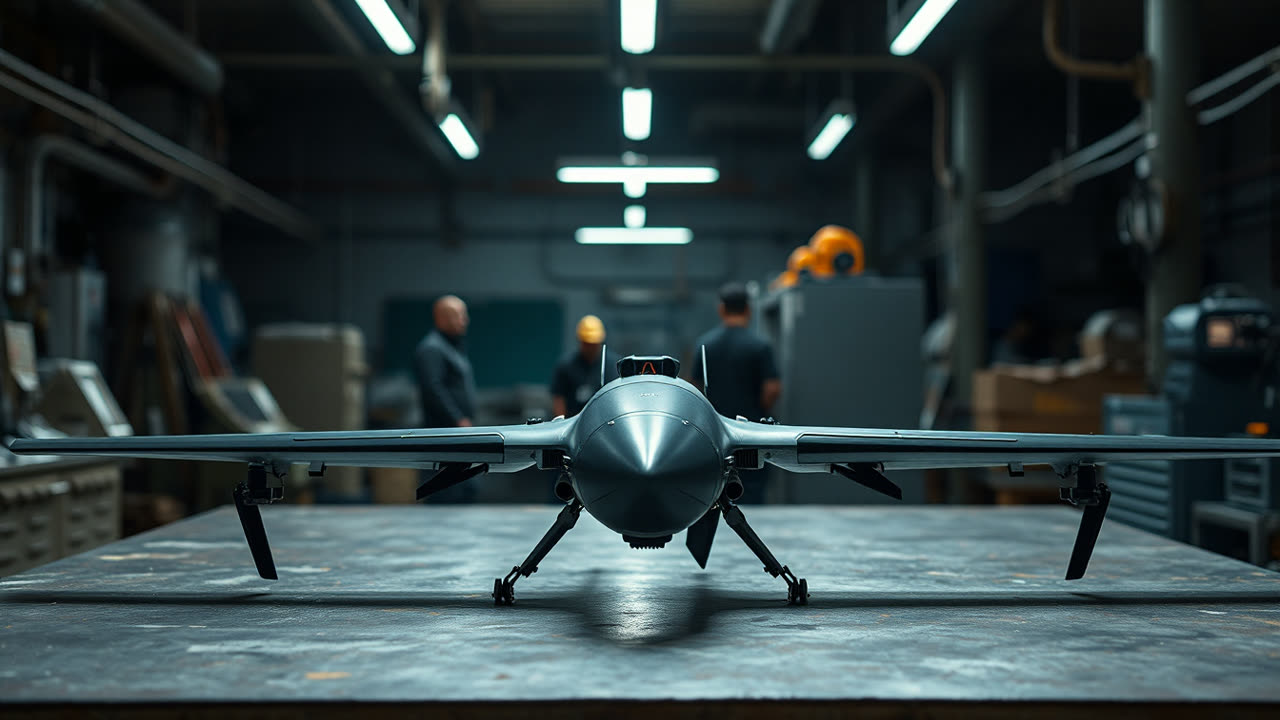
The seizure of a U.S. Navy Anduril Dive-LD underwater drone by Iran, followed by Tehran's public mockery and Washington's dismissive claims of the vehicle being defective and unclassified, presents a complex intelligence challenge and a significant test for the future of autonomous naval warfare. This incident, reportedly occurring in late 2022 or early 2023, is not merely a loss of hardware but a potential intelligence windfall for Iran, offering an unprecedented opportunity to dissect advanced American uncrewed underwater vehicle (UUV) technology. While the U.S. Navy asserts the Dive-LD carries no sensitive technology or classified information, its physical components, software architecture, and operational parameters could yield invaluable insights to adversaries.
The core significance lies in the potential for reverse-engineering. Iran has a documented history of successfully reverse-engineering captured Western military hardware, notably producing its own versions of the U.S. RQ-170 Sentinel stealth drone after one was brought down in 2011. While the Dive-LD is a much smaller, commercially derived platform, its capture still provides a physical model for Iranian engineers to study propulsion systems, sensor integration, communication protocols, and navigation algorithms. Even if the U.S. claim of "unclassified" status is true, understanding the engineering principles behind a commercially available yet militarily adapted UUV can accelerate Iran's indigenous drone development programs, potentially allowing them to build more capable and harder-to-detect underwater assets. This could significantly complicate naval operations in contested waterways like the Persian Gulf and the Strait of Hormuz, where Iran already employs asymmetric tactics.
The Anduril Dive-LD, a product of the rapidly evolving defense tech sector, represents a shift towards more agile, commercially-sourced solutions for military applications. Weighing approximately 1,000 pounds and capable of operating for 10 days, it is designed for persistent intelligence, surveillance, and reconnaissance (ISR) missions, as well as mine countermeasures and anti-submarine warfare. Its modular design allows for various payloads, making it a versatile tool for naval forces. Compared to larger, more bespoke military UUVs, the Dive-LD emphasizes affordability and rapid deployment, a strategy aimed at fielding numerous, distributed autonomous assets. This incident, however, underscores the inherent vulnerability of such a strategy: while individual unit loss might be deemed acceptable, the compromise of underlying technology can have far-reaching implications. Rivals like China and Russia also actively develop UUVs, but Iran's direct access to a functional U.S. system could provide a unique shortcut in certain design aspects, bypassing years of research and development.
For the U.S. and its allies, the capture necessitates a thorough re-evaluation of UUV deployment strategies, particularly concerning data security, operational redundancy, and recovery protocols in high-risk environments. The incident highlights the growing challenge of safeguarding autonomous systems, especially those operating in international waters where claims of "lost" or "defective" equipment can be met with skepticism and exploited for propaganda. The public mocking by Iranian embassies, contrasting with the U.S. Navy's downplaying, underscores the psychological warfare aspect of such events.
Looking ahead, the fallout is multi-faceted. Iran will likely dedicate significant resources to extracting every possible piece of information from the Dive-LD. Even if they cannot replicate it perfectly, insights gained could inform the design of more effective countermeasures against U.S. UUVs or enhance their own offensive underwater capabilities. This could manifest in improved acoustic signatures, better sensor evasion, or even attempts to develop their own autonomous interception systems. For Anduril Industries, a prominent player in defense technology, the incident, while not catastrophic, will undoubtedly prompt a review of security features and potentially influence future design choices for export models or systems deployed in sensitive regions. The broader industry may see increased demand for "black box" features that render captured systems inert or self-destruct critical components. Ultimately, this episode serves as a stark reminder that in the age of autonomous warfare, the loss of even an "unclassified" asset can represent a significant intelligence and strategic setback, reshaping the underwater battlespace for years to come.