Isar Aerospace's Spectrum Rocket Achieves Historic Orbital Launch for Europe
German startup Isar Aerospace has successfully launched Europe's first fully commercial orbital rocket from continental soil, a monumental achievement that signifies Europe's burgeoning independence in space access and positions it as a formidable contender in the global commercial space race, moving beyond reliance to sovereign innovation.
✨ This content was summarized and interpreted by AI; it may contain errors — please verify accuracy with the original sources. Learn more
Listen to this story
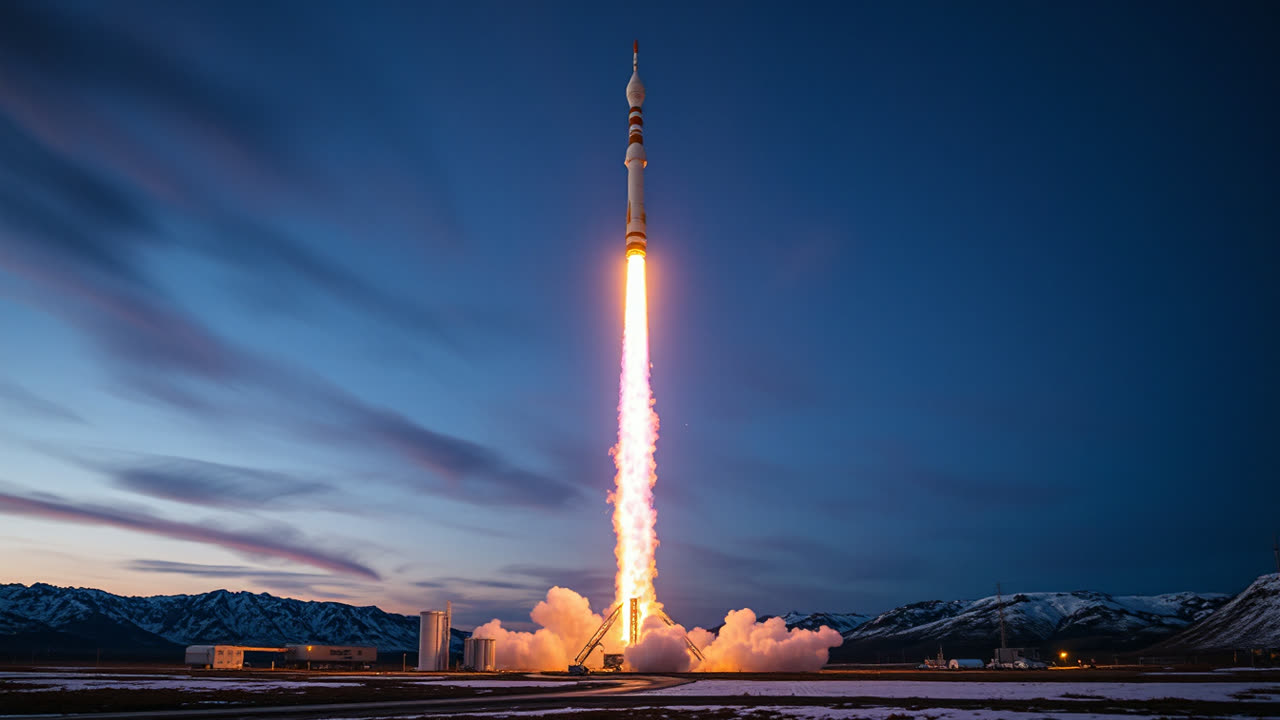
German company Isar Aerospace has successfully launched its Spectrum rocket into orbit from Andøya Spaceport in Arctic Norway, marking a pivotal moment as Europe's first entirely commercial orbital rocket to achieve this feat from continental Europe. This landmark mission, dubbed "Onward and Upward," lifted off on September 5, 2026, at 20:12 UTC, deploying five CubeSats and one experimental mission into a 500-kilometer low Earth orbit. The success comes 524 days after the company's inaugural test flight on March 30, 2025, ended in a crash just 30 seconds after liftoff from the same site, attributed to an unintended opening of a vent valve and a loss of attitude control.
This achievement is more than a technical triumph; it signifies a critical step towards bolstering Europe's autonomous access to space, a strategic imperative underscored by the retirement of Ariane 5 and the ongoing transition to Ariane 6. For years, Europe has heavily relied on a limited number of launch providers, including Arianespace (a joint venture between Airbus and Safran) and often non-European entities like SpaceX. The successful deployment of customer payloads by a privately developed European rocket fundamentally shifts this dynamic, offering a genuine alternative for small and medium-sized satellite operators. Isar Aerospace CEO Daniel Metzler emphasized that "launch capability is right now the biggest bottleneck in the entire industry," a constraint this launch directly addresses by opening up a new European supply line to orbit. The European Commission and the European Space Agency (ESA) have actively supported this development, with Isar Aerospace receiving the EIC Horizon Prize for Low Cost Space Launch in 2022, accompanied by €10 million in funding, and a significant €200 million from ESA under its European Launcher Challenge program in August 2026. This backing highlights a concerted effort to foster a competitive European launcher ecosystem and strengthen technological sovereignty.
The Spectrum rocket itself is a 28-meter tall, two-stage vehicle powered by nine Aquila engines on its first stage and a single vacuum-optimized Aquila engine on its second, burning liquid oxygen and propane. It is designed to deliver up to 1,000 kilograms to low Earth orbit (LEO) or 700 kilograms to a sun-synchronous orbit (SSO), targeting a competitive price point of approximately €10,000 per kilogram. This positions Spectrum as a direct competitor to global small-lift launch vehicles like Rocket Lab's Electron and Firefly Aerospace's Alpha. Unlike its first attempt, which generated data but ended in a fiery crash, this second mission successfully executed critical maneuvers including stage separation, upper-stage ignition, fairing deployment, and payload separation. The journey to this success was fraught with challenges, including multiple scrubbed attempts between January and September 2026 due to issues ranging from pressurization valve malfunctions and fluid system anomalies to adverse weather and even an unauthorized vessel entering the exclusion zone.
Looking ahead, Isar Aerospace is poised for rapid expansion. The company has already secured approximately €870 million in cumulative funding, including a €270 million Series D round in June 2026 with participation from the NATO Innovation Fund, valuing the company at roughly €2 billion. This capital is earmarked for global scaling and ramping up serial production of the Spectrum launch vehicle, with five more rockets already in production. Isar Aerospace's new 40,000-square-meter integrated production facility near Munich is designed to produce up to 40 Spectrum rockets per year, indicating a clear ambition to meet surging global demand. Furthermore, the company is expanding its launch infrastructure, with a second launch site planned in Nova Scotia, Canada, which could be operational by 2028, complementing its operations at Andøya. This expansion aligns with Europe's broader push to increase its orbital launch capabilities, as the European space launch services market is projected to reach nearly $9.75 billion by 2030, growing at a CAGR of 17.5% from 2024. With defense-related demand now accounting for approximately 60% of Isar's pipeline, the company's success also has profound implications for European security and defense autonomy. The successful "Onward and Upward" mission unequivocally signals Europe's arrival as a serious contender in the commercial space launch sector, shifting from dependence to a burgeoning era of sovereign access and competitive innovation.